

Modern Educational Technology(EdTech)_现代教育技术
Time:2026-07-12 Visits:0
Modern Educational Technology (Educational Applications) Major
The Modern Educational Technology Major integrates pedagogy, technology, and design to enhance learning effectiveness. This guide details its curriculum in instructional design and multimedia development, advanced study options, and diverse careers in K-12 education, edtech companies, and educational publishing. Discover how this Major prepares professionals to innovate teaching and learning in a digital age.
1. Introduction to the Modern Educational Technology Major
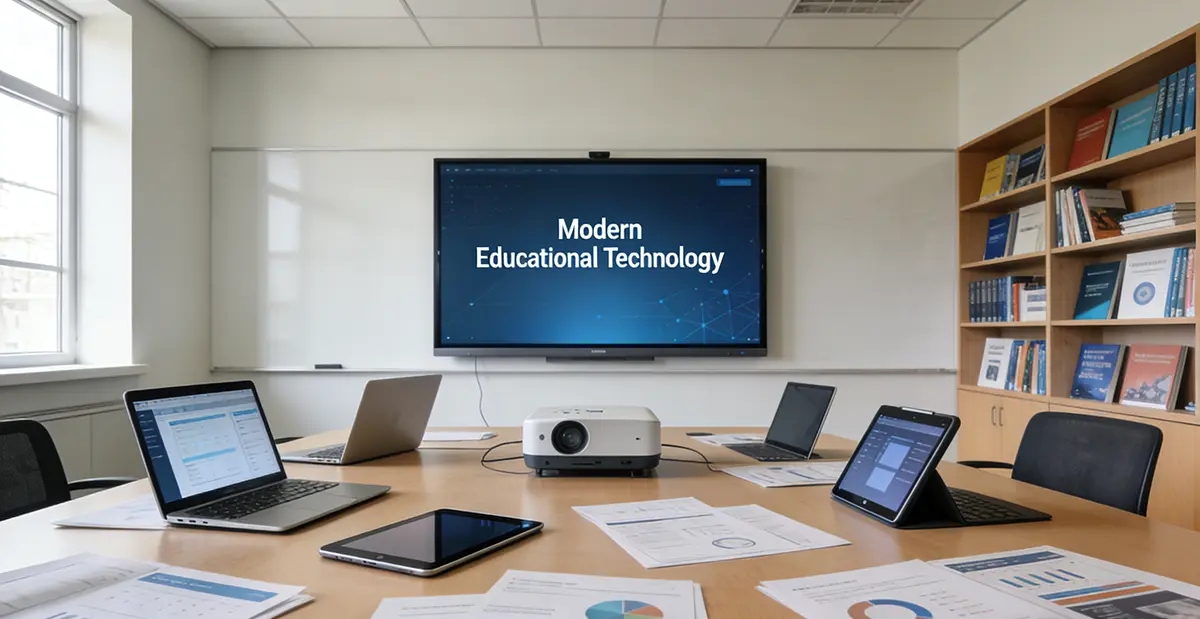
The Modern Educational Technology Major is an interdisciplinary applied field that integrates pedagogy, psychology, computer science, and design. It focuses on researching how to design, develop, utilize, and manage various technologies and resources to optimize teaching processes and enhance learning outcomes. Moving beyond a sole focus on tools, the Modern Educational Technology Major emphasizes the principles, methodologies, and effectiveness evaluation of “technology-enabled education,” serving as a core discipline driving educational informatization, digitization, and intelligent transformation.
2. Core Curriculum for the Modern Educational Technology Major
| Module Category | Core Courses |
| Educational Foundations | Principles of Education, Learning Sciences & Instructional Theory, Educational Psychology, Curriculum & Instruction |
| Core Tech Competencies | Programming Fundamentals (Python/Scratch), Multimedia Technology & Arts, Web Front-End Fundamentals, Database Principles & Applications |
| Core EdTech | Intro to Educational Technology, Instructional System Design, Educational Software Design & Development, Online Course Design & Development, Learning Analytics Fundamentals |
| Innovative Applications | Educational & Serious Games, VR/AR in Education, STEAM Education, AI in Education, Educational Robotics |
| Assessment & Management | EdTech Research Methods, Educational Project Evaluation, EdTech Management & Policy, Digital Educational Resource Management |
| Practice & Design | Instructional Design Workshop, Educational Product Prototyping, EdTech Project Practice |
3. Advanced Study Pathways for the Modern Educational Technology Major
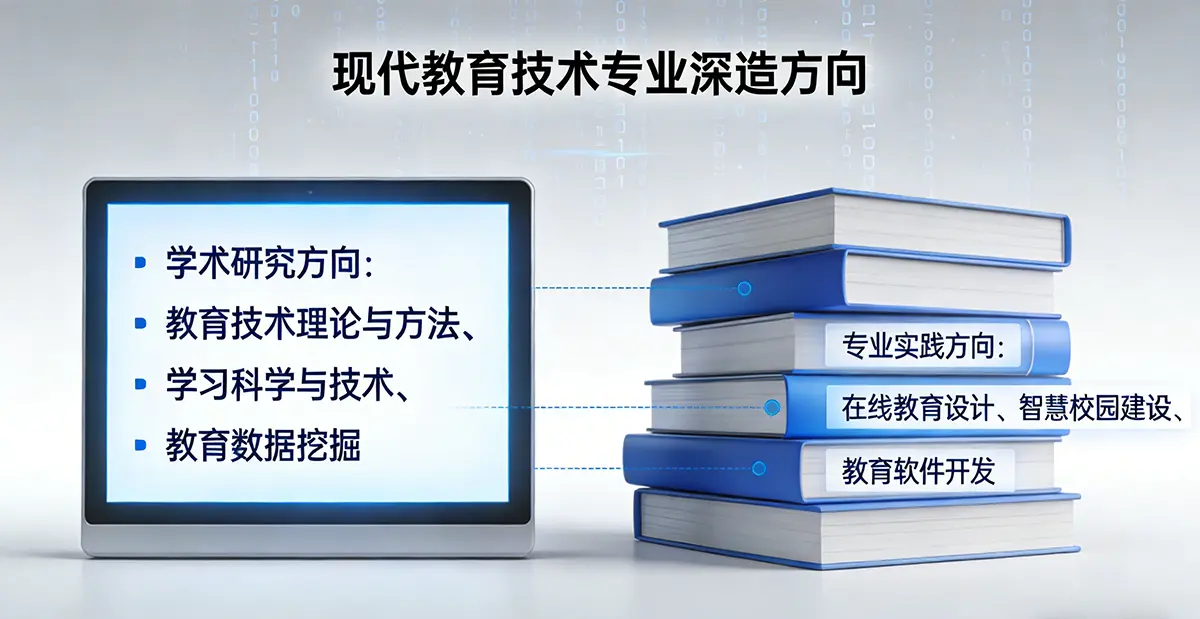
Master’s/PhD in Educational Technology: For careers in academic research, university faculty, or advanced educational product R&D.
Master’s in Computer Science/Software Engineering: To strengthen technical skills for core edtech development.
Master’s in Learning Sciences: To deepen understanding of human learning and inform technology design.
Master’s in UX/Interaction Design: To specialize in user experience design for educational products.
Master’s in Educational Administration/Policy: To shift focus to educational informatization planning and management.
Master’s in Business Analytics/Data Science: To specialize in educational big data analysis.
4. Career Pathways for the Modern Educational Technology Major
Career paths span education, technology, and publishing, producing quintessential “education + technology” hybrid professionals.
Education System: K-12 IT/STEM Teacher, Digital Instruction Specialist; University EdTech Center Support, Instructional Designer; Government Educational Informatization Project Manager.
EdTech Companies: Course/Learning Designer, Instructional Product Manager, Content R&D Engineer (online education); Product Manager, Solutions Consultant (edtech hardware/software); AI Education Application Researcher.
Publishing & Media Transformation: Digital Textbook Editor, Interactive Content Developer (publishing houses); Educational Program Director, Multimedia Developer (media).
Freelance & Entrepreneurship: Independent Educational Designer, EdTech Entrepreneur.
5. Employment & Industry Trends for the Modern Educational Technology Major
Employment Characteristics
Emerging sector with rapid growth driven by online education and digitalization policies, leading to strong demand and high employment rates.
Core competitive edge lies in hybrid expertise (education + technology); specializing in only one area increases competition.
Salary and career growth in edtech companies are generally more attractive than in traditional education roles.
Some market volatility exists in certain online education segments due to policy and capital shifts.
Industry Trends
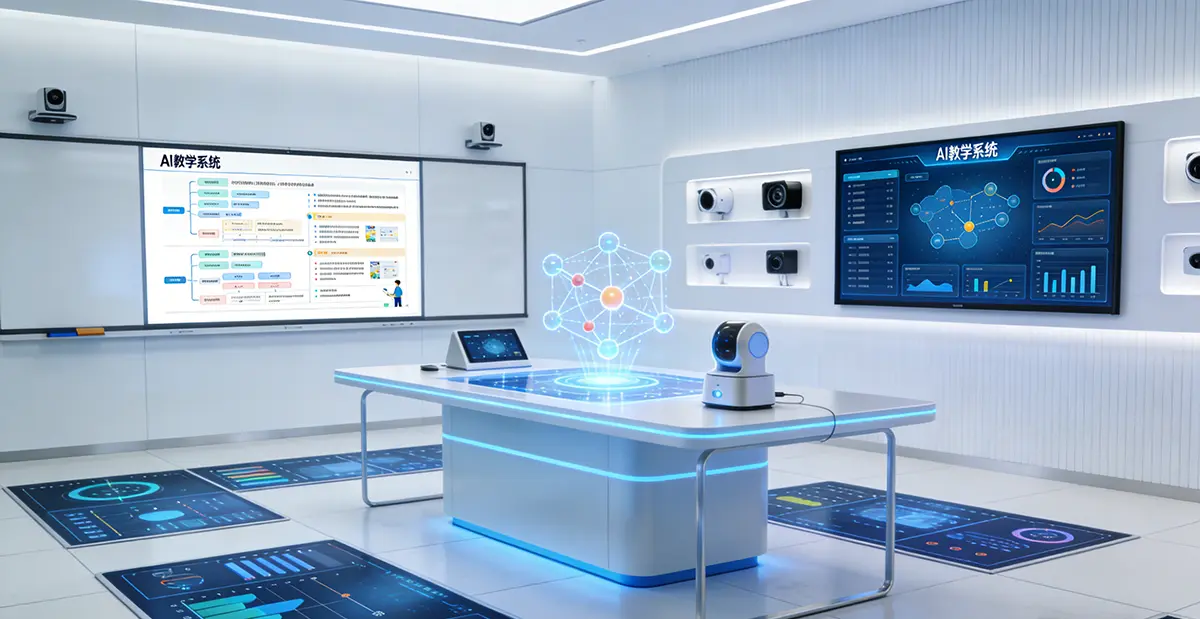
Deep integration of AI and personalized learning (adaptive systems, intelligent tutors).
Post-“Double Reduction” focus on educational substance, increasing demand for quality course and product design.
Convergence of virtual and physical learning spaces (Metaverse, VR/AR) creating new development roles.
Educational big data and learning analytics driving precise teaching and management decisions.
Technology for educational equity and inclusion (e.g., distance classrooms, teacher training).
Growing demand for roles focused on enhancing teacher digital literacy and support.
6. Leading Global Institutions for the Modern Educational Technology Major
(Some universities are displayed—rankings are not in order)
| Country/Region | Representative Institutions (Leading Programs) |
| United States | Stanford University (GSE), Carnegie Mellon University, Harvard University (GSE), Indiana University Bloomington |
| United Kingdom | University College London (IOE), Open University |
| Canada | University of British Columbia, University of Toronto (OISE) |
| Australia | Monash University, University of Melbourne |
| China | Beijing Normal University, South China Normal University, East China Normal University, Central China Normal University |
| Other | Nanyang Technological University, Singapore (NIE) |
DisciplineMajor Recommendations
Ideal Candidates for the Major
Possess a strong curiosity about how technology transforms learning.
Combine an educator's passion, a designer's creativity, and an engineer's logic.
Enjoy exploring new tools and can tolerate the uncertainty of rapid technological change.
Thrive in interdisciplinary teams, bridging educational needs with technical implementation.
Core Competencies of the Major
Systematic ability to translate instructional goals into technological solutions.
Capacity to rapidly learn and evaluate emerging EdTech tools (e.g., AI, VR).
Foundational technical implementation skills (prototyping, data analysis) coupled with product thinking.
Ability to evaluate technology effectiveness based on evidence (learning data).
Study Recommendations
Build a balanced, three-dimensional skill set: educational theory, technical practice, and design thinking.
Master at least one core technology (e.g., interaction design, data analysis, programming) and its educational applications.
Accumulate hands-on project experience through school digitalization projects, online micro-course development, or edtech internships.
Stay current by deeply testing and analyzing leading domestic and international EdTech products.
Develop storytelling skills to clearly articulate technical solutions to educators, parents, and administrators.
Define your career focus early (curriculum design, product management, technical development, or academia) and plan accordingly.
*Note: Program classification may vary by institution.*
- The Previous Passage:Special Education(Spec Educ)_特殊教育
- The Next Passage:Elementary Mathematics Education(Elem Math Educ)_小学数学教育
Human Geography Major_Geography(Geog.)_人文地理
The Human Geography Major explores the complex relationships between human activities and space, cul···

Atmospheric Sciences(Atmos. Sci.)_大气科学
Atmospheric science is the study of phenomena and evolutionary patterns within Earth's atmospher···

Earth Sciences(Earth Sci.)_地球科学
The Earth Science major focuses on studying the Earth system and its interactions, providing a scien···

Ocean Sciences(Ocean Sci.)_海洋科学
PbootCMS是全新内核且永久开源免费的PHP企业网站开发建设管理系统,是一套高效、简洁、 强悍的可免费商用的···

