

Interior Design(Int. Des.)_室内设计
Time:2026-07-05 Visits:0
Interior Design Major
The Interior Design Major is a comprehensive applied discipline focused on creating functional, aesthetic, and experiential interior environments. This guide details the curriculum blending design theory, technical skills, and project management, explores advanced specializations from sustainable design to exhibition design, and maps diverse careers in design firms, real estate, and cultural sectors. It analyzes key industry trends like digital integration and urban renewal. The Interior Design Major equips students with the creative vision, technical proficiency, and strategic thinking necessary to shape the spaces where people live, work, and connect.
Introduction to the Interior Design Major
The Interior Design Major is a comprehensive applied discipline focused on the functionality, aesthetics, environmental quality, and user experience of architectural interior spaces. It extends beyond decoration and arrangement to employ systematic design thinking, spatial planning, material application, lighting design, and furnishings to create physical environments that meet user needs, enhance quality of life and work, and foster emotional resonance and cultural expression. As an interdisciplinary field intersecting architecture, art, engineering, and human psychology, this major directly impacts how people live, work, engage in commerce, and participate in cultural activities.
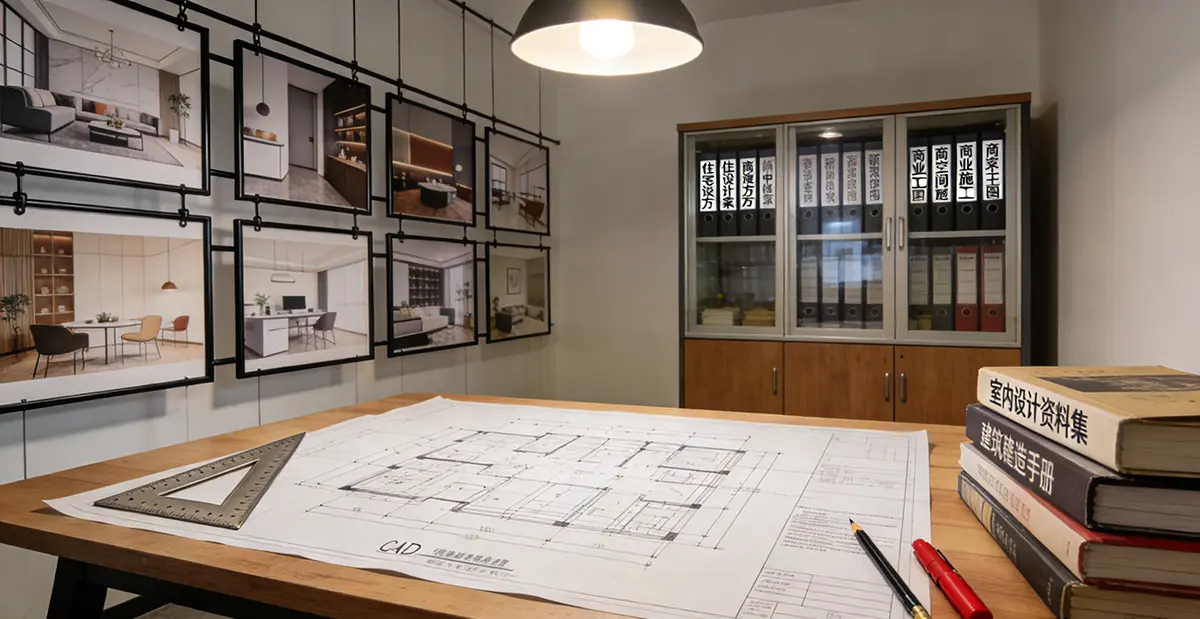
Core Curriculum for the Interior Design Major
| Module Category | Core Courses |
| Design Fundamentals and Theory | Design Sketching, Color Composition, Three-Dimensional Composition, Introduction to Design, Design History (including Architectural and Furniture History), Design Psychology, Ergonomics |
| Core Design Competencies | Principles of Interior Design, Spatial Composition and Design, Residential Space Design, Public Space Design (Commercial, Office, Exhibition, etc.), Materials and Construction, Interior Color Design, Lighting Design |
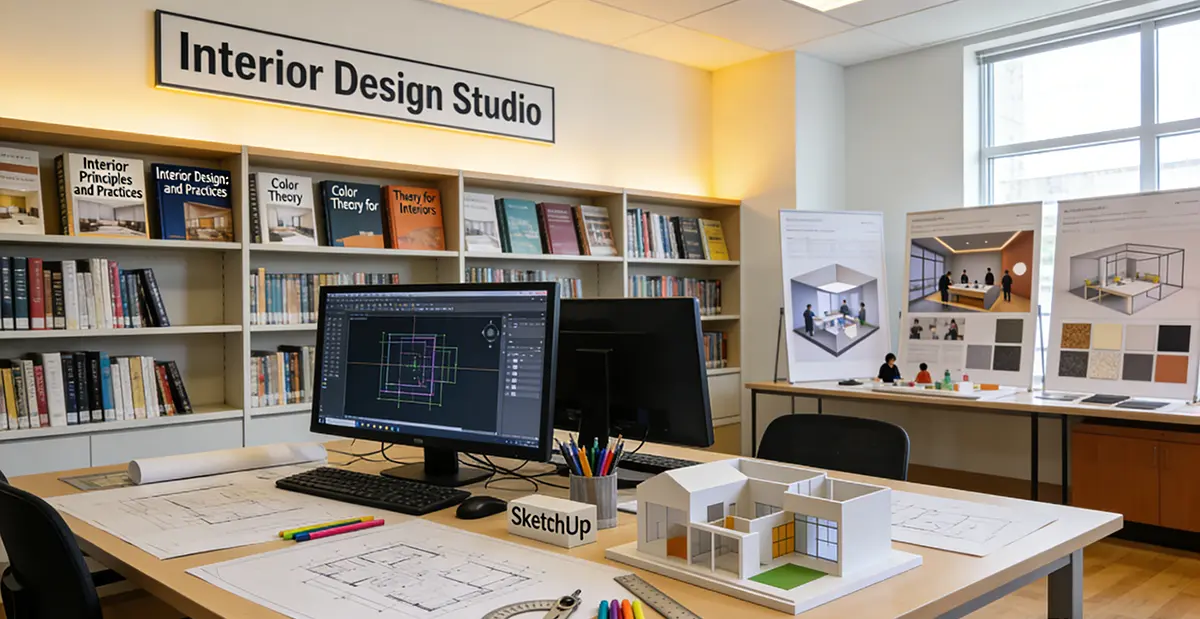
| Technical Drawing and Visualization | Technical Drawing and CAD, SketchUp/3ds Max Modeling, V-Ray/Enscape Rendering, Hand-Rendered Perspectives, Construction Documentation Development, BIM Fundamentals |
| Specialized and System Design | Furniture Design, Soft Furnishing Design and Curation, Interior Planting Design, Kitchen and Bathroom Design, Universal/Accessible Design, Fundamentals of Acoustics and Smart Design |
| Engineering and Project Management | Decorative Materials and Construction Techniques, Interior Physical Environment (Light, Thermal, Acoustic), Fundamentals of Building Systems (MEP), Project Estimating and Budgeting, Design Project Management, Relevant Codes and Contracts |
| Frontiers and Special Topics | Sustainable Interior Design, Renovation and Adaptive Reuse, Hotel Design, Exhibition and Display Design, Health and Wellness Design (WELL Standard) |
| Projects and Practice | Design Workshops, Thematic Design Projects, Interdisciplinary Collaborative Projects, Corporate Internships, Graduation Project (Comprehensive Design Proposal) |
Advanced Study Pathways for the Interior Design Major
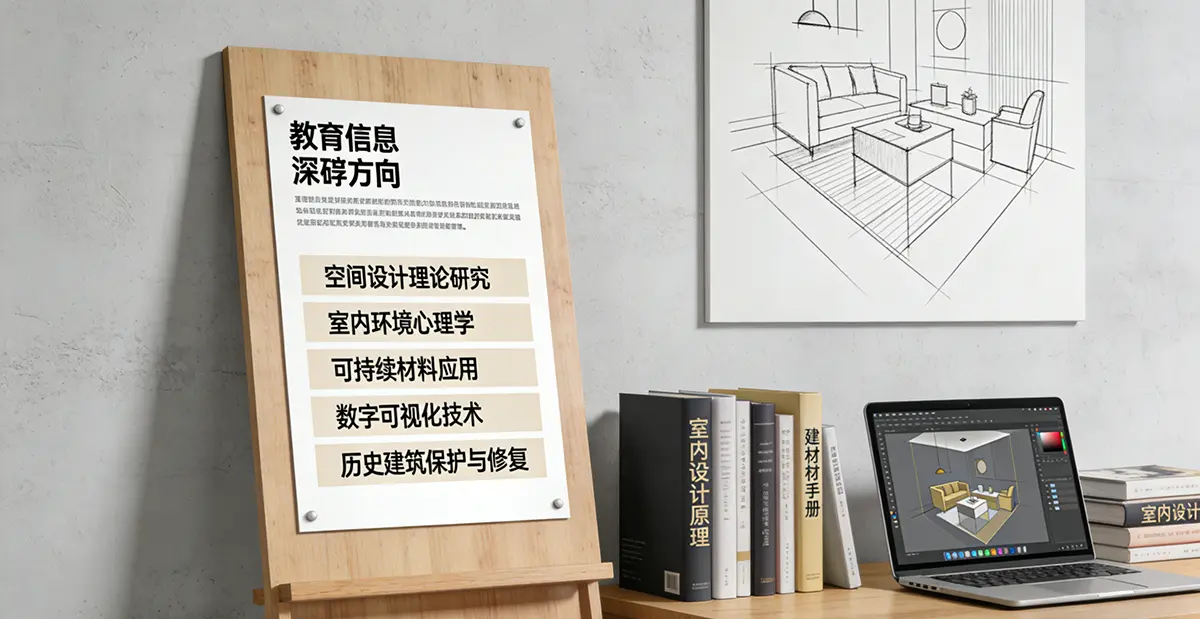
Master’s (Design Specialization): Interior Design/Interior Architecture: Advances expertise in complex spatial design, historic renovation, and specialized interior typologies. Architecture: Expands into broader architectural design and theory. Exhibition Design/Scenic Design: Specializes in design for museums, galleries, commercial exhibitions, or film and theater sets.
Master’s (Interdisciplinary & Management): Design Management: Focuses on managing design teams, project workflows, and business strategy. Sustainable Design/Environmental Design: Concentrates on green building, low-carbon materials, and healthy built environments. Cultural Heritage Conservation: Specializes in the preservation, restoration, and research of historic buildings and interiors.
Other Related Fields: More specialized disciplines such as Furniture Design or Lighting Design.
Career Paths for the Interior Design Major
Career opportunities are vast, covering the design, construction, and management of various spaces including residential, commercial, office, hospitality, and cultural venues.
Design Firms and Enterprises: Interior Designer, Assistant Designer, Lead Designer, Design Director (at design studios, architectural institutes, decoration & engineering firms); Soft Furnishing Designer, Lighting Designer, Furniture Designer (in specialized departments within firms).
Real Estate and Related Industries: Design Manager at property developers, Finishing & Fit-out R&D Engineer, Show Unit Designer; Showroom Designer, Product Consultant for home furnishing retailers and building material suppliers.
Entrepreneurship and Independent Practice: Independent Designer/Design Studio Founder, Design Consultant.
Culture and Media Sector: Exhibition Designer, Stage/Sets Designer (for museums, galleries, exhibition companies, film/TV); Home & Design Media Editor, Social Media Content Creator/Influencer.
Education and Research Institutions: University Faculty, Vocational Trainer, Researcher at design institutes.
Employment Rate and Industry Trends for the Interior Design Major
Employment Characteristics: “Stable Demand, Correlated with Economic Cycles”: Development in real estate, commerce, and cultural tourism directly drives demand, with market fluctuations impacting job availability and compensation. “Practical Skills and Project Experience are Paramount”: Portfolios, construction documentation skills, material knowledge, and hands-on project experience are highly valued. “Income Strongly Tied to Skill, Location, and Firm Type”: Designers in first-tier cities, foreign firms, or top design agencies earn higher salaries, though entry-level roles offer modest starting pay, with growth tied to project portfolio. “Clear Career Progression”: Typically starting as an assistant, professionals advance to project-leading designer, lead designer, design director, or entrepreneur.
Industry Trends: “Green, Healthy, and Sustainable Design”: Eco-friendly materials, smart energy systems, and WELL Building Standard are becoming standard in high-end projects, requiring relevant knowledge and credentials. “Deep Integration of Digitalization and Intelligence”: BIM collaboration, parametric design, VR/AR immersive presentations, and smart home integration are becoming essential tools and requirements. “The Era of Existing Stock and Urban Renewal”: With slower new construction, renovation, adaptive reuse, and micro-renewals dominate, demanding skills in historic preservation and functional transformation. “Emotional Design and Local Culture”: Focus shifts from form to creating emotional experiences and a sense of place, increasing demand for integrating local culture and personal narrative. “Specialization and Division of Labor”: Niche fields like lighting, acoustics, soft furnishings, and kitchen/bathroom design are professionalizing, creating more high-end consultancy roles. “Diversification of Design Service Models”: Beyond full-service design, models like design consulting, supervision, and online services are emerging.
Leading Global Institutions Offering the Interior Design Major
| Country/Region | Representative Institutions (Top or Renowned in Interior Design) |
| United States | Pratt Institute (top-tier), Rhode Island School of Design (RISD), New York School of Interior Design (NYSID), Savannah College of Art and Design (SCAD), Parsons School of Design |
| United Kingdom | Royal College of Art (RCA, Interior Design), Chelsea College of Arts (University of the Arts London), Architectural Association School of Architecture (AA, Spatial & Interior), Glasgow School of Art |
| Europe | Politecnico di Milano (Italy), Royal Danish Academy of Fine Arts, Design Academy Eindhoven (Netherlands, conceptual focus) |
| Australia | Royal Melbourne Institute of Technology (RMIT), University of Technology Sydney (UTS) |
| China | Tsinghua University (Academy of Arts & Design, Dept. of Environmental Art Design), Central Academy of Fine Arts (School of Architecture), China Academy of Art (School of Architecture & Art), Tongji University (College of Design and Innovation), Guangzhou Academy of Fine Arts (School of Architecture & Art Design) |
| Other Asia | The Hong Kong Polytechnic University (School of Design), National University of Singapore (School of Design and Environment) |
DisciplineMajor Recommendations
Ideal Candidates for the Interior Design Major:
Individuals with a keen sensitivity to space, scale, light, and materials, adept at observing human behavior and experience within environments. Those who combine artistic sensibility, rational logic, and pragmatism to balance creativity with functionality, aesthetics with budget, and concept with execution. Possess excellent communication, coordination, and stress-management skills to handle diverse demands and unexpected issues from clients, contractors, and suppliers. Maintain ongoing interest and critical thinking about social culture, lifestyles, and technological developments.
Core Competencies of the Interior Design Major:
Systematic spatial analysis and problem-solving ability to optimize function, enhance experience, and create value through design. End-to-end project control from concept to construction, with fluency in both design expression and engineering technical language. Profound understanding and integrated application of materials, craftsmanship, cost, and market trends. Cross-disciplinary collaboration and project management capabilities.
Study Recommendations for the Interior Design Major:
“Observe, Analyze, and Experience Extensively”: Conduct frequent site visits to exemplary spaces (hotels, museums, commercial complexes) to analyze their design logic and detailing. “Master a Core Software Suite”: Become proficient in a standard toolkit such as AutoCAD + SketchUp + V-Ray + Photoshop. “Immerse in Construction Sites to Understand Systems”: Seek internships on-site to learn how materials interface and how drawings become built reality. “Build a Personal Material and Case Study Library”: Systematically collect material samples, furniture/lighting catalogs, and images of excellent projects, organizing them categorically. “Cultivate Systematic Thinking and Code Awareness”: Study building and fire codes to understand that innovative design operates successfully within constraints, not in a vacuum. “Stay Current on Sustainability and Technology Frontiers”: Proactively learn about green building certifications, smart home protocols, and BIM technology to enhance future competitiveness.
Note: Program classifications may vary by institution. Please refer to the specific classification used by the target university.
- The Previous Passage:Visual Communication Design(Vis. Comm. Des. 或 VCD)_视觉传达设计
- The Next Passage:没有了!
Human Geography Major_Geography(Geog.)_人文地理
The Human Geography Major explores the complex relationships between human activities and space, cul···

Atmospheric Sciences(Atmos. Sci.)_大气科学
Atmospheric science is the study of phenomena and evolutionary patterns within Earth's atmospher···

Earth Sciences(Earth Sci.)_地球科学
The Earth Science major focuses on studying the Earth system and its interactions, providing a scien···

Ship and Ocean Engineering(Ship Ocean Eng.)_船舶与海洋工程
Naval Architecture and Ocean EngineeringNaval Architecture and Ocean Engineering is a core engineeri···

