

Finance(Fin)_金融学
Time:2026-03-08 Visits:9
Finance Major
The Finance Major explores capital allocation and financial markets, balancing risk, time, and return. This guide details its comprehensive curriculum in investment, corporate finance, and financial analysis, outlines diverse career paths in investment banking, asset management, and FinTech, and lists top-tier global universities renowned for their finance programs.

1. Introduction to the Finance Major
The Finance Major is a discipline that studies capital allocation and resource distribution, with a core focus on balancing time, risk, and return. It primarily examines how individuals, businesses, and governments allocate financial resources across time under uncertainty, and how financial markets and institutions function. The Finance Major aims to cultivate professionals proficient in modern financial theory, equipped with independent analytical capabilities and practical operational skills. Compared to Financial Engineering or Financial Mathematics, it emphasizes macro-financial theory, market mechanisms, and institutional management; compared to Financial Management, it prioritizes an external market and investment perspective.
2. Core Curriculum of the Finance Major
| Module Category | Core Courses |
| Economics & Mathematics Foundation | Micro/Macroeconomics, Principles of Accounting, Statistics, Calculus/Linear Algebra/Probability |
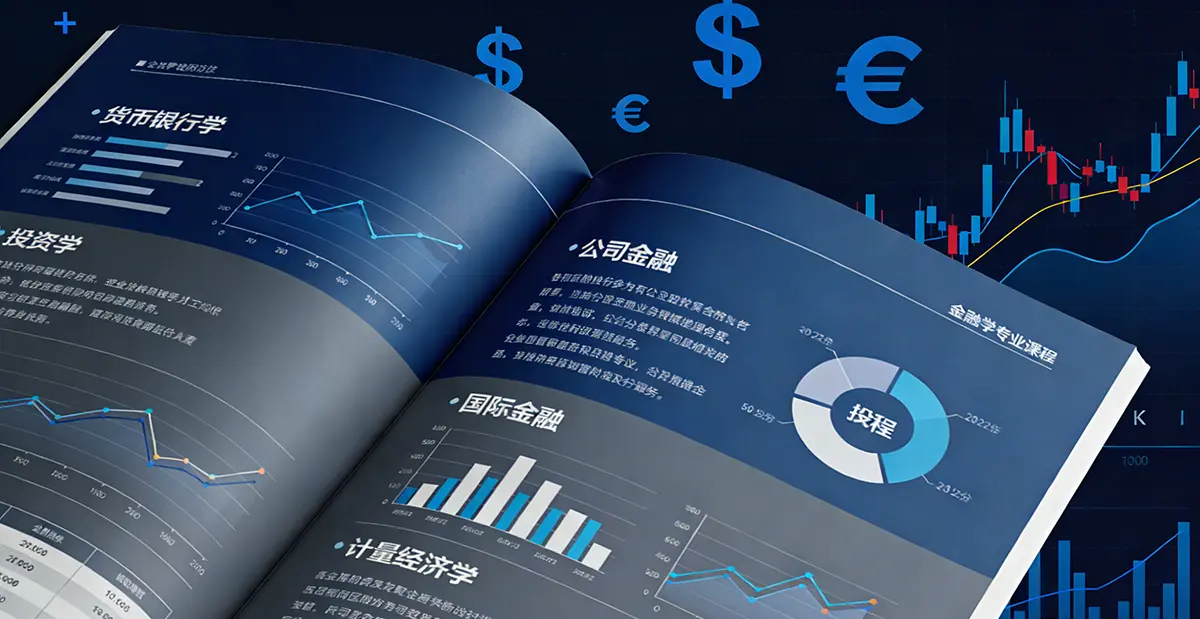
| Core Financial Theory | Monetary Economics/Financial Markets & Institutions, Investments, Corporate Finance, International Finance |
| Financial Instruments & Markets | Fixed Income Securities, Derivative Instruments, Financial Risk Management |
| Analytical Methods & Skills | Financial Analysis & Valuation, Econometrics, Financial Modeling (Excel/Python), Intro to FinTech |
3. Advanced Study Pathways for the Finance Major
Academic Advancement:
* Master of Science in Finance (MSF/MFin): The most directly relevant path, deepening specialized knowledge and practical skills.
* Master in Financial Engineering/Mathematical Finance: Shifts focus to quantitative finance, suitable for students with strong math and programming skills.
* Master’s/PhD in Economics: Leads toward academic research or policy analysis.
* Master of Business Administration (MBA): Enhances comprehensive management capabilities for senior leadership roles.
Professional Certifications:
* Gold Standard: Chartered Financial Analyst (CFA).
* Other Key Credentials: Financial Risk Manager (FRM), Certified Public Accountant (CPA), various practitioner qualifications.
4. Career Paths for Finance Graduates
Graduates of the Finance Major enjoy exceptionally broad employment opportunities, as finance is a core discipline within economics. Primary career sectors include:
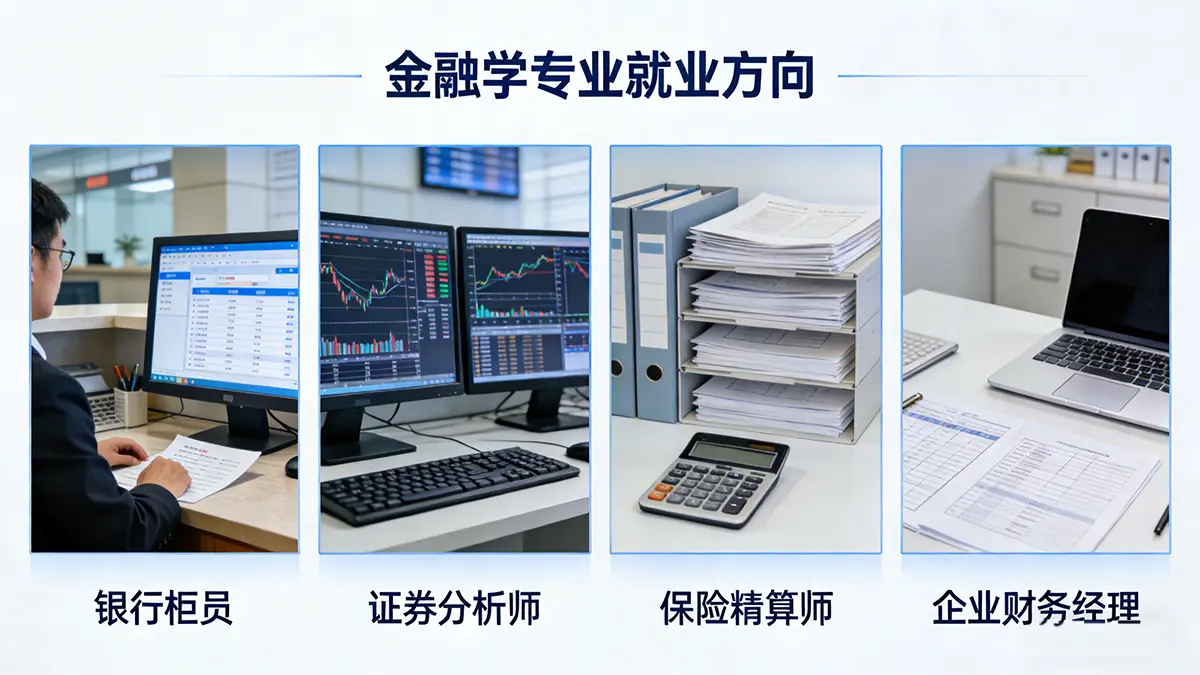
* Investment Banking/Securities Firms: Investment Banking Division (IBD), Equity Research, Sales & Trading.
* Commercial Banks: Management Trainee Programs (Head Office/Branch), Financial Markets Department, Asset Management.
* Fund/Asset Management Companies: Researcher, Fund Manager Assistant, Product Manager.
* Private Equity/Venture Capital (PE/VC): Investment Analyst.
* Corporations (Non-Financial): Securities Affairs Department, Investment Department of listed companies.
* Intermediaries & Service Providers: Financial Services groups in Accounting Firms, Financial Information Services (e.g., Bloomberg).
* Regulatory & Public Sector: Financial Regulatory Agencies, Policy Banks, Stock Exchanges.
5. Employment and Industry Trends for the Finance Major
Employment & Compensation: The Finance Major is a high-demand, highly competitive field. Graduates from top-tier institutions enjoy very high employment rates and starting salaries. Industry compensation varies significantly, with core front-office roles commanding premiums over middle and back-office positions.
Industry Trends:
* Pervasive FinTech Integration: Big data, AI, and blockchain are reshaping finance, driving surging demand for hybrid “Finance + Tech” talent.
* Wealth Management Expansion: Booming demand for asset allocation, financial planning, and retirement solutions.
* ESG Investment Mainstreaming: Environmental, social, and governance factors are critical investment criteria, creating new roles in ESG research and product design.
* Bilateral Capital Market Opening: RMB internationalization and cross-border capital flows present opportunities in international finance.
* Normalized Regulation & Enhanced Compliance: Increased demands on financial institutions' compliance, internal controls, and risk management capabilities.
6. Leading Global Institutions (Top Finance Programs)
| Country/Region | Representative Institutions (Notable Finance Programs/Schools) |
| United States | University of Pennsylvania (Wharton), New York University (Stern), MIT (Sloan), University of Chicago (Booth) |
| United Kingdom | London School of Economics, University of Oxford (Saïd), University of Cambridge (Judge), London Business School |
| Europe | University of St. Gallen, HEC Paris, IESE Business School |
| Asia | National University of Singapore / Nanyang Tech, University of Hong Kong / HKUST, Tsinghua PBCSF, Peking University (Guanghua) |
| Australia | University of Melbourne, University of New South Wales |
DisciplineMajor Recommendations
Ideal Candidates for the Finance Major: Individuals with a strong interest in economics and markets, possessing robust logical analysis, interpersonal communication, and stress-management skills, along with numerical aptitude.
Core Competencies for Success:
* Hard Skills: Solid financial theory, financial analysis capabilities, data processing and modeling skills.
* Soft Skills: Exceptional information synthesis, clear communication, and sharp business acumen.
* Key Advantages: High-value internship experience, professional certifications (e.g., CFA), and a strong academic pedigree.
Study Recommendations:
1. Master core theory while staying attuned to real-world market dynamics.
2. Gain early internship experience to explore career paths and build professional capital.
3. Achieve proficiency in key tools like Excel, Python, and platforms such as Wind/Bloomberg.
4. Actively network and participate in industry events to broaden perspectives.
Note: Program categorization varies by institution. Please refer to the specific discipline classification used.
- The Previous Passage:Financial Mathematics(FinMath)_金融数学
- The Next Passage:Actuarial Science(Act Sci)_精算

Human Geography Major_Geography(Geog.)_人文地理
The Human Geography Major explores the complex relationships between human activities and space, cul···

Atmospheric Sciences(Atmos. Sci.)_大气科学
Atmospheric science is the study of phenomena and evolutionary patterns within Earth's atmospher···

Earth Sciences(Earth Sci.)_地球科学
The Earth Science major focuses on studying the Earth system and its interactions, providing a scien···

Ocean Sciences(Ocean Sci.)_海洋科学
PbootCMS是全新内核且永久开源免费的PHP企业网站开发建设管理系统,是一套高效、简洁、 强悍的可免费商用的···

