

Visual Communication Design(Vis. Comm. Des. 或 VCD)_视觉传达设计
Time:2026-07-03 Visits:0
Visual Communication Design Major
The Visual Communication Design Major is an interdisciplinary discipline focused on strategic information delivery and experience shaping through visual symbols across diverse media. This guide details the curriculum that bridges traditional graphic design with digital interactivity, explores advanced specializations from UX to data visualization, and maps out wide-ranging careers in tech, media, and consulting. It analyzes key industry trends like AI integration and immersive design, providing insights for aspiring designers. The Visual Communication Design Major equips students with the systematic thinking, technical versatility, and creative vision necessary to become problem-solvers in a visually-driven world.
Introduction to the Visual Communication Design Major
The Visual Communication Design Major is a comprehensive design discipline that conveys information, constructs meaning, and shapes experiences through visual symbols and media systems. It transcends traditional graphic design boundaries, emphasizing the strategic application of elements like graphics, imagery, typography, color, and motion across diverse media—from static print to dynamic screens, and from physical spaces to virtual environments—to address challenges in information delivery, brand communication, user guidance, and cultural expression. This major cultivates design strategists and practitioners equipped with systematic thinking, cross-media integration skills, and cutting-edge technological vision, serving as a bridge connecting information, people, and their environments.
Core Curriculum for the Visual Communication Design Major
| Module Category | Core Courses |
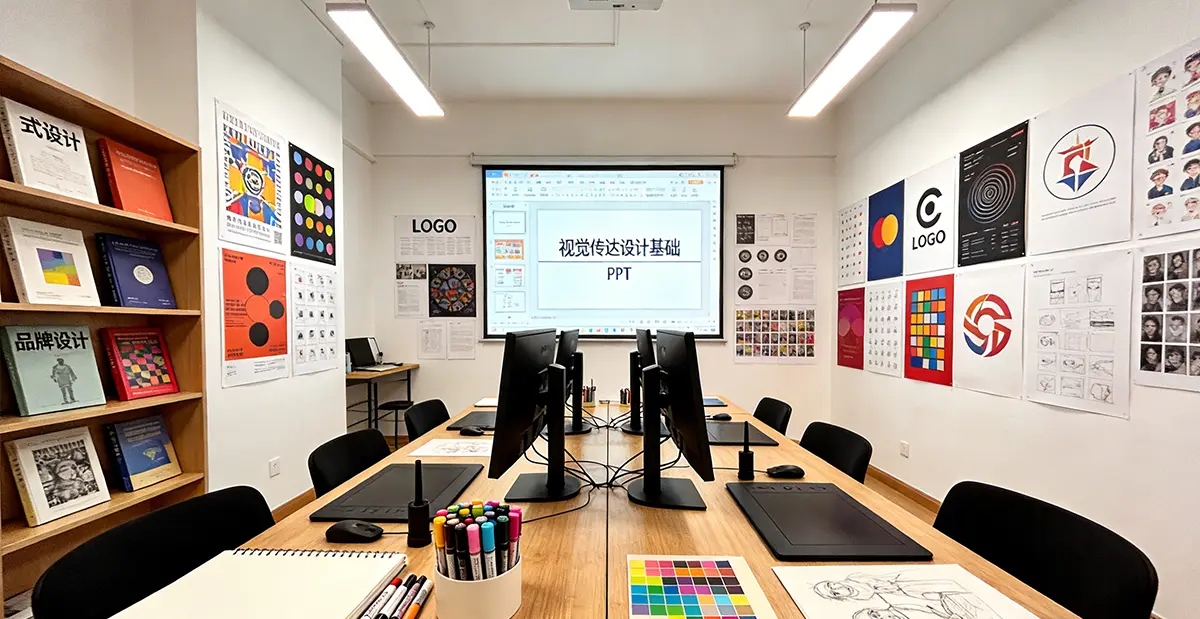
| Core Foundations and Principles | Visual Language, Form and Composition, Color Design, Typography and Layout Design, Printing Technology, Design Thinking, Fundamentals of Information Design |
| Brand and System Design | Brand Identity Design, Visual Identity System (VIS) Design, Wayfinding System Design, Packaging System Design, Motion Branding |
| Digital and Interactive Media | User Interface (UI) Design, Fundamentals of User Experience (UX), Motion Graphics Design, Fundamentals of Web Design, Data Visualization, Fundamentals of New Media Art |
| Narrative and Integrated Expression | Illustration Design, Book Design, Infographic Design, Visual Storytelling, Visual Experimentation and Creative Practice |
| Theory, Methodology, and Research | History of Visual Communication Design, Modern Design Trends, Design Criticism, Visual Culture Studies, Design Research Methods, Design Project Management |
| Technical Tools and Implementation | Adobe Creative Suite, Figma/Sketch, Adobe After Effects, Fundamentals of Cinema 4D/Blender, Fundamentals of TouchDesigner/Processing |
| Frontiers and Special Topics | Service Design Thinking, Visual Strategy for Social Media, Immersive Experience Design, Generative Art, Artificial Intelligence and Design |
Advanced Study Pathways for the Visual Communication Design Major
Master’s (Specialization): Visual Communication/Graphic Design: Advanced academic or creative study in areas such as brand systems, information design, experimental communication, and typography. User Experience (UX) Design/Interaction Design: Focuses on the interaction logic and user experience research for digital products and service systems. Motion Graphics Design/Visual Effects: Specializes in dynamic visual design and production for the film, television, and media industries.
Master’s (Strategy and Management): Design Strategy and Management: Learns to position design as a core business strategy and manages innovation processes and teams. Brand Management: Focuses on the systematic study of brand strategy, communication, and asset management.
Master’s (Interdisciplinary Research): Design Research: Shifts towards academic research in design history and theory, criticism, and social innovation design. Data Visualization: Combines computer science and statistics to specialize in the visual representation and interactive exploration of complex data. Art and Technology: Explores visual expression and interaction within technological media such as VR/AR, AI, and bio-art.
Career Paths for the Visual Communication Design Major
Career paths are exceptionally broad, covering traditional design fields, the digital industry, and emerging interdisciplinary areas.
Brand and Design Consulting: Brand Designer, Visual Designer, Design Strategist, Art Director (at brand design agencies, advertising firms, and consultancies).
Internet and Technology Sector: UI/UX Designer, Visual Designer, Marketing Operations Designer, Creative Visual Designer (at product, gaming, social media, and e-commerce companies); Data Visualization Engineer/Designer (at technology, finance, and media firms).
Media and Content Industry: Motion Graphics Designer, Visual Effects (VFX) Designer, New Media Artist/Designer, Art Editor (at film/TV studios, animation houses, publishing companies, and Multi-Channel Network agencies).
Cultural Institutions and the Public Sector: Exhibition Designer, Educational Program Designer, Public Visual Designer (at museums, art galleries, intangible cultural heritage centers, and for government projects).
Education, Research, and Freelancing: University Lecturer/Professor, Design Researcher, Independent Designer/Studio Founder & Principal.
Employment Rate and Industry Trends for the Visual Communication Design Major
Employment Characteristics: “High Demand but Rapidly Evolving Skill Requirements”:
The growth of the digital economy has generated massive demand for visual communication, but the required skill set has shifted entirely from “software operator” to “problem-solver and experience-builder.” “Portfolio and Holistic Competence are the Ultimate Gatekeepers”: Portfolios must demonstrate strategic thinking, technical execution, and aesthetic sophistication; soft skills like communication, collaboration, and project management are equally critical. “High Income Disparity”: Top-tier designers, especially those with combined strategic, technical, or managerial skills, can command salaries rivaling the tech industry, while entry-level positions face intense salary competition.
Industry Trends: “Media Convergence and End-to-End Design Capability”:
Design outputs now span branding, UI, motion graphics, video, and spatial design, demanding designers possess cross-media integration and storytelling skills. “The Experience Economy and Systems Thinking”: The design focus shifts from isolated visual outputs to crafting complete user journeys and brand experiences, making service design and systems thinking central. “Data-Driven and Intelligent Design”: Design decisions increasingly rely on user data and A/B testing; AI has become a core productivity tool for inspiration, efficiency, and personalized content creation. “Social Value and Sustainable Design”: Demand for design addressing social issues like aging, accessibility, environmental protection, and community building is growing significantly, highlighting designers’ social responsibility. “Physical-Virtual Integration and Immersive Experiences”: Scenarios like the metaverse, AR/VR, and digital twins are creating new demands for 3D visuals, interactive storytelling, and immersive experience design.
Leading Global Institutions Offering the Visual Communication Design Major
| Country/Region | Representative Institutions (Top-Ranked Schools in Visual Communication Design) |
| United States | Rhode Island School of Design (RISD), Yale School of Art, ArtCenter College of Design, School of Visual Arts (SVA), California Institute of the Arts (CalArts) |
| United Kingdom | Royal College of Art (RCA), University of the Arts London (UAL) – London College of Communication (LCC) & Central Saint Martins (CSM), Kingston University, Edinburgh College of Art (ECA) |
| Europe | Berlin University of the Arts (UdK Berlin, Germany), Design Academy Eindhoven (DAE, Netherlands), Zurich University of the Arts (ZHdK, Switzerland), Politecnico di Milano (POLIMI, Italy) |
| Japan | Tama Art University, Musashino Art University, Tokyo University of the Arts |
| China | Central Academy of Fine Arts (CAFA, School of Design), China Academy of Art (CAA, School of Design and Art), Tsinghua University (Academy of Arts & Design, Department of Visual Communication Design), Tongji University (College of Design and Innovation), Guangzhou Academy of Fine Arts (GAFA, School of Visual Art and Design) |
| Other | The Hong Kong Polytechnic University (PolyU, School of Design), Nanyang Technological University, Singapore (NTU, School of Art, Design and Media), Hongik University (South Korea) |
DisciplineMajor Recommendations
Ideal Candidates for the Visual Communication Design Major
Individuals with a systematic curiosity about the world, adept at discovering connections between things and enjoy visualizing them. Those who possess strong logical thinking, narrative skills, and aesthetic judgment. Candidates with a deep interest in technology, culture, business, and social issues, and a willingness to explore their intersections. Excellent communicators and collaborators who can clearly convey complex ideas and drive them to realization.
Core Competencies of the Visual Communication Design Major
Systematic thinking ability to define visual problems and construct communication strategies. Integrated design capability, mastering multiple visual languages (static, dynamic, interactive) and seamlessly transitioning across different media. Technical exploratory skill to leverage cutting-edge tools (e.g., AI, programming, 3D) for innovative expression. End-to-end project management ability to lead design projects from research to implementation.
Study Recommendations for the Visual Communication Design Major
“Cultivate a Macro Vision and Micro Craftsmanship”: Understand design's role within broader cultural and technological contexts while deeply honing fundamental skills like typography, color, and composition. “Adopt Research-Driven Design”: Integrate methodologies from anthropology, sociology, and market research into the design process to ground solutions in solid insights. “Embrace Code and New Technologies”: Learning foundational programming, 3D software, or creative coding will significantly expand your expressive boundaries and career potential. “Build an Interdisciplinary Knowledge Network”: Proactively collaborate with programmers, engineers, and business analysts to learn their languages and thought processes through practice. “Develop a ‘Critical Portfolio’”: Your portfolio should showcase your thought process, depth of research, and problem-solving capability, not just final polished visuals. “Maintain Critical Thinking and Engage in Dialogue”: Pay attention to design ethics, actively participate in industry discourse, and form your own design perspective and stance.
Note: Program classifications may vary by institution. Please refer to the specific classification used by your target institution.
- The Previous Passage:Fashion Management(Fashion Mgmt.)_时尚管理
- The Next Passage:没有了!
Human Geography Major_Geography(Geog.)_人文地理
The Human Geography Major explores the complex relationships between human activities and space, cul···

Atmospheric Sciences(Atmos. Sci.)_大气科学
Atmospheric science is the study of phenomena and evolutionary patterns within Earth's atmospher···

Earth Sciences(Earth Sci.)_地球科学
The Earth Science major focuses on studying the Earth system and its interactions, providing a scien···
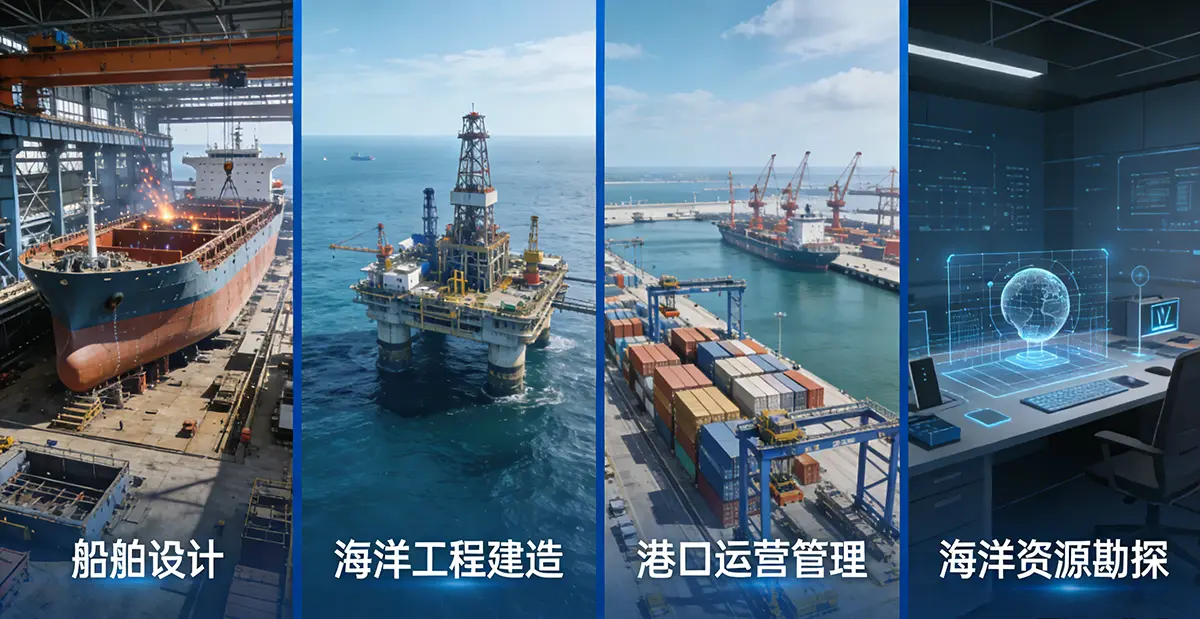
Ship and Ocean Engineering(Ship Ocean Eng.)_船舶与海洋工程
Naval Architecture and Ocean EngineeringNaval Architecture and Ocean Engineering is a core engineeri···

