

Special Education(Spec Educ)_特殊教育
Time:2026-07-04 Visits:0
Special Education Major
The Special Education Major prepares professionals to support individuals with diverse learning needs. This guide details the core curriculum focusing on assessment, intervention, and inclusive practices. Explore advanced pathways like applied behavior analysis, diverse career options in schools and community settings, and leading global institutions. Learn how this Major equips graduates to design individualized strategies and advocate for lifelong learning and inclusion.
1. Introduction to the Special Education Major
The Special Education Major is an applied discipline dedicated to providing professional educational services to children and adults with diverse learning needs. It serves individuals with intellectual disabilities, learning disabilities, autism spectrum disorders, emotional and behavioral disorders, sensory impairments, physical disabilities, and giftedness. The Special Education Major aims to cultivate professional educators and support personnel equipped with theoretical knowledge, individualized instructional strategies, assessment skills, and inclusive education principles. Its ultimate goal is to unlock potential and enhance the quality of life for individuals with special needs.
2. Core Curriculum for the Special Education Major
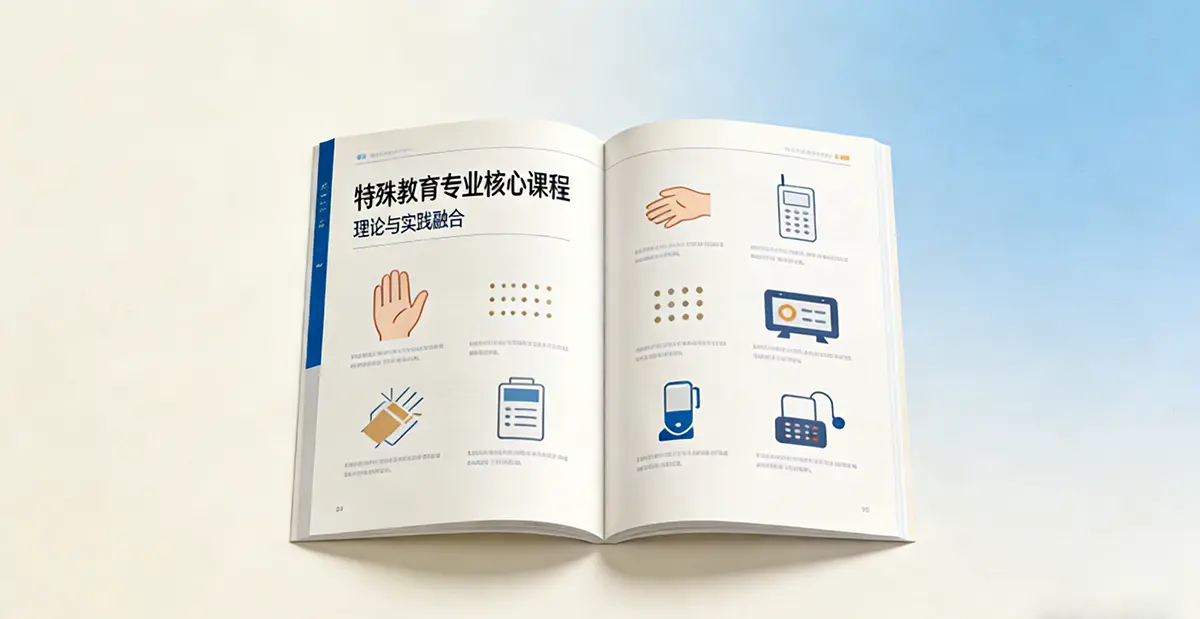
| Module Category | Core Courses |
| Educational Foundations | Introduction to Special Education, Developmental Psychology, Educational Psychology, Learning Sciences |
| Disability & Assessment | Psychology & Education of Children with Disabilities, Diagnosis & Assessment of Special Needs, Functional Behavioral Assessment |
| Instruction & Intervention | IEP Development & Implementation, Differentiated Instruction, Positive Behavior Support, Early Intervention, Assistive Technology |
| Inclusion & Support | Theory & Practice of Inclusive Education, Family Support & Collaboration, Transition Education, Special Education Law & Policy |
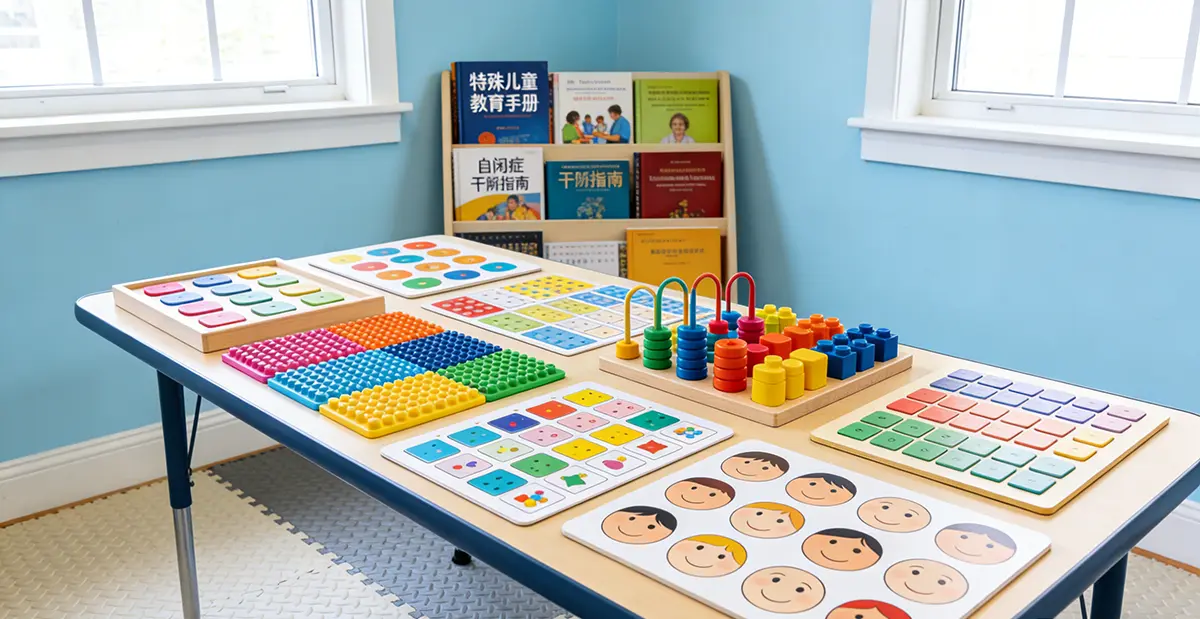
| Professional Skills Practice | Sign Language, Braille, Orientation & Mobility, Communication Training, Sensory Integration, Teaching Practicum |
| Interdisciplinary Knowledge | Rehabilitation Medicine, Speech-Language Therapy Basics, Occupational Therapy Basics, Social Work Principles |
3. Advanced Study Pathways for the Special Education Major
Master’s/PhD in Special Education: Deepen expertise for roles as university faculty, researchers, or senior supervisors.
Master’s in Applied Behavior Analysis: Specialize in behavioral interventions (e.g., for autism) to pursue BCBA certification.
Master’s in Speech-Language Pathology: Transition to become a certified speech-language pathologist.
Master’s in Rehabilitation Counseling/Occupational Therapy: Enter the broader rehabilitation services field.
Master’s in Educational/School Psychology: Focus on psychological assessment and counseling for children with special needs.
Master’s in Educational Administration/Policy: Pursue leadership roles in special education administration or policy.
Master’s in Inclusive Education/Universal Design for Learning: Specialize in designing accessible learning environments.
4. Career Pathways for the Special Education Major
Career paths center on school systems and extend into broader community support services.
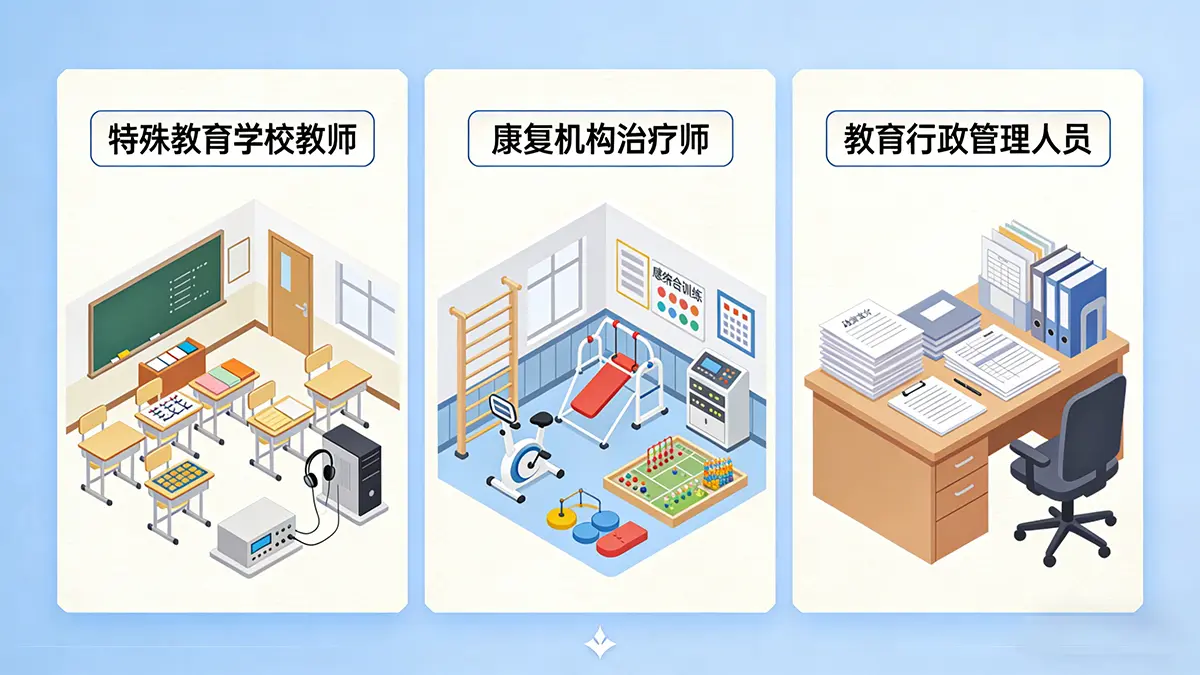
School Systems: Special Education Teacher (specialized schools), Resource Room Teacher/Inclusion Coordinator (mainstream schools), Early Intervention Teacher (preschools).
Rehabilitation & Support Agencies: Instructor/Therapist (rehabilitation centers, hospitals), Case Manager (community centers).
Related Professional Services: Behavior Interventionist, Assistive Technology Specialist/Trainer.
Government & Non-Profits: Educational Supervisor/Researcher, Program Officer/Advocate (e.g., in disability organizations).
Freelance & Consulting: Independent Educational Consultant.
5. Employment & Industry Trends for the Special Education Major
Employment Characteristics
Stable, policy-driven demand leads to relatively high employment rates, especially in public systems.
Professional certification (teaching license, often with special education endorsement) is a fundamental requirement.
The work is emotionally demanding yet highly rewarding, offering strong personal fulfillment.
Compensation varies significantly by region, institution type (public vs. private), and specific role.
Industry Trends
Inclusive education is becoming the mainstream, driving demand for resource teachers and inclusion coordinators in general education settings.
There is a growing emphasis on evidence-based practices and scientific interventions like Applied Behavior Analysis.
Services are expanding to cover the entire lifespan, from early intervention (ages 0-3) to adult transition support.
Technology integration skills are crucial due to the proliferation of assistive and educational technologies.
Interdisciplinary collaboration with therapists, psychologists, and social workers is now the standard service model.
A family-centered, community-based approach is increasingly prioritized over isolated institutional care.
6. Leading Global Institutions for the Special Education Major
| Country/Region | Representative Institutions (Leading Programs) |
| United States | Vanderbilt University (Peabody College), University of Kansas, University of Oregon, University of Wisconsin–Madison |
| United Kingdom | University of Birmingham, University of Exeter, Oxford Brookes University |
| Canada | University of British Columbia, University of Toronto |
| Australia | University of Melbourne, University of Sydney |
| China | Beijing Normal University, East China Normal University, Central China Normal University, Chongqing Normal University |
| Other | The Education University of Hong Kong, National Taiwan Normal University |
DisciplineMajor Recommendations
Ideal Candidates for the Major
Demonstrate profound respect for human diversity and potential, coupled with immense patience.
Possess exceptional empathy, emotional resilience, creativity, and problem-solving skills.
Excel in teamwork and collaborate effectively with professionals from various fields and families.
Driven by a strong commitment to equity and inclusion, finding deep satisfaction in incremental progress.
Core Competencies of the Major
Ability to design and implement effective Individualized Education Programs.
Skills in data-driven behavioral observation, documentation, and intervention.
Capacity to build trust and communicate effectively with children with special needs and their families.
Proficiency in integrating assistive technology and community resources into practice.
Study Recommendations
Gain hands-on experience early through internships/volunteering in diverse settings to confirm career fit.
Prioritize obtaining the required teaching certification with a special education endorsement.
Master foundational principles of behavior analysis and data collection methods.
Learn an augmentative and alternative communication method (e.g., sign language, PECS).
Develop robust self-care and stress management strategies for long-term career sustainability.
Stay informed about relevant policies (e.g., IDEA) and current evidence-based research in the field.
*Note: Program classification may vary by institution.*
- The Previous Passage:Mathematics and Statistics(Math & Stats)_数学与统计
- The Next Passage:没有了!

Human Geography Major_Geography(Geog.)_人文地理
The Human Geography Major explores the complex relationships between human activities and space, cul···

Atmospheric Sciences(Atmos. Sci.)_大气科学
Atmospheric science is the study of phenomena and evolutionary patterns within Earth's atmospher···

Earth Sciences(Earth Sci.)_地球科学
The Earth Science major focuses on studying the Earth system and its interactions, providing a scien···
Ship and Ocean Engineering(Ship Ocean Eng.)_船舶与海洋工程
Naval Architecture and Ocean EngineeringNaval Architecture and Ocean Engineering is a core engineeri···

