

Mental Health Education(Mental Health Educ)_心理健康教育
Time:2026-07-15 Visits:0
Mental Health Education Major
The Mental Health Education Major integrates psychology and pedagogy to promote well-being in educational and community settings. This guide details its curriculum in assessment, intervention, and program design, explores graduate pathways, and outlines growing career opportunities as mental health educators in schools, communities, and organizations. Learn how this Major addresses the critical need for preventative mental health support and systemic wellness promotion.
1. Introduction to the Mental Health Education Major
The Mental Health Education Major is an applied interdisciplinary discipline integrating psychology, pedagogy, medicine, and social work. It aims to enhance the psychological resilience of individuals and groups through education, prevention, development, and intervention, thereby preventing psychological issues and fostering mental wellness. At its core, this Major focuses on systematically disseminating mental health knowledge, cultivating positive psychological traits, and providing primary psychological support within schools, communities, workplaces, and other settings. Serving as a crucial bridge between clinical psychological services and public mental health, the Mental Health Education Major supports national initiatives such as the “Healthy China” strategy.
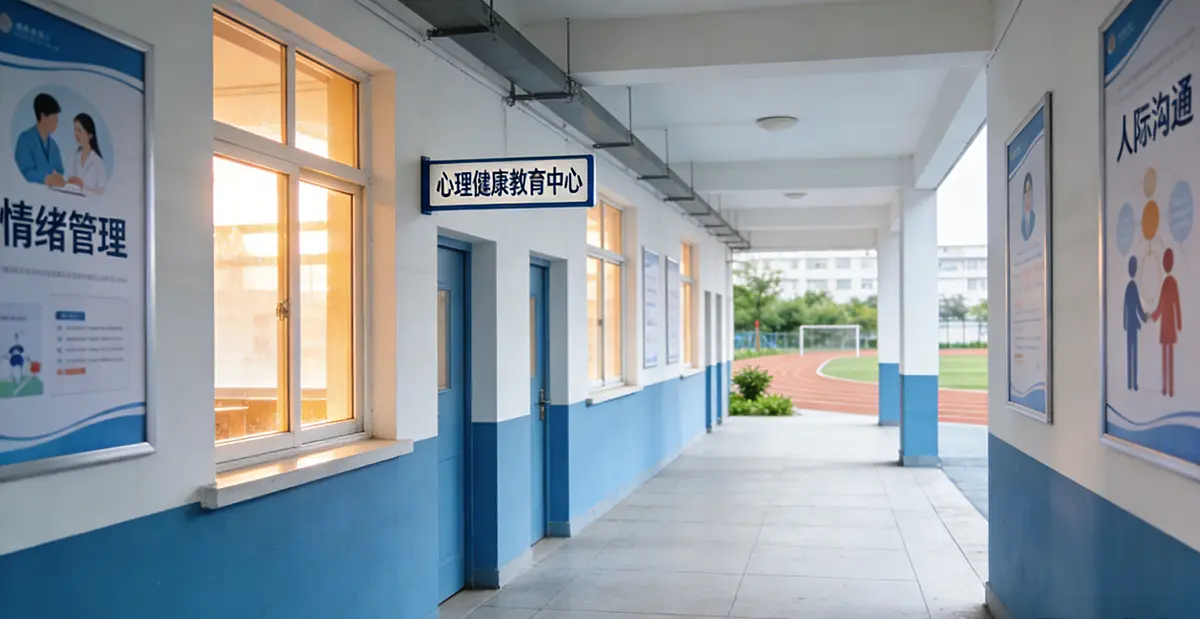
2. Core Curriculum for the Mental Health Education Major
| Module Category | Core Courses |
| Foundational Psychology | General Psychology, Developmental Psychology, Personality Psychology, Social Psychology, Abnormal Psychology |
| Educational Theory & Pedagogy | Principles of Education, MH Education Curriculum & Instruction, Group Counseling, Psychological Activity Design |
| Assessment & Intervention Skills | Psychological Measurement & Assessment, Counseling Theory & Techniques, Crisis Prevention & Intervention, CBT Fundamentals, Sandplay/Art Therapy |
| Professional Application Areas | School Mental Health Education, Community Mental Health Services, Occupational Health (EAP), Family Psychology, Positive Psychology |
| Research Methods & Ethics | Psychological Research Methods, MH Education Research, Professional Ethics & Law, Mental Health Policy |
| Practical Skills | MH Education Internship, Psychodrama/Group Facilitation, Assessment Tool Usage, Science Communication & Public Speaking |
3. Advanced Study Pathways for the Mental Health Education Major
Master’s in Applied Psychology (Mental Health Education Focus): Deepen specialized theory and advanced practical skills.
Master’s/PhD in Clinical & Counseling Psychology: Pursue licensure as a professional counselor or therapist (requires accredited clinical training).
Master’s in Educational Psychology: Focus on the psychology of learning and educational environments.
Master of Social Work (MSW): Transition to broader social services and case management.
Master of Public Health (Mental Health Focus): Engage in population-level mental health promotion and policy research.
Master’s in Educational Administration: Assume leadership and management roles in school-based mental health programs.
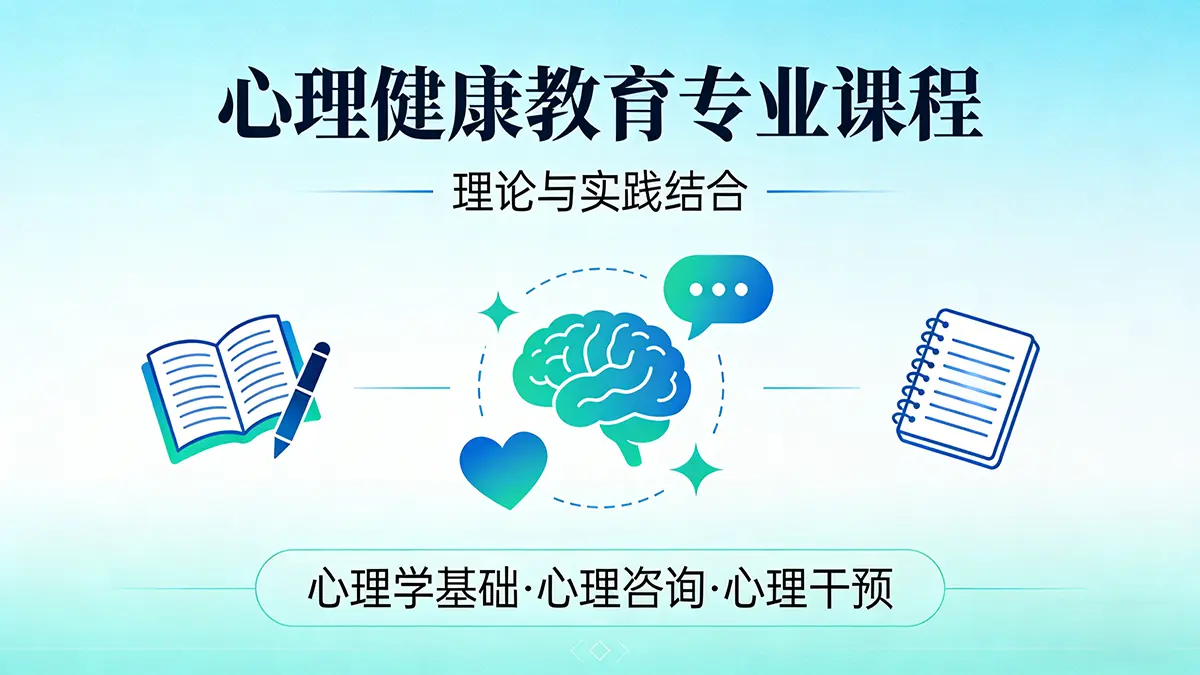
4. Career Pathways for the Mental Health Education Major
As a policy-driven field, employment is concentrated in the education system while expanding into community, corporate, and public service sectors.
Education System (Primary Pathway): K-12 Mental Health Education Teacher; University Counseling Center Faculty/Counselor; Mental Health Educator in vocational/special education schools.
Community & Social Services: Community Mental Health Specialist/Social Worker; Program Specialist at youth/women’s centers; Psychological Counselor in judicial/civil affairs systems.
Corporate & Organizations: Employee Assistance Program (EAP) Specialist/HR Advisor; Trainer/Curriculum Developer at counseling agencies; Mental Health Content Editor/Producer in media.
Government & Public Health: Teaching Researcher/Policy Supervisor in education departments; Program Officer at CDC/Mental Health Centers.
5. Employment & Industry Trends for the Mental Health Education Major
Employment Characteristics
Policy-driven growth ensures stable job prospects, particularly with mandated positions in K-12 schools.
Professional certification (teaching license, counseling credentials) is essential for career entry and advancement.
Roles are highly multifaceted, combining teaching, counseling, programming, and primary intervention.
Compensation and work models vary between stable public-school positions and more flexible community/corporate roles.
Industry Trends
Systematization of school mental health into comprehensive, standards-based programs.
Shift toward prevention and development, emphasizing positive psychology and resilience building.
Integration of technology (AI, apps, online platforms) to enhance service reach and effectiveness.
Adoption of a whole-school, collaborative approach involving all staff (“whole-school mentor system”).
Expanded focus on specific issues like cyber addiction, bullying, and educator well-being.
Policy-driven efforts to improve equity and access for underserved populations (rural, left-behind children).
6. Leading Global Institutions for the Mental Health Education Major
(Some universities are displayed—rankings are not in order)
| Country/Region | Representative Institutions (Leading Programs) |
| China | Beijing Normal University, East China Normal University, South China Normal University, Central China Normal University, Southwest University |
| United States | University of Michigan, Ann Arbor; University of Wisconsin–Madison; University of Texas at Austin |
| United Kingdom | University College London (IOE), University of Cambridge, University of Nottingham |
| Australia | University of Melbourne, University of Queensland |
| Other | The University of Hong Kong, National Taiwan Normal University |
DisciplineMajor Recommendations
Ideal Candidates for the Major
Possess curiosity about the human mind, combining an educator’s passion with a helper’s patience.
Demonstrate excellent communication, empathy, organizational skills, and emotional stability.
Enjoy working in educational settings and interacting with children, adolescents, and families.
Have strong ethical awareness and clear professional boundaries.
Core Competencies of the Major
Ability to design and implement systematic mental health education curricula and programs.
Skills in facilitating developmental group counseling and providing primary individual support.
Competence in identifying psychological crisis signs and executing initial intervention and referral protocols.
Capacity to build collaborative partnerships with administrators, teachers, and parents.
Study Recommendations
Obtain teaching certification early as a fundamental requirement for school-based roles.
Gain extensive practical experience through internships across various educational settings.
Master group facilitation and psychological activity leadership as core professional skills.
Learn foundational psychological assessment and crisis intervention procedures.
Develop strong public speaking and instructional delivery abilities.
Build a sustainable professional network through associations, training, and engagement with policy and standards.
*Note: Program classification may vary by institution.*
- The Previous Passage:Elementary Mathematics Education(Elem Math Educ)_小学数学教育
- The Next Passage:没有了!
Human Geography Major_Geography(Geog.)_人文地理
The Human Geography Major explores the complex relationships between human activities and space, cul···

Atmospheric Sciences(Atmos. Sci.)_大气科学
Atmospheric science is the study of phenomena and evolutionary patterns within Earth's atmospher···

Earth Sciences(Earth Sci.)_地球科学
The Earth Science major focuses on studying the Earth system and its interactions, providing a scien···
Ocean Sciences(Ocean Sci.)_海洋科学
PbootCMS是全新内核且永久开源免费的PHP企业网站开发建设管理系统,是一套高效、简洁、 强悍的可免费商用的···

