

Business Administration(Bus Admin)_工商管理
时间:2026-03-08 阅读:0次
Business Administration
Business Administration stands as the cornerstone discipline within the field of commerce, often hailed as the backbone of business studies. In the year 2026, as the digital economy reshapes commercial logic, this discipline is undergoing a profound transformation—shifting from traditional functional management toward data-driven approaches, ecosystem collaboration, and value co-creation.

Introduction to Business Administration
Business Administration is a comprehensive applied discipline studying corporate operations and management activities, encompassing core domains such as corporate strategy, marketing, human resources, financial management, operations management, and organizational behavior. It focuses not only on how enterprises function efficiently but also on creating value and achieving sustainable development within dynamic environments.
If the modern business world is likened to an ecosystem, graduates of Business Administration programs serve as its “architects” and “operators”—they chart strategic directions, design organizational structures, optimize business processes, unlock team potential, and ultimately transform resources into value.
Program Characteristics from an International Perspective: Business Administration is the core discipline of global business schools, with distinct educational emphases across countries. U.S. business schools prioritize case-based teaching and practical orientation; European business schools prioritize international perspectives and cross-cultural management; Chinese business schools are rapidly rising in digital transformation and local practice. This is a highly internationalized discipline, closely integrated with business practice and offering diverse career pathways.
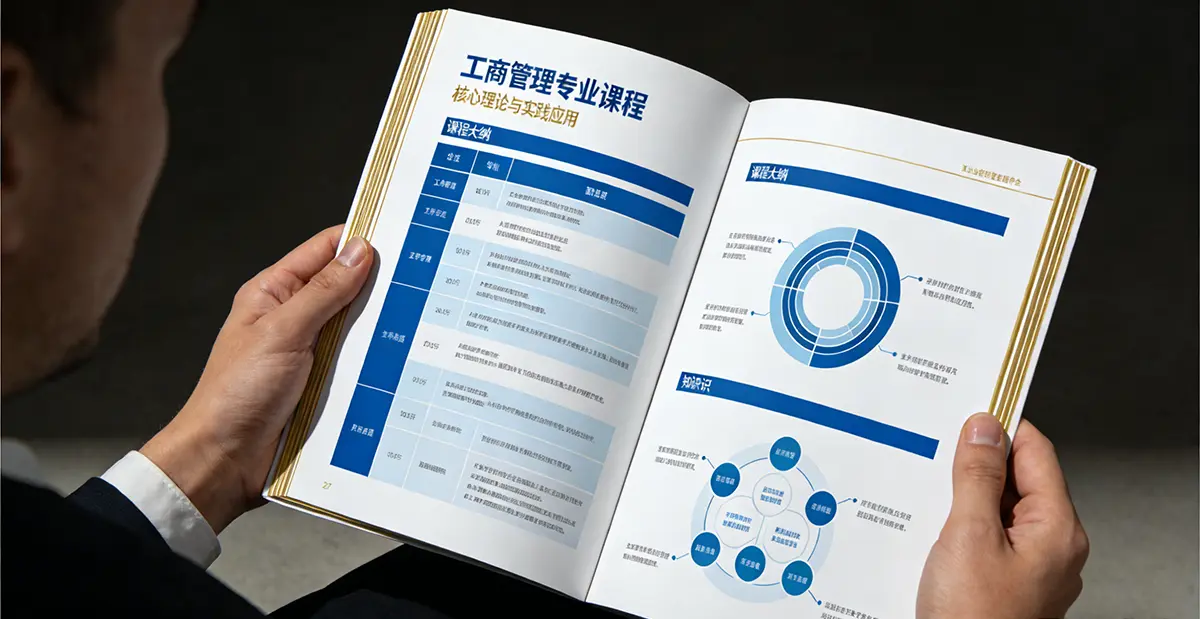
Core Courses at International Institutions
Top international universities' MBA programs emphasize a trinity of “theory + practice + internationalization,” typically structured in modules: “core fundamentals + specialized tracks + integrated practice.”
Core Foundation Module (Combined from London Business School and Coventry University):
| Course Category | Core Courses | Institution Examples |
| Core Business Foundations | Accounting, Financial Management, Marketing, Organizational Behavior, Strategic Management | London Business School, Qinghai University |
| Quantitative & Analytics | Data Analysis, Business Statistics, Decision & Risk Analysis, Data Modeling | London Business School, Shanghai Business School |
| Economics & Decision-Making | Applied Microeconomics, Global Macroeconomics, Managerial Economics | London Business School, Shanghai Business School |
| Leadership & Communication | Leadership Development, Effective Communication, Teamwork, Cross-Cultural Management | London Business School, Hefei University |
Specialization Modules (Example: London Business School GMiM Program):
| Specialization Track | Core Courses | Application Areas |
| Strategy & Consulting | Strategic Management, Corporate Governance, International Business, Innovation Management | Strategic Planning, Management Consulting, Investment Analysis |
| Marketing | Marketing Management, Consumer Behavior, Brand Management, Digital Marketing | Brand Management, Market Research, Digital Marketing |
| Finance & Accounting | Corporate Finance, Investment Analysis, Management Accounting, Financial Statement Analysis | Financial Analysis, Investment Banking, Risk Management |
| Human Resources | Human Resource Management, Organizational Development, Performance Management, Talent Development | HR Management, Organizational Development, Talent Acquisition |
| Operations & Supply Chain | Operations Management, Supply Chain Management, Project Management, Quality Management | Production Management, Logistics Management, Operations Optimization |
Distinctive Cutting-Edge Modules (Example: Shanghai Business School MBA):
| Cutting-Edge Direction | Core Courses | Application Areas |
| Digital Retail Management | Digital Marketing & Consumer Behavior, Digital Retail Management & Model Innovation, Retail Technology Innovation Management | Retail Digital Transformation, New Retail Operations |
| Distribution Channel Innovation | Procurement & Supply Chain Management, Distribution Innovation Frontiers, Channel Management | Supply Chain Optimization, Channel Strategy |
| AI & Business Decision-Making | Artificial Intelligence & Business Decision-Making, Digital Transformation & Organizational Change, Big Data Empowerment | AI Business Applications, Digital Transformation |
| Sustainability | ESG & Sustainable Accounting, Corporate Ethics & Social Responsibility | Green Management, ESG Investing |
Integrated Practice Modules (London Business School example):
- LondonLAB: 10-week practical projects solving real-world business challenges for companies while expanding industry networks
- Global Experiences: Immersive learning in global business hubs (Austin, Cape Town, Medellín, Paris, etc.) alongside MBA and leadership program students
- Skills for Success: Training in three core competencies—interpersonal skills, quantitative skills, and digital literacy—covering personal branding, professional presentation, modeling, Excel, and coding
- Career Management: Comprehensive career support throughout the program, including career planning, interview preparation, and employer networking
Advanced Study Pathways for Business Administration Graduates
Master's and doctoral research specializations are highly specialized and cutting-edge, primarily covering the following domains:
Traditional Research Areas:
- Corporate Strategy: Strategic Management, Competitive Strategy, Corporate Governance, Internationalization Strategy
- Marketing: Consumer Behavior, Brand Management, Marketing Models, Digital Marketing
- Organizational Behavior & Human Resource Management: Organizational Theory, Leadership, Talent Management, Organizational Change
- Financial Management: Corporate Finance, Investment Theory, Capital Markets, Risk Management
- Operations and Supply Chain Management: Production Operations, Logistics Management, Quality Management, Supply Chain Optimization
Emerging Frontier Areas (Aligned with Shanghai Business School's Curriculum):
| Research Area | Core Content | Application Scenarios |
| Digital Retail Management | Exploring digital retail strategies, operational models, and consumer behavior through deep data analytics and AI | Retail enterprises' digital transformation, new retail model innovation |
| Distribution Channel Innovation | Deep integration of IoT, blockchain, and big data in distribution to enhance supply chain efficiency | Supply chain optimization, channel innovation, business model design |
| AI and Management Decision-Making | AI-empowered business decisions, application of intelligent algorithms in management | Intelligent decision systems, AI business applications |
| Sustainable Development Management | ESG, green management, corporate social responsibility | Sustainable development strategies, ESG investing |
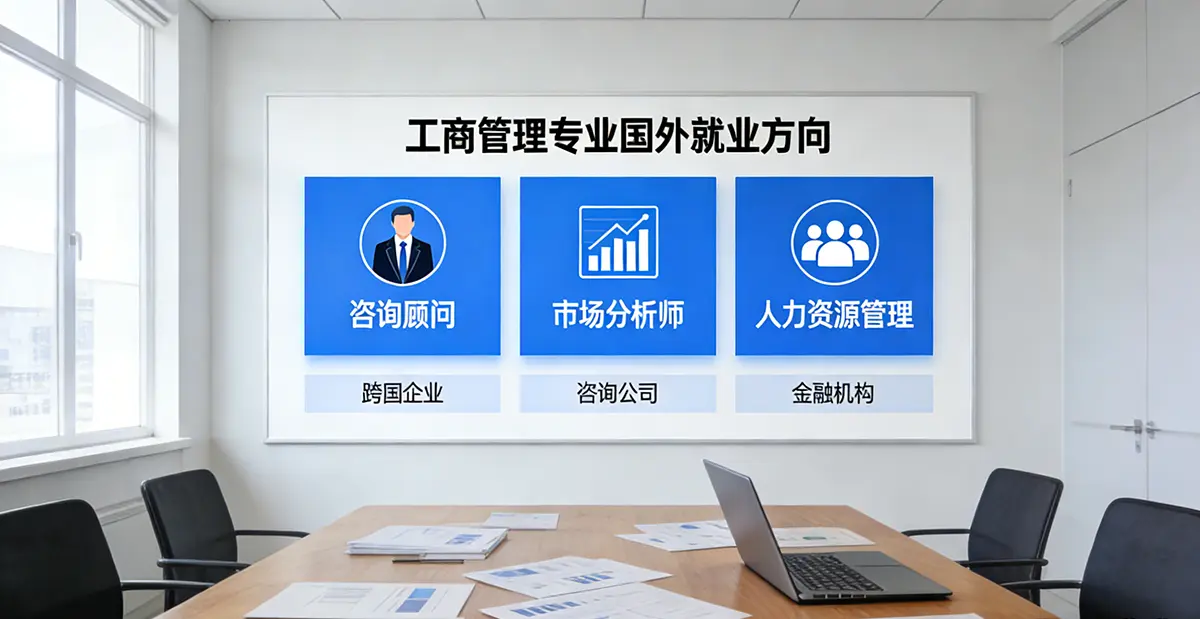
International Career Paths and Positions
Business administration graduates are in high demand globally, with career opportunities spanning diverse industries.
Core Employment Sectors:
| Sector | Typical Employers | Representative Positions |
| Consulting | McKinsey, Boston Consulting Group, Bain & Company, Big Four firms | Management Consultant, Strategy Consultant, Business Analyst |
| Finance | Goldman Sachs, JPMorgan Chase, Citigroup, China International Capital Corporation | Investment Banking Analyst, Risk Management, Asset Management |
| Technology | Amazon, Google, Microsoft, Alibaba, Tencent | Product Manager, Operations Manager, Business Development, Project Management |
| Consumer Goods/Retail | Procter & Gamble, Unilever, Nike, Walmart | Brand Manager, Marketing, Supply Chain Management |
| Manufacturing/Industrial | Tesla, General Electric, Siemens, Huawei | Strategic Planning, Operations Management, International Business Development |
| Healthcare | Johnson & Johnson, Pfizer, Medtronic | Product Manager, Market Access, Strategic Analysis |
| Startups | Various Startups | Co-Founder, Head of Operations, Business Development |
Global Representative Positions (Based on Latest Industry Data):
1. Management Consultant: Provides strategic, operational, and organizational consulting services to enterprises—a popular choice for MBA graduates
2. Product Manager: Oversees product planning, requirement analysis, and iteration at tech companies, requiring a blend of business acumen and technical understanding
3. Brand Manager: Oversees brand strategy, marketing campaigns, and market analysis at consumer goods companies; Procter & Gamble is a representative employer
4. Investment Banking Analyst: Engages in corporate finance, M&A, and capital markets at investment banks; offers high compensation but demands intense workloads
5. International Country Manager: Manages overseas market development, channel management, and sales target achievement at multinational corporations; companies like BAIC International recruit for this role
6. Strategic Planning Manager: Conducts strategic research, business planning, and investment analysis within corporations
7. Operations Manager: Oversees daily operational management, process optimization, and efficiency improvements
8. Data Analyst: Applies analytical tools to support business decisions—a high-demand role in digital transformation
Salary Levels (International Reference):
- U.S. MBA: Average annual salary $125,000
- Canadian MBA: Average annual salary $55,000
- Western Europe MBA: Average annual salary $38,000
- Oxford Business School MBA: Average annual salary £74,143 (approx. $99,000)
- Professional Master's (Finance/Marketing/Analytics): Average annual salary $66,435
- Bachelor's Degree Graduate: Average annual salary $63,905
International Employment Rates and Industry Trends
Employment Rate Data (AACSB 2024-25 Survey):
- MBA Graduates: 85% full-time employment within three months of graduation (slightly down from 87.5% the previous year)
- Professional Master's: 70%+ employment within three months, rising to 85% within six months
- Undergraduate Graduates: 70% employment within three months, 82% within six months
Job Market Challenges:
- Slowing hiring in consulting and finance sectors; restructuring in tech industry recruitment
- MBA employment rates at some top business schools dropped to 77%, a recent low
- Amazon remains the primary employer for MBA graduates, with increased hiring in healthcare and AI sectors
Industry Development Trends:
1. Value Reconstruction: From “Process-Centric” to “Data-Driven”
Data evolves from supplementary documentation to foundational decision-making, fundamentally reshaping corporate value creation logic.
2. Organizational Structure: Evolution from “Hierarchical Bureaucracy” to “Flat Network”: Breaking down hierarchical barriers and departmental silos to build more resilient and collaborative organizational forms.
3. Decision-Making Model: Efficiency Upgrade from “Experience-Driven” to “Real-Time Dynamic”: Leveraging real-time data collection and intelligent analytics to achieve instantaneous, precise, and dynamic decision-making.
4. Risk management evolves from “reactive remediation” to “dynamic defense”: Establishing a comprehensive risk control mechanism encompassing real-time monitoring, early warning, and proactive prevention.
5. Accelerated adoption of AI and digital transformation: Approximately 45% of enterprises are implementing AI and digital twin technologies, driving strong demand for composite management talent with data analytics capabilities.
6. Sustainability as a Core Focus: ESG, green management, and corporate social responsibility are shifting from “add-ons” to “mandatory requirements.”
Ideal Candidates for Business Administration
You'll gain a competitive edge in the global marketplace if you possess these traits:
1. Leadership and Influence: Inspire team potential, sway others, and drive change.
2. Analytical and problem-solving skills: Structured approach to complex issues, leveraging data and logic to propose solutions.
3. Communication and interpersonal skills: Effective engagement with diverse backgrounds to build trust.
4. Business acumen: Sharp insight into business models, market dynamics, and competitive landscapes.
5. Learning and adaptability: Rapid acquisition of new knowledge and adjustment to evolving business environments.
6. Teamwork Spirit: Collaborate effectively within diverse teams to achieve shared objectives.
7. Resilience Under Pressure: Maintain consistent performance in high-intensity, fast-paced work environments.
8. Global Perspective: Understand and respect worldwide business trends and cultural differences.
Core Competencies of Business Administration
The core competitiveness of this program lies in its systematic development from “functional specialists” to “business leaders”:
Strategic Thinking & Business Insight: Ability to understand industry trends and competitive landscapes from a macro perspective to formulate corporate strategies.
Data Analysis & Decision-Making: Ability to leverage data analytics tools to support business decisions, transforming data into actionable insights.
Leadership & Organizational Management: Ability to motivate teams, coordinate resources, drive change, and achieve organizational objectives.
Cross-Functional Integration: Ability to integrate marketing, finance, human resources, operations, and other functions to develop holistic solutions.
Communication and Influence: Ability to articulate perspectives clearly, persuade others, and build consensus.
Innovation and Entrepreneurship: Ability to identify opportunities, create value, and drive innovation.
Ethics and Social Responsibility: Ability to consider ethical, legal, and societal impacts in business decisions.
Major Institutions Offering Programs Worldwide
(Selected Institutions Listed - No Particular Order)
United Kingdom
University of Leeds, University of Birmingham, University of Manchester, University of Reading, Aston University, Newcastle University (UK)
Norway
Norwegian School of Economics
United States
Indiana University Bloomington, Harvard University, Pennsylvania State University-Park, Northeastern University (Boston), Texas A&M University, University of Tennessee-Knoxville, University of Michigan-Ann Arbor, University of Pennsylvania
Canada
Western University
Netherlands
Vrije Universiteit Amsterdam, Erasmus University Rotterdam, University of Groningen
Finland
Hanken School of Economics
France
Nantes Business School
Denmark
Copenhagen Business School
Australia
Monash University, RMIT University, Deakin University, University of Queensland, Curtin University, University of Melbourne, University of Sydney
China
City University of Hong Kong, Renmin University of China, Sun Yat-sen University, Shanghai Jiao Tong University, Shenzhen University, Xi'an Jiaotong University, Peking University, Tsinghua University, Huazhong University of Science and Technology, Tongji University, Southwestern University of Finance and Economics, Shanghai University, Zhejiang University, Wuhan University, Tianjin University, Harbin Institute of Technology, Shandong University, Sichuan University, Jinan University, University of Nottingham Ningbo China, Zhejiang Gongshang University, Xi'an Jiaotong-Liverpool University, Fudan University, Nanjing University, Nankai University, South China University of Technology, Shanghai University of Finance and Economics, Jilin University
Recommended Learning Path for Business Administration
1. Build a Solid Foundation (Undergraduate Stage): Focus on core management, economics, and data analysis fundamentals. Master Management Principles, Microeconomics, Accounting, and Statistics—these form the bedrock for all subsequent specialized courses. Simultaneously, become proficient in advanced Excel functions and at least one data analysis tool (Python/R/SQL). Engage early in business case competitions, entrepreneurial projects, or corporate internships to cultivate business acumen.
2. Build Your Professional Framework (Mid-to-Late Undergraduate): Delve into core courses like Marketing, Financial Management, Organizational Behavior, Strategic Management, and Operations Management. Select a specialization based on your interests (e.g., Marketing, Finance, Human Resources, Strategy). Actively participate in business simulation competitions and corporate consulting projects, and secure internships at reputable companies.
3. Focus and Deepen (Master's/MBA Stage): Select the appropriate program type based on career goals:
- Professional Master's (MiM/Finance/Marketing): Suitable for recent graduates or those with limited work experience, emphasizing specialized skills
- Full-time MBA: Ideal for individuals with 3-5 years of work experience, comprehensively enhancing leadership and strategic thinking
- Part-time/EMBA: Designed for working executives to pursue advanced studies while maintaining their careers
Actively pursue internships, particularly in target industries like consulting, finance, and technology. Top programs like London Business School offer practical platforms such as LondonLAB, enabling students to apply their learning in real business environments.
4. Future Planning and Internationalization (Throughout the Process):
- Language and Perspective: Achieve IELTS or TOEFL scores (LBS requires IELTS 7.0+ with no band below 6.5). Business administration is a highly globalized field; fluent English is a fundamental requirement for multinational corporations and top business schools.
- Professional Certifications: Pursue relevant credentials based on your specialization, such as CFA (Finance), PMP (Project Management), CPA (Accounting), or SHRM-CP (Human Resources).
- Skill Matrix: Align with industry demands to strategically develop targeted competencies:
- Data Proficiency: Advanced Excel analysis, SQL, Tableau/PowerBI, Python data analysis
- Business Tools: ERP systems, CRM systems, project management software
- Soft Skills: Case interview preparation, presentation techniques, business writing
- Industry Networking: Build connections via LinkedIn, attend industry conferences and alumni events, monitor target companies' recruitment updates.
- International Experience: Pursue international exchanges, overseas internships, or multinational project exposure. London Business School's GMiM program offers dual study opportunities in China and the UK, while Shanghai Business School encourages participation in domestic and international exchanges.
5. Job Search Strategy (Based on AACSB Expert Recommendations):
- Proactive Approach: Applying to only one position daily is insufficient; adopt a “strategic, resourceful, and door-to-door” approach.
- Networking is Paramount: Your network is your safety net—leverage alumni connections and career resources fully.
- Broaden Your Horizons: Employers no longer exclusively target top-tier business schools; graduates from more institutions now have opportunities.
- Maintain Patience: Salary increases and promotions may take 2-3 years post-graduation, but the medium-to-long-term value remains.

Human Geography Major_Geography(Geog.)_人文地理
The Human Geography Major explores the complex relationships between human activities and space, cul···

Atmospheric Sciences(Atmos. Sci.)_大气科学
Atmospheric science is the study of phenomena and evolutionary patterns within Earth's atmospher···

Earth Sciences(Earth Sci.)_地球科学
The Earth Science major focuses on studying the Earth system and its interactions, providing a scien···

Ocean Sciences(Ocean Sci.)_海洋科学
PbootCMS是全新内核且永久开源免费的PHP企业网站开发建设管理系统,是一套高效、简洁、 强悍的可免费商用的···

