

Film Studies(Film Stud.)_电影学
Time:2026-03-08 Visits:3
Film Studies Major
The Film Studies Major explores cinema through theory, history, and industry analysis. This guide details its core courses in criticism and research, diverse career paths in academia and media, key industry trends like streaming platforms, and leading global university programs for aspiring scholars and critics.
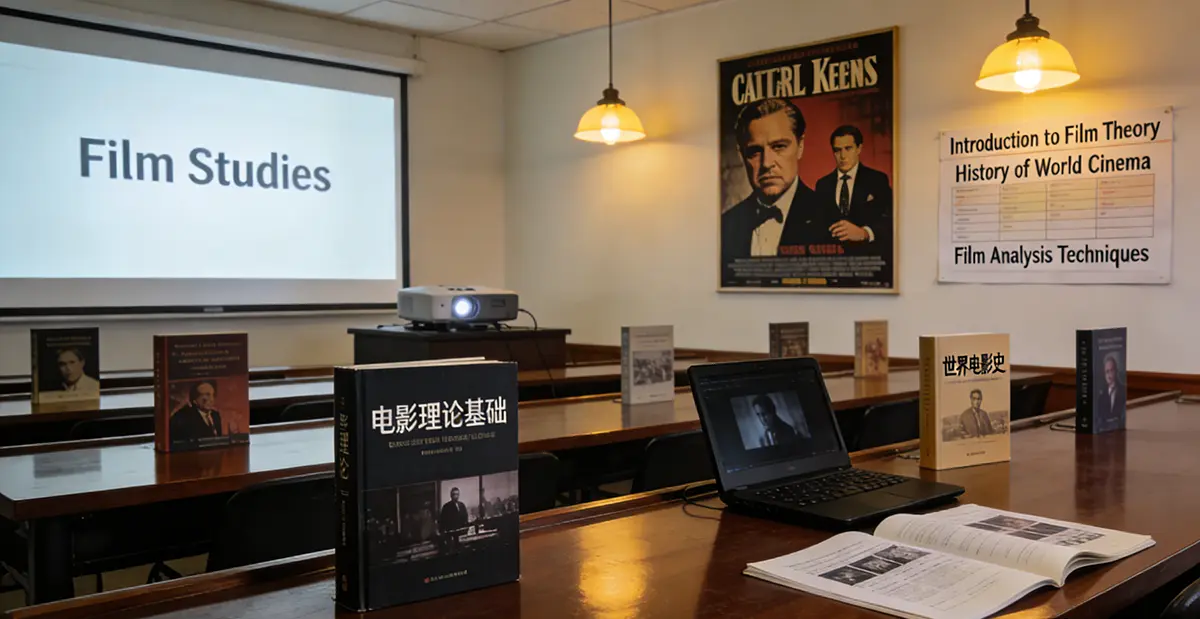
1. Program Introduction
The Film Studies Major is a comprehensive humanities discipline that takes cinematic works, phenomena, and the film industry as its primary objects of study. Rather than directly training creative professionals such as directors, screenwriters, or cinematographers, the Film Studies Major systematically explores the creative principles, aesthetic characteristics, social functions, dissemination mechanisms, and industrial operations of cinema from theoretical, historical, critical, industrial, and cultural perspectives. This Major emphasizes cultivating students' solid textual analysis skills, theoretical reasoning capabilities, and macro-level understanding of the film industry. It serves as an indispensable academic cornerstone within the film arts ecosystem—encompassing creation, production, research, criticism, and education—supplying the film industry with research-oriented, managerial, and critically-minded professionals.
2. Core Curriculum of the Film Studies Major
| Module Categories | Core Courses |
| Theory and Criticism | Introduction to Film, Film Aesthetics, Film Criticism Methodology, Film Psychology, Film Semiotics, Feminist Film Theory, Postmodern Film Theory |
| Film History | World Film History, Chinese Film History, National/Regional Cinema Studies (e.g., European, Asian, Hollywood), Genre Film History (e.g., Wuxia, Film Noir), History of Film Movements |
| Audiovisual Language and Text Analysis | Audiovisual Language, Film Close Reading, Film Narratology, Director Studies, Genre Studies, Film Music Analysis |
| Industry and Cultural Studies | Introduction to Film Industry, Film Economics, Film Marketing and Distribution, Film Policy and Regulations, Film Festival Studies, Media Culture Studies, Star Studies |
| Research Methods and Writing | Academic Writing, Film Research Methods, Literature Search and Retrieval, Basic Data Statistics, Film Criticism Writing |
| Related Practice and Special Topics | Fundamentals of Short Film Production, Screenplay Analysis, Film Curation Practice, Fundamentals of Film Archiving and Restoration, Special Topics (e.g., Science Fiction Film, Documentary, Independent Cinema) |
| Supporting Skills | Fundamentals of Photography, Fundamentals of Editing, Film Poster and Visual Culture Analysis |
3. Advanced Study Pathways for the Film Studies Major
Master's/PhD (Mainstream Academic Research): Film/Cinema Studies: Conducts in-depth research into film theory, film history, or specific cinematic phenomena such as particular directors, genres, national cinemas, historical periods, or theoretical schools. Film Criticism/Cultural Studies: Focuses on the cultural significance of cinema, ideological critique, and cross-media studies. Film and Media Communication: Examines the communicative effects, audiences, and societal impact of film from a communication studies perspective.
Master's (Applied and Related Fields): Film Curation and Archival Management: Specializes in film festival programming, film archive administration, classic film restoration, and related research. Film Industry and Management: Delves deeply into industry chain segments such as production, financing, marketing, distribution, and theater management. Arts Management: Encompasses the management and planning of a broader range of performing arts institutions.
Interdisciplinary Advanced Studies: Screenwriting/Directing/Producing (MFA): Transitions to creative practice through a Master of Fine Arts degree, typically requiring a high-quality portfolio submission. Education: Pursues careers in film or media education. Law (Intellectual Property Specialization): Focuses on legal affairs in the film and television sector, including copyright and contract law.
4. Career Paths and Positions for Film Studies Majors
The employment landscape reflects the characteristic “multifaceted convergence of academia, industry, and media.”
Higher Education and Research Institutions: Film/Media schools or Journalism & Communication schools at universities: Faculty, researchers (typically requiring a PhD and high-level research output). Film archives, art research institutes: Positions in academic research, curation, archival management, restoration research.
Film Industry and Related Organizations: Film/TV production companies, studios: Project planning and evaluation, literary development, production assistants, market analysis, publicity copywriting. Cinema chains, distribution companies: Scheduling analysis, distribution specialists, marketing. Film festivals, exhibitions: Program curation, selection committee members, forum organization, media publicity.
Media and Publishing Industry: Newspapers, magazines, websites: Professional film critics, film journalists, culture section editors, new media content operators. Publishing houses: Film and television book planning editors.
Cultural and Publicity Departments: TV stations, video platforms (e.g., iQIYI, Bilibili): Content planning, channel editors, documentary planning, film/TV program directors. Publicity departments, cultural and tourism bureaus, literary and art federations: Cultural officers, project officials.
Emerging and Freelance Roles: Self-media/independent film critics: Operating personal film review accounts, podcasts, or video channels. Film and TV culture companies/studios: Engaging in film/TV planning, consulting, script doctoring, etc. Film and TV education and training: Lecturers at art examination training institutions, planners of film public lectures.
5. Employment Rates and Industry Trends for the Film Studies Major
Employment Rate Characteristics: “Industry-dependent and susceptible to market fluctuations”: Job opportunities are highly correlated with the prosperity of the film and television sector, with competition intensifying during industry downturns. “Academic credentials and experience are both crucial”: Core research positions and university faculty roles generally require doctoral degrees; industry-applied roles place greater value on internship experience, industry connections, and practical skills. “Multi-skilled professionals are more competitive”: Graduates proficient in both theoretical criticism and areas like market analysis, planning, or new media operations hold a distinct advantage. “Strong clustering effect in cultural hub cities”: Film and television industry centers like Beijing and Shanghai provide the vast majority of specialized job opportunities.
Industry Trends: “Streaming platforms reshape the industry and research landscape”: Platforms like Netflix, Disney+, and major domestic video services have transformed creation, distribution, viewing habits, and critical discourse, becoming new research hotspots and significant employment sectors. “Deepening of film industrial aesthetics and industry research”: Growing demand for academic and industrial research on China's film industrialization, genre development, and production management systems. “Rise of film festival and art house cinema culture”: The development of regional film festivals, exhibitions, and art house theaters has created demand for professionals in curation, programming, and audience development. “Cross-media storytelling and IP development”: The deep integration of film with games, literature, and animation requires cross-media planners and researchers skilled in narrative. “Digitization and restoration of film archives”: The digital restoration, preservation, and study of classic films have become significant fields. “Media transformation of film criticism”: Professional film criticism is migrating from traditional print media to new formats like video channels and podcasts, placing new demands on critics' integrated media skills.
6. Leading Global Institutions Offering the Film Studies Major
As a theoretical discipline, the Film Studies Major is commonly offered within the arts, communication, or humanities faculties of comprehensive universities.
| Country/Region | Representative Institutions (Leading or Renowned in Film Studies/Cinema) |
| United States | New York University (Tisch School of the Arts - Cinema Studies), University of Southern California (School of Cinematic Arts), University of California, Los Angeles (School of Theater, Film and Television), Columbia University, University of Texas at Austin |
| United Kingdom | University College London (Film Studies), King's College London, University of Warwick, University of Oxford, University of Edinburgh |
| France | Université Sorbonne Nouvelle - Paris 3 (renowned for Film and Audiovisual Studies), Université Paris 8 (a major hub for film studies) |
| China | Beijing Film Academy (Department of Film Studies / Institute for Chinese Film Culture), Communication University of China (School of Drama, Film and Television), Peking University (School of Arts), Shanghai University (Shanghai Film Academy), Beijing Normal University (School of Arts and Communication) |
| Other | University of Melbourne (Australia), Université de Montréal (Canada), University of Amsterdam (Media Studies, Netherlands), Waseda University (Image Studies, Japan) |
DisciplineMajor Recommendations
Ideal Candidates for the Film Studies Major:
Individuals with a passionate enthusiasm and near-obsessive love for cinematic art and culture, possessing extensive viewing experience and reflective habits. Those with excellent close-reading skills, logical reasoning abilities, and theoretical sensitivity, who enjoy deep reading and writing. People with strong curiosity about the social, historical, cultural, and industrial mechanisms behind cinema. Candidates with solid written and oral communication skills, capable of articulating viewpoints clearly.
Core Competencies for the Film Studies Major:
The academic ability to systematically and deeply analyze cinematic texts and phenomena. The capacity to track, comprehend, and critically reflect on film theories and cutting-edge intellectual trends. Proficiency in conducting rigorous academic research and writing high-quality papers and professional film criticism. An understanding of the fundamental principles governing the film industry chain and the ability to apply theory to industry analysis or project planning.
Learning Recommendations for the Film Studies Major:
Build a dual “Film History-Theory” framework: Systematically view films (by country, period, director, genre) while concurrently reading classic theoretical works to establish a knowledge coordinate system. Refine “scene analysis” and writing: Treat detailed, frame-by-frame or scene-by-scene analysis as a foundational skill; persistently practice writing, progressing from short reviews to long-form papers. Master research tools and a foreign language: Become proficient in using academic databases; mastering a foreign language (especially English) is crucial for accessing original texts and cutting-edge literature. Delve deeply into a field of interest: Build upon general knowledge by identifying and deepening expertise in a niche area (e.g., a specific director, genre, period, or theoretical school) early on. Actively engage in industry practice: Seek internships at film festivals, production companies, media outlets, or research institutes to bridge theory and practice. Build academic and professional networks: Attend academic conferences, film festival forums, and fan events; connect with scholars, critics, and industry professionals in the field.
Note: Some institutions may categorize this major under different disciplines. Please refer to the specific classification used by the institution.
- The Previous Passage:Product Design(Prod. Des.)_产品设计学
- The Next Passage:Animation(Anim.)_动画学
Human Geography Major_Geography(Geog.)_人文地理
The Human Geography Major explores the complex relationships between human activities and space, cul···

Atmospheric Sciences(Atmos. Sci.)_大气科学
Atmospheric science is the study of phenomena and evolutionary patterns within Earth's atmospher···

Earth Sciences(Earth Sci.)_地球科学
The Earth Science major focuses on studying the Earth system and its interactions, providing a scien···
Ocean Sciences(Ocean Sci.)_海洋科学
PbootCMS是全新内核且永久开源免费的PHP企业网站开发建设管理系统,是一套高效、简洁、 强悍的可免费商用的···

