

Product Design(Prod. Des.)_产品设计学
Time:2026-03-08 Visits:3
Product Design Major
The Product Design Major prepares innovators through a user-centered curriculum integrating design thinking, engineering, and business strategy. This guide details core courses, advanced specializations, global career paths in tech and manufacturing, industry trends like sustainability and AI, and leading programs worldwide for aspiring product designers.
1. Program Introduction
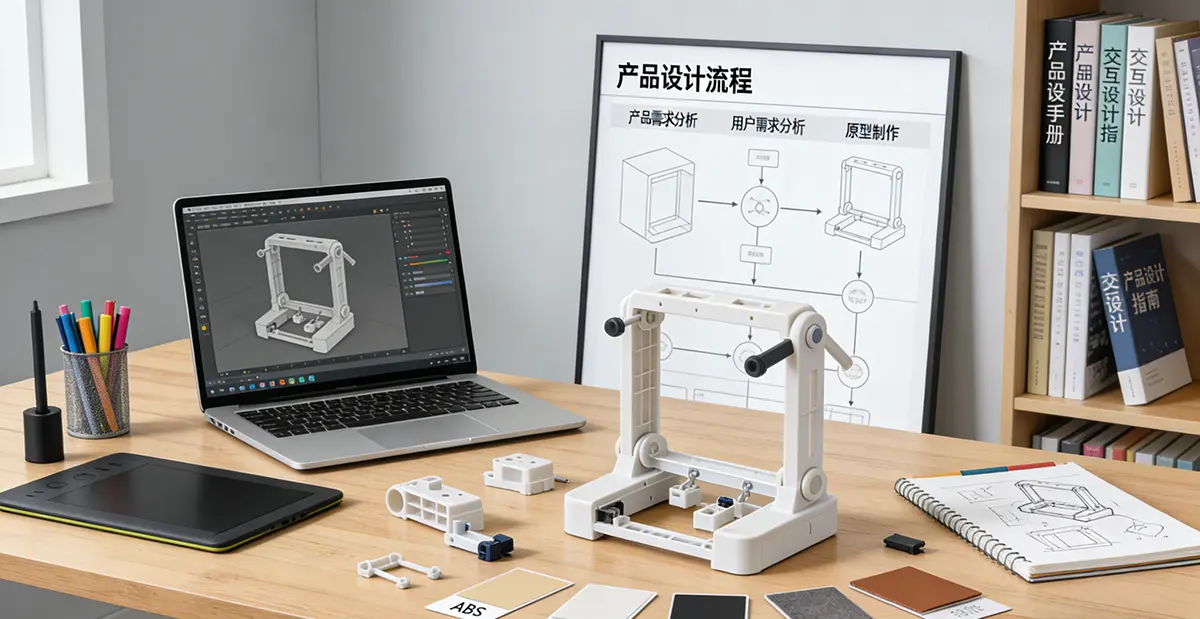
The Product Design Major is a comprehensive applied discipline centered on the user, systematically researching, planning, creating, and optimizing both physical and digital products. It focuses on product functionality, form, user experience, market positioning, and full lifecycle management. By employing innovative design thinking and technical methods, the Product Design Major aims to solve user needs, generate commercial value, and drive societal progress. This discipline serves as a pivotal hub connecting users, technology, and business, acting as a key engine for product innovation and industrial advancement.
2. Core Curriculum of the Product Design Major
| Module Categories | Core Courses |
| Design Fundamentals and Thinking | Design Thinking, Design Theory and History, Design Sketching and Speed Drawing, Three-Dimensional Composition, Design Psychology, Innovation Methodology |
| Core Professional Competencies | Product Form and Semantic Design, Ergonomics and Applications, CMF Design (Color, Material, Finish), Product System Design, User Research and Experience Design, Design Expression Techniques (Hand Drawing, Digital Drawing) |
| Technology and Engineering Implementation | Engineering Drawing and CAD, 3D Modeling and Rendering (Rhino, KeyShot, SolidWorks), Materials and Manufacturing Processes, Prototyping (Metalworking, 3D Printing, CNC), Structural Design Fundamentals, Prototype Testing and Validation |
| Interaction and Intelligent Design | Interaction Design Principles, Intelligent Product Design, Introduction to Service Design, IoT and Product Innovation |
| Business and Strategic Management | Product Planning and Market Analysis, Design Management, Brand Strategy, Design Economics, Sustainable Design Strategies |
| Frontier and Specialized Design | Furniture Design, Consumer Electronics Design, Cultural and Creative Product Design, Transportation Interior Design, Medical Device Design, Social Innovation Design |
| Projects and Practice | Specialized Design Workshops, Corporate Collaboration Projects, Interdisciplinary Innovation Projects, Graduation Project (End-to-End Product Development from Concept to Launch) |
3. Advanced Study Tracks for the Product Design Major
Master's (Specialized Deepening): Product Design/Industrial Design: Deepens integrated innovation and engineering implementation capabilities for complex products. Interaction Design/User Experience Design: Expands into experience design for smart products integrating hardware and software. Service Design and Systems Innovation: Broadens from single-product design to product-service system design.
Master's (Engineering & Management Interdisciplinary): Design Engineering/Integrated Product Development: Strengthens knowledge in engineering technology, manufacturing, and supply chain management. Design Strategy & Management: Focuses on design leadership, innovation strategy, and commercialization.
Master's (Research-Oriented): Human Factors Engineering/Human-Computer Interaction: Conducts in-depth research on ergonomics and cognitive science in human-product interactions. Sustainable Design Research: Focuses on design research in the circular economy, green materials, and social equity.
MBA (Business Integration): Innovation Management, Product Management, advancing toward the business strategy level.
4. Career Paths and Positions for Product Design Majors
Career paths for Product Design Majors are highly diversified, spanning manufacturing, technology, consulting, and entrepreneurship.
Technology and Consumer Electronics Industry: Product Designer, CMF Designer, User Experience (UX) Designer, Hardware Product Manager (at companies like Apple, Xiaomi, Huawei, DJI).
Transportation & Equipment Manufacturing: Automotive/EV Interior Designer, HMI Designer, Outdoor Gear Designer, Tool & Instrument Designer.
Furniture, Home Goods & Cultural Industries: Furniture Designer, Home Product Designer, Lighting Designer, Creative Product Director.
Design Consultancies & Strategy Firms: Product Design Consultant, Design Strategist, Design Researcher (at firms like IDEO, Frog, Designworks, or in-house corporate design centers).
Internet Companies and Startup Teams: Hardware Product Manager, Product Designer (for smart hardware or IoT product lines).
Independent Entrepreneurship and Personal Brands: Independent Designer, Design Studio Founder, Original Brand Owner.
Education and Research Institutions: University Faculty, Corporate Trainer, Design Research Institute Researcher.
5. Employment Rates and Industry Trends for the Product Design Major
Employment Rate Characteristics: “Stable demand with a rising trend, yet accelerated skill evolution”: Industrial and consumption upgrades continuously drive demand for high-end product design talent. However, companies seek “T-shaped professionals” with user insight, technical integration, business acumen, and cross-disciplinary collaboration skills. “Portfolio is the ultimate key”: Core competitiveness in job hunting lies in a portfolio demonstrating a complete design process, deep thinking, excellent presentation skills, and relevant industry internship experience. “Salary strongly correlates with location and industry”: Starting salaries are higher in first-tier cities and in tech/automotive sectors; senior experts can reach top-tier compensation with clear career progression. “Significant industrial clustering effect”: Premium positions concentrate in manufacturing and innovation hubs like the Yangtze River Delta, Pearl River Delta, and Beijing-Tianjin-Hebei region.
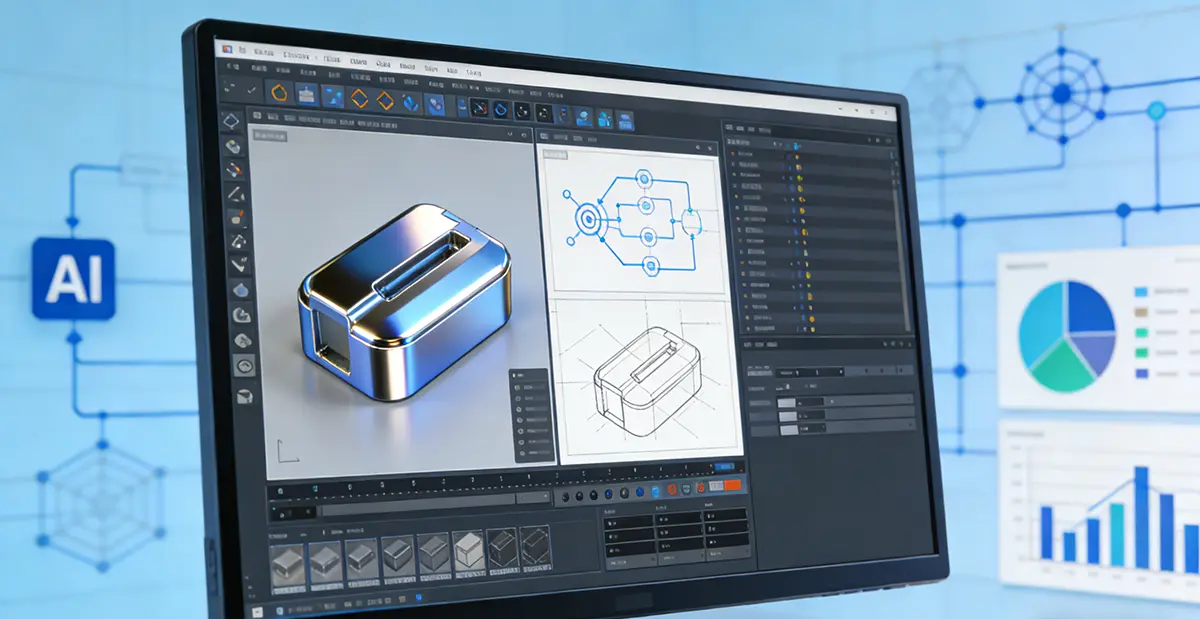
Industry Trends: “Intelligent Integration and Scenario Fusion”: Product design shifts from standalone objects to smart, interconnected scenario-based solutions, requiring designers to understand interaction, data, and service ecosystems. “Sustainability as a Design Baseline”: Recyclable materials, modular design, extended product lifespan, and design-for-recycling become regulatory and market imperatives, and core innovation points. “Narrative and Emotional CMF”: Color, Material, and Finish (CMF) become key strategic tools for brand storytelling, emotional value delivery, and product personality building. “Generative AI-Assisted Design Workflow”: AI serves as a powerful aid in concept generation, form exploration, sketch rendering, and user simulation, evolving the designer's role toward “editing, curation, and decision-making.” “Rise of Domestic Brands and Globalized Design”: Local brands place unprecedented value on original design, while Chinese designers increasingly participate in global projects, requiring cross-cultural understanding. “From Design Execution to Design-Driven”: Design gains greater influence within companies, participating in or even leading early-stage product definition and business model innovation.

6. Leading Global Institutions Offering the Product Design Major
As a vital branch of industrial design, top programs for the Product Design Major are offered by prestigious institutions worldwide, particularly in regions known for design-driven innovation.
| Country/Region | Representative Institutions (Leading Product Design Schools) |
| United States | Art Center College of Design (ACCD, renowned for transportation and consumer electronics), Rhode Island School of Design (RISD), Stanford University (d.school, emphasizing design thinking and innovation), Carnegie Mellon University (Integrated Product Development), Cranbrook Academy of Art |
| Germany | Bauhaus University Weimar, Ulm School of Design (profound legacy), State Academy of Art and Design Stuttgart, Folkwang University of the Arts |
| United Kingdom | Royal College of Art (RCA, close collaboration with Imperial College London), Central Saint Martins (CSM), Loughborough University (engineering-oriented practice), Brunel University London |
| Italy | Politecnico di Milano (Polimi, strong engineering design), Domus Academy |
| Nordic Countries | Aalto University (Finland), Umeå University (Sweden), Design School Kolding (Denmark) |
| Japan | Musashino Art University, Tama Art University, Tokyo University of the Arts |
| China | Academy of Arts & Design, Tsinghua University; College of Design and Innovation, Tongji University; School of Design, Hunan University; School of Design, Jiangnan University; School of Industrial Design, Guangzhou Academy of Fine Arts |
| Other | School of Design, The Hong Kong Polytechnic University; Industrial Design, National University of Singapore; KAIST (Korea Advanced Institute of Science and Technology) |
DisciplineMajor Recommendations
Ideal Candidates for the Product Design Major:
Individuals filled with curiosity and passion for “how things are created” and “how they can be improved.” Those who combine intuitive aesthetic insight with rational analytical skills, adept at identifying problems and solving them systematically. People with broad interests in technology, humanities, business, and the environment, who enjoy finding innovative balance points within constraints. Resilient practitioners and communicators who embrace iterative processes and can clearly articulate design value to engineers and marketers.
Core Competencies for the Product Design Major:
Systematic product innovation and problem-solving skills (the full process from insight to implementation). Exceptional 3D modeling capabilities, understanding of engineering implementation, and CMF expression. User-centered research and experience-building capabilities. Interdisciplinary collaboration and design project management skills.
Learning Recommendations for the Product Design Major:
“Maintain keen observation of life and hands-on modification”: Carry a sketchbook to record inspiration, and try disassembling and improving everyday products. “Immerse yourself in factories and markets”: Understand every manufacturing step from material to finished product, and continuously observe consumer trends and user behavior. “Master at least one parametric or engineering software”: Such as SolidWorks or Creo. This is not just a skill but a shared “language” for consensus with engineers. “Build your portfolio with complete projects”: Your portfolio should clearly showcase 2-3 in-depth projects from research to prototype validation, demonstrating your depth of thinking and breadth of execution. “Cultivate technical literacy and business acumen”: Proactively learn basic programming and electronics, study business cases, and understand design's position in the value chain. “Develop an international perspective and professional network”: Follow international awards (e.g., iF, Red Dot, IDEA), study works from top design firms, and actively pursue internships, competitions, and exchanges.
Note: Some academic programs may be categorized under different disciplines. Please refer to the specific classification of the institution.
- The Previous Passage:Illustration(Illust.)_插画
- The Next Passage:Film Studies(Film Stud.)_电影学
Human Geography Major_Geography(Geog.)_人文地理
The Human Geography Major explores the complex relationships between human activities and space, cul···

Atmospheric Sciences(Atmos. Sci.)_大气科学
Atmospheric science is the study of phenomena and evolutionary patterns within Earth's atmospher···

Earth Sciences(Earth Sci.)_地球科学
The Earth Science major focuses on studying the Earth system and its interactions, providing a scien···
Ocean Sciences(Ocean Sci.)_海洋科学
PbootCMS是全新内核且永久开源免费的PHP企业网站开发建设管理系统,是一套高效、简洁、 强悍的可免费商用的···

