

Animation(Anim.)_动画学
Time:2026-03-09 Visits:3
Animation Major
The Animation Major integrates art, technology, and storytelling to train creators for the dynamic animation industry. This guide explores its core production courses, career paths in film and gaming, key trends like real-time rendering and AI, and leading global university programs for aspiring animators.
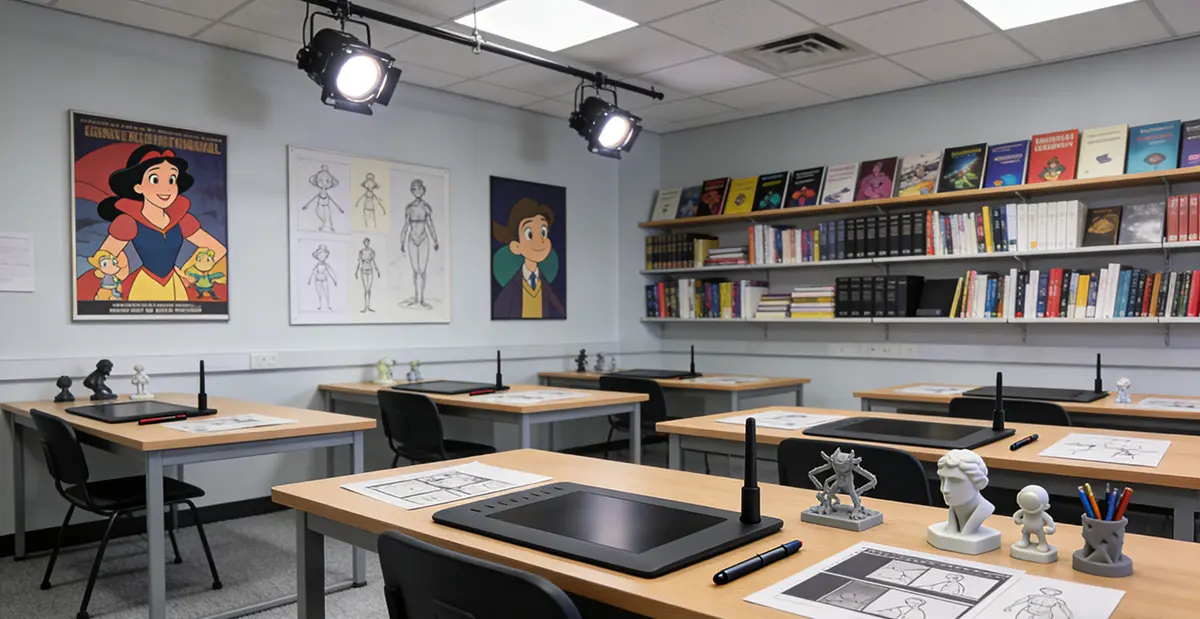
1. Program Overview
The Animation Major is a comprehensive discipline that studies the principles of motion image creation, the artistic expression of animation, and its technical realization. It integrates art, technology, narrative, and commerce, encompassing diverse forms from traditional hand-drawn and stop-motion animation to modern 3D digital animation, motion graphics, experimental animation, and even immersive interactive animation. This Major not only equips students with a complete understanding of animation production workflows and technical skills but also focuses on developing their unique artistic style, storytelling ability, and innovative thinking. As a core field bridging artistic imagination and industrial implementation, the Animation Major supplies creative and production talent to the rapidly developing animation, gaming, film, television, and new media industries.
2. Core Curriculum of the Animation Major
| Module Categories | Core Courses |
| Art and Theory Foundation | Introduction to Animation, History of Animation, Audiovisual Language, Sketching and Speed Drawing, Color Theory, Dynamic Sketching, Performance Fundamentals, Screenwriting Fundamentals |
| Core Production Skills | 2D Animation: Keyframe Animation, Inbetweening,
Principles of Motion, Character Design, Environment Design, Storyboarding
3D
Animation: 3D Modeling, Rigging, Texturing & Lighting, 3D Character
Animation, VFX/Simulation
Stop-Motion Animation: Puppet/Prop Fabrication,
Stop-Motion Shooting Techniques, Set Construction
Post-Production &
Compositing: Digital Compositing, Editing, Color Grading, Sound Design |
| Professional Software Tools | 2D: TVPaint, Toon Boom Harmony, Adobe
Animate, Photoshop
3D: Maya, Blender, ZBrush, Substance
Painter
Post-Production: After Effects, Premiere, Nuke, DaVinci Resolve |
| Expansion and Frontiers | Motion Graphics Design, Experimental Animation, Game Art Fundamentals, Virtual Reality Animation, Interactive Storytelling, Animation Production & Management |
| Creation and Practice | Short Film Production Workshop, Character & Worldbuilding Development, Graduation Project (Individual or Team Animated Short) |
3. Advanced Study Pathways for the Animation Major
Master's (Creation and Research): Animation Production (MFA): Deepens creative capabilities in a specific area (e.g., character animation, visual development, experimental animation) to produce a more mature, auteur-driven portfolio. Animation Studies/Theory (MA): Shifts toward academic research areas such as animation history, aesthetics, and cultural criticism. Digital Media/Interactive Media Arts: Expands into broader fields like game design, interactive art, and immersive experiences.
Master's (Applied and Industry): Animation Production and Management: Focuses on animation project development, financing, team management, and operations. Visual Effects (VFX): Specializes in the simulation, compositing, and production of film and television-level visual effects.
Interdisciplinary Advanced Studies: Game Design: Leverages animation skills to deepen expertise in character, motion, or cinematic (cutscene) design. Film/Television Production: Integrates animation as a narrative tool within broader film and TV production. Art Education: Pursues careers in animation or digital arts education.

4. Career Paths and Positions for Animation Majors
Career paths are extensive, covering the entire chain of content creation, technical implementation, and industry support.
Animation Production Studios (Primary Destination): Pre-Production: Concept Artist, Character Designer, Environment Designer, Storyboard Artist. Production: 2D Animator, 3D Modeler, Rigger, Lighting Artist, Texture Artist, VFX Artist, Animator (Keyframe/Performance). Post-Production: Compositor, Editor, Colorist.
Film, Television, and Gaming Industries: Film/TV Series: Animation Director, Animator, or providing Visual Effects (VFX), Pre-visualization, and Title Sequences for live-action productions. Game Studios: Game Animator, Technical Artist, Character Artist, Environment Artist, VFX Artist, UI Motion Designer.
New Media and Internet: Internet Companies: Motion Graphics Designer, UI/UX Motion Designer, Marketing Video Designer, Advertising Animator. Self-Media/Studios: Independent Animation Creator, Short Video Animation IP Developer and Operator.
Other Related Fields: Advertising and Media: Advertising Animation Director, Motion Graphics (MG) Animator. Educational Institutions: University Animation Faculty, Vocational Training Instructor. Freelancing: Independently undertaking various animation projects.
5. Employment Rates and Industry Trends for the Animation Major
Employment Rate Characteristics: “Skills-oriented, portfolio is king”: Employability is almost entirely determined by the quality of one's personal portfolio (Demo Reel) and technical proficiency, with academic qualifications having a relatively minor influence. “High industry concentration”: High-quality positions are heavily concentrated in animation and gaming hubs such as Beijing, Shanghai, Guangzhou, Shenzhen, Hangzhou (for gaming), and Chengdu. “Clear career pathways”: Technical roles (e.g., modeling, rigging, VFX) offer relative stability, while creative roles (e.g., director, concept art) have higher ceilings but face fiercer competition. “Significant starting salary variation by role and skill”: In-demand technical roles (e.g., VFX, rigging) may command higher entry-level salaries. Junior animators start at moderate pay, but salaries grow rapidly with experience and technical expertise.
Industry Trends: “Industrialization of 3D animation and the real-time rendering revolution”: Real-time rendering technologies, exemplified by Unreal Engine (UE), are transforming animation pipelines, increasing efficiency, and blurring the boundaries between film/TV, animation, and game production. “Pervasive AI-assisted creation”: AI plays an increasingly significant role in concept design, in-between generation, motion capture optimization, and even script assistance, requiring practitioners to learn to collaborate with AI. “Diversification of animation forms and cross-media storytelling”: New formats like anime series, motion comics, interactive animation, and VR animation continue to emerge, while cross-media IP development (across animation, games, literature, and merchandise) has become mainstream. “Global collaboration and the overseas expansion of Chinese production capacity”: Chinese animation studios are undertaking numerous high-quality overseas projects, while domestic animation content is actively expanding abroad, demanding talent with international perspectives and collaborative skills. “Technical Artists (TA) become key roles”: In gaming and high-end animation projects, there is an acute shortage of technical artists who understand both art and programming (e.g., shaders, tool development). “Elevated aesthetics and demand for stylization”: The market shows growing demand for animated works with unique artistic styles and sophisticated aesthetics—moving beyond purely Japanese or American influences.
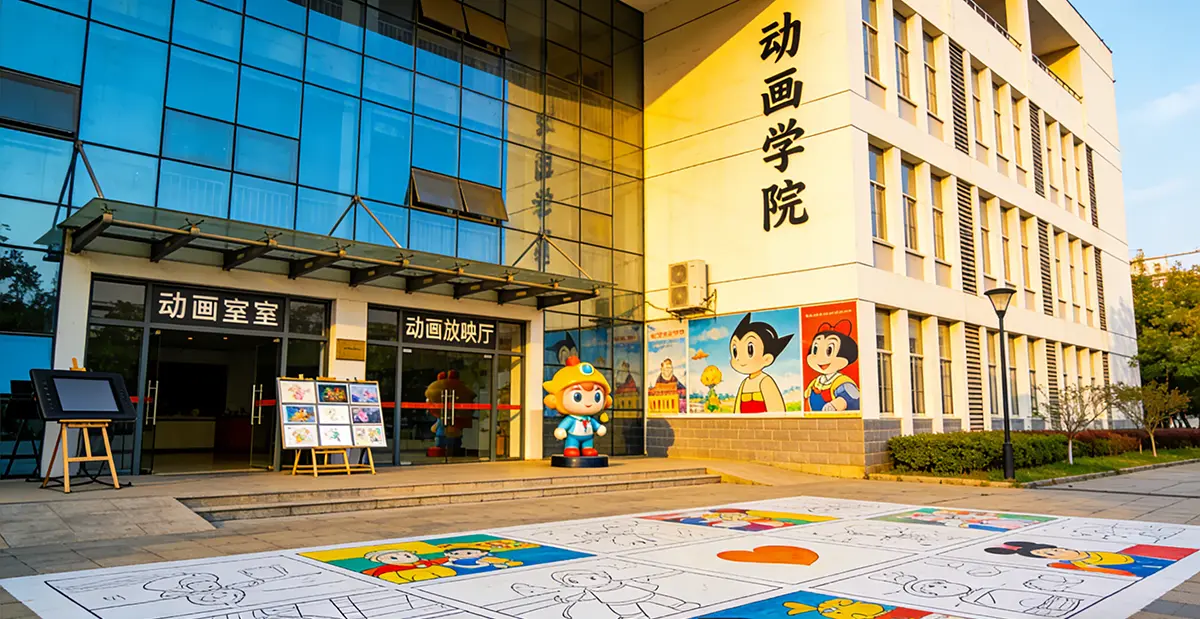
6. Leading Global Institutions Offering the Animation Major
Leading animation programs are primarily concentrated in art academies and comprehensive universities with dedicated film/animation schools.
| Country/Region | Representative Institutions (Top Animation Schools) |
| United States | California Institute of the Arts (CalArts, known as the "cradle of Disney"), Ringling College of Art and Design, University of Southern California, New York University, Savannah College of Art and Design, Rhode Island School of Design |
| United Kingdom | Royal College of Art (Postgraduate only), Bournemouth University (National Centre for Computer Animation), Teesside University, Edinburgh College of Art |
| France | Gobelins, l'École de l'Image (world-renowned), École Supérieure des Métiers Artistiques (ESMA) |
| Canada | Sheridan College ("Harvard of Animation"), Vancouver Film School (VFS) |
| Japan | Tokyo University of the Arts, Takarazuka University, Digital Hollywood University, Kyoto Seika University (first university in Japan to establish an animation program) |
| China | Beijing Film Academy (School of Animation), Communication University of China (School of Animation and Digital Arts), China Academy of Art (School of Animation and Game Design), Jilin Animation College, Sichuan Fine Arts Institute |
| Other | Hongik University (South Korea), RMIT University (Australia) |
DisciplineMajor Recommendations
Ideal Candidates for the Animation Major:
Individuals with boundless passion for creating dynamic worlds and characters, rich imagination, and keen observational skills. Those with strong hands-on abilities, patience, and perseverance, capable of enduring long hours of highly repetitive production work. People who hold a keen interest simultaneously in artistic style, principles of motion, performance, and new technologies. Candidates who possess good teamwork spirit and can adapt to project-based, pipeline-style work models.
Core Competencies for the Animation Major:
Mastery of at least one core production discipline (e.g., keyframe animation, 3D animation, modeling, VFX), backed by high-quality portfolio evidence. Exceptional visual storytelling skills, capable of conveying emotion and narrative through imagery and motion. Solid foundational art skills (form, color, composition) and a strong sense of kinetics/dynamics. Adaptability to quickly learn and apply new technologies and software in creative work.
Learning Recommendations for the Animation Major:
“Your portfolio is your lifeline”: Consciously begin building your portfolio from day one of your studies, prioritizing quality over quantity. “Foundations determine your ceiling”: Regardless of technological changes, traditional fundamental skills like sketching, quick drawing, principles of motion, and performance remain the core competitive edge of an animator. “Choose one direction to master deeply”: After understanding the full production pipeline, identify the area you are most interested in and skilled at (e.g., character animation, concept art, technical art) as early as possible and focus your efforts on mastering it. “Embrace technology and change”: Proactively learn cutting-edge skills such as real-time rendering engines (UE/Unity), AI painting tools, and basic Python scripting. “Conduct extensive film analysis and practice”: Deeply study classic animation works, analyzing their movement, performance, and cinematography frame by frame. “Actively pursue internships and competitions”: Strive to secure internships at renowned companies and participate in major domestic and international animation festivals and competitions to accumulate experience and build professional networks.
Note: Some institutions may categorize this major under different disciplines. Please refer to the specific classification used by the institution.
- The Previous Passage:Film Studies(Film Stud.)_电影学
- The Next Passage:Fashion Design(Fashion Des.)_服装设计
Human Geography Major_Geography(Geog.)_人文地理
The Human Geography Major explores the complex relationships between human activities and space, cul···
Atmospheric Sciences(Atmos. Sci.)_大气科学
Atmospheric science is the study of phenomena and evolutionary patterns within Earth's atmospher···
Earth Sciences(Earth Sci.)_地球科学
The Earth Science major focuses on studying the Earth system and its interactions, providing a scien···
Ocean Sciences(Ocean Sci.)_海洋科学
PbootCMS是全新内核且永久开源免费的PHP企业网站开发建设管理系统,是一套高效、简洁、 强悍的可免费商用的···

