

Real Estate(RE)_房地产
Time:2026-03-08 Visits:2
Real Estate Major
The Real Estate Major is an interdisciplinary field focusing on property investment, development, and management. This guide explores its core curriculum, diverse career paths in development, finance, and consulting, key industry trends like PropTech and ESG, and leading universities worldwide offering specialized real estate programs.
1. Introduction to the Real Estate Major
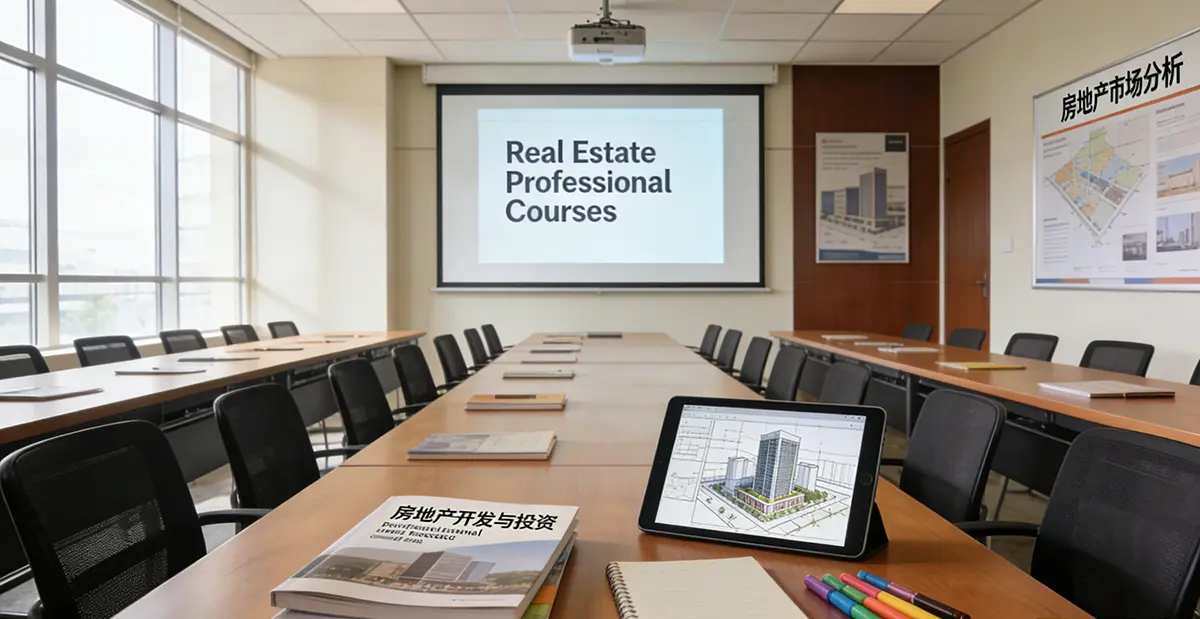
The Real Estate Major is a comprehensive applied discipline focused on the investment, development, financing, management, and appraisal of land, buildings, and related assets. It integrates knowledge from diverse fields such as economics, finance, law, urban planning, and architecture, aiming to cultivate versatile professionals equipped for careers in real estate development, investment, finance, consulting, and services. Beyond the physical construction of spaces, this major emphasizes realizing the economic value of property as an asset and ensuring its sustained operational performance.
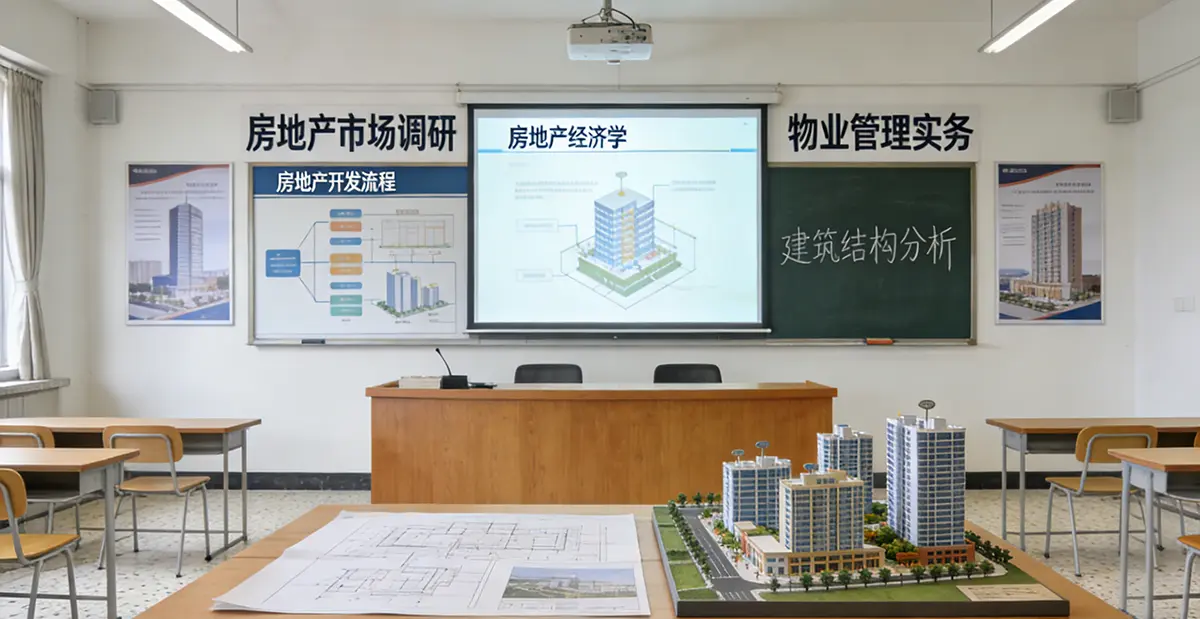
2. Core Courses in the Real Estate Major
| Module Category | Core Courses |
| Economics and Finance Core | Real Estate Economics, Urban Economics, Real Estate Finance and Investment, Real Estate Capital Markets, Real Estate Valuation and Appraisal |
| Development and Operations Management | Real Estate Development Process, Real Estate Asset Management, Property Management, Fundamentals of Construction Technology and Project Management |
| Market and Investment Analysis | Real Estate Market Analysis, Investment Analysis and Portfolio Management, Real Estate Quantitative Analysis (Data Analysis and Modeling) |
| Law and Policy | Real Estate Law, Land Use Planning and Regulations, Housing Policy |
| Professional Skills | Real Estate Financial Modeling (Argus, Excel), Fundamentals of Geographic Information Systems (GIS), Business Plan Writing |
3. Advanced Study Pathways for the Real Estate Major
Academic Advancement:
* Master of Real Estate: The most directly aligned advanced degree, deepening specialized knowledge and industry networks.
* Master of Finance (Real Estate Finance track) or MBA (Real Estate concentration): Pathways toward investment or senior management positions.
* Master of Urban and Regional Planning: Focuses on perspectives from land policy and urban planning.
* Master of Laws (LL.M.): Specializes in real estate legal practice.
Professional Certifications: Pursue credentials such as Certified Real Estate Appraiser, Chartered Financial Analyst (CFA, with an emphasis on REIT analysis), or Certified Property Manager.

4. Career Paths for Real Estate Graduates
* Development Sector: Real estate development companies (Development Analyst, Investment Expansion Manager, Project Manager).
* Investment and Finance Sector: Real estate private equity funds/investment firms (Investment Analyst, Asset Management Manager); Real Estate Investment Trusts (REITs) (Securities Analyst, Investment Manager); Banks/financial institutions (Commercial Real Estate Loan Officer, Structured Finance Manager).
* Consulting Services Sector: Real estate consulting firms (e.g., the “Big Five” agencies: Consultant, Broker); Accounting firms (Real Estate Tax Advisor, Transaction Services).
* Operations and Services Sector: Real estate asset management companies (Asset Management Manager, Leasing Manager); Property management companies (Asset Manager, Property Manager); Corporate real estate departments (in-house real estate asset managers within large enterprises).
* Public Sector: Government planning departments, housing authorities, public land management agencies.
5. Employment and Industry Trends for the Real Estate Major
Employment Characteristics: Highly cyclical, closely tied to macroeconomic conditions; combines local market knowledge with institutional networks; offers competitive starting salaries among business disciplines; the value of experience increases significantly with career progression.
Industry Trends:
* Technology Empowerment (PropTech): Big data, AI, and other technologies are transforming transaction, management, and analysis methodologies.
* ESG as a Core Investment Criterion: Green building certifications and healthy building standards significantly impact asset valuation.
* Refined Asset Management: Shift towards holistic lifecycle value management, focusing on operational efficiency and user experience.
* Rise of Alternative Asset Classes: Logistics warehouses, data centers, long-term rental apartments are emerging as key investment targets.
* Urban Renewal and Stock Transformation: Core cities are transitioning from “greenfield development” to “brownfield optimization.”
* REIT Market Growth and Financialization: The securitization of real estate assets is expanding public investment avenues, increasing demand for financial engineering expertise.
6. Leading Global Institutions for Real Estate Studies
(Selected Schools - Listed in no particular order)
| Country/Region | Representative Institutions (Notable Real Estate Programs) |
| United States | Massachusetts Institute of Technology, University of Pennsylvania (Wharton), University of Wisconsin-Madison, Cornell University, New York University |
| United Kingdom | University of Cambridge, London School of Economics, University of Reading (Henley Business School), University College London |
| Asia-Pacific | National University of Singapore, The University of Hong Kong, The Hong Kong Polytechnic University, Tsinghua University, Renmin University of China |
| Europe | Delft University of Technology (Netherlands), Swiss Federal Institute of Technology Zurich (Switzerland) |
DisciplineMajor Recommendations
Ideal Candidates for the Real Estate Major: Individuals fascinated by cities, architecture, and spatial dynamics, coupled with an understanding of their economic underpinnings; those possessing strong data analysis, financial modeling, and communication skills; capable of thriving in fast-paced, project-based environments and withstanding market volatility; and keen observers of macro policies and economic cycles.
Core Competencies for Success: Proficiency in financial modeling and investment analysis; strong market research and judgment capabilities; transaction and execution skills; and the ability to interpret legal and policy frameworks.
Learning Recommendations: Master core tools like Excel and Argus; build deep knowledge of local real estate markets; secure internships at leading developers, funds, or consulting firms; minor in finance, data science, or urban planning to build an interdisciplinary edge; and develop “hard” communication skills for crafting professional reports and delivering compelling presentations.
Note: Program categorization may vary by institution. Please refer to the specific discipline classification used by the respective university.
- The Previous Passage:Law(Law)_法学
- The Next Passage:Enterprise Management(Bus Admin)_工商管理

Human Geography Major_Geography(Geog.)_人文地理
The Human Geography Major explores the complex relationships between human activities and space, cul···

Atmospheric Sciences(Atmos. Sci.)_大气科学
Atmospheric science is the study of phenomena and evolutionary patterns within Earth's atmospher···

Earth Sciences(Earth Sci.)_地球科学
The Earth Science major focuses on studying the Earth system and its interactions, providing a scien···

Ocean Sciences(Ocean Sci.)_海洋科学
PbootCMS是全新内核且永久开源免费的PHP企业网站开发建设管理系统,是一套高效、简洁、 强悍的可免费商用的···

