

Vocal Arts / Voice(Vocal)_声乐
Time:2026-06-29 Visits:0
Vocal Performance Major
The Vocal Performance Major is a specialized discipline focused on mastering the art of singing through systematic training in technique, interpretation, and performance. This guide details the rigorous curriculum, advanced study options, and diverse career paths for vocal performance majors, encompassing opera, concert, musical theatre, and education. It addresses the unique challenges and evolving trends in the vocal arts industry, including digital performance and crossover genres. Whether aspiring to become a stage performer, educator, or studio artist, the Vocal Performance Major provides the technical foundation, artistic depth, and professional resilience required for a sustainable career in music.
Introduction to the Vocal Performance Major
The Vocal Performance Major is a highly specialized performing arts discipline that utilizes the human voice as an instrument to systematically study the technique, style, expression, and theory of singing. Through scientific and systematic training in breathing, phonation, resonance, language, and artistic expression, it aims to cultivate professional singers and vocal educators capable of high-level artistic practice on stages such as opera, concert, and musical theatre, as well as in teaching and creative fields. This major demands not only masterful vocal technique but also emphasizes profound musical literacy, multilingual proficiency, theatrical performance skills, and the precise ability to interpret works from various historical periods and styles.
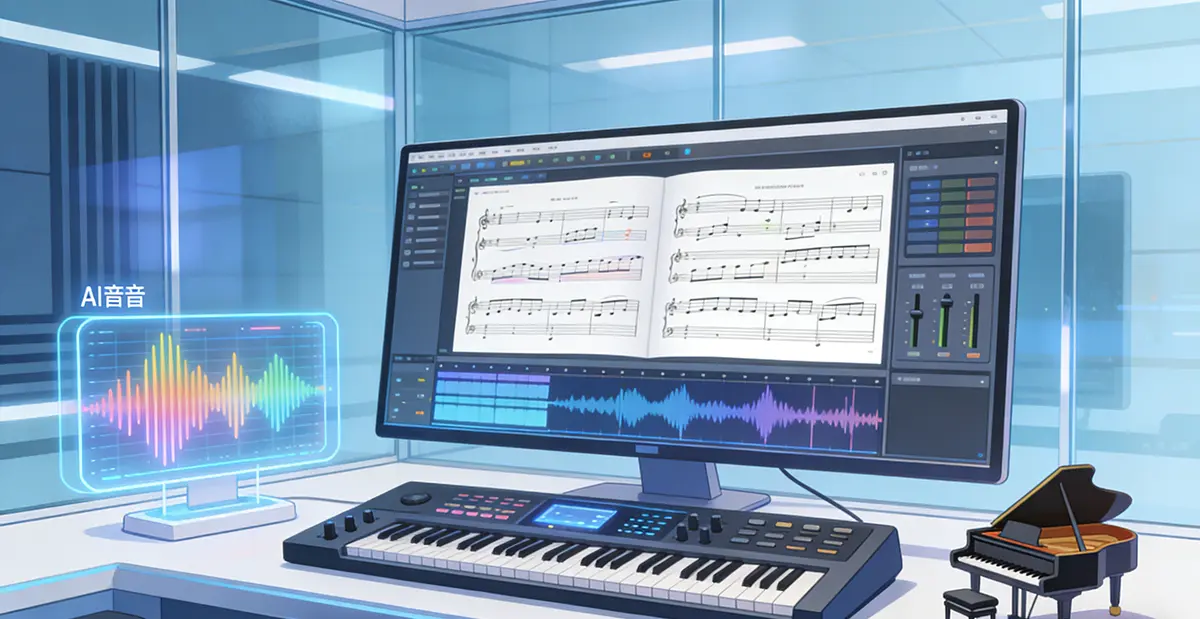
Core Curriculum for the Vocal Performance Major
| Module Category | Core Courses |
| Core Professional Skills | Principal Voice Lessons (One-on-one, core component), Artistic Coaching/Piano Accompaniment, Opera Performance/Opera Scene Study, Concert Performance Practice, Chamber Music/Vocal Ensemble Singing |
| Music Theory and History | Sight-Singing and Ear Training, Basic Music Theory, Harmony and Musical Form Analysis, Western Music History, Chinese Music History/Ethnic and Folk Music, History of Vocal Arts/Opera History |
| Language and Dramatic Performance | Italian Diction and Singing, German Art Song Diction and Singing, French Diction and Singing, Russian Diction Fundamentals, Stage Performance/Drama Fundamentals, Movement/Physical Training, Diction Correction |
| Practical and Stage Proficiency | Chorus, Vocal Ensemble (Duets, Quartets, etc.), Sight-Singing of New Works, Vocal Pedagogy, Fundamentals of Concert Planning and Stage Management |
| Expansion and Frontiers | Performance of Contemporary Vocal Works, Chinese Art Song and Opera Singing, Musical Theatre Styles and Practice, Recording Studio Practice and Microphone Techniques |
| Cultural Literacy | Introduction to Arts, Aesthetics of Music, Selected Readings in Poetry and Literature |
Advanced Study Pathways for the Vocal Performance Major
Master's/Doctorate in Vocal Performance: Deepens singing technique, expands repertoire, and specializes in opera, art song, or specific stylistic areas. Master of Opera/Master of Music in Opera: Provides comprehensive professional training for opera singers, often within a conservatory or opera house training program. Master of Vocal Pedagogy/Music Education: Focuses on the scientific theory and methodology of voice teaching. Master of Musicology/Music Theory: Shifts focus to vocal music history, work analysis, or theoretical research. Master of Musical Theatre Performance: Transitions to the musical theatre stage with systematic performance training. Master of Arts Management/Cultural Policy: Moves into management and operations of opera houses, concert halls, or arts festivals. Artist Diplomas/Advanced Studies at Top International Conservatories: Pursues advanced study abroad to obtain internationally recognized performance credentials and access wider professional networks.
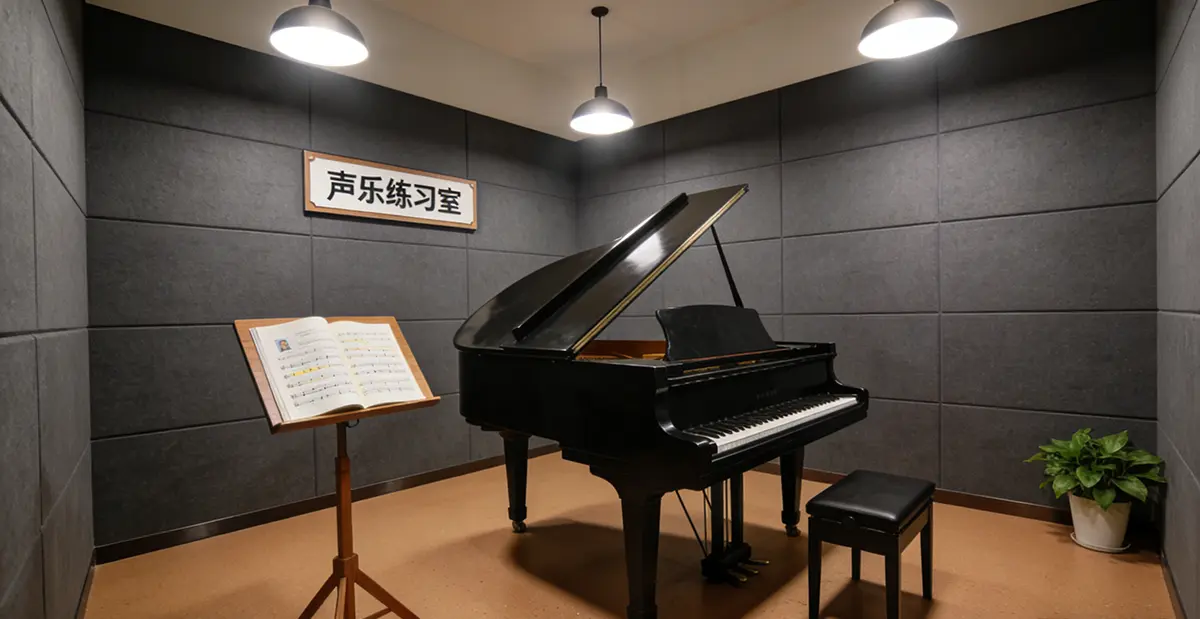
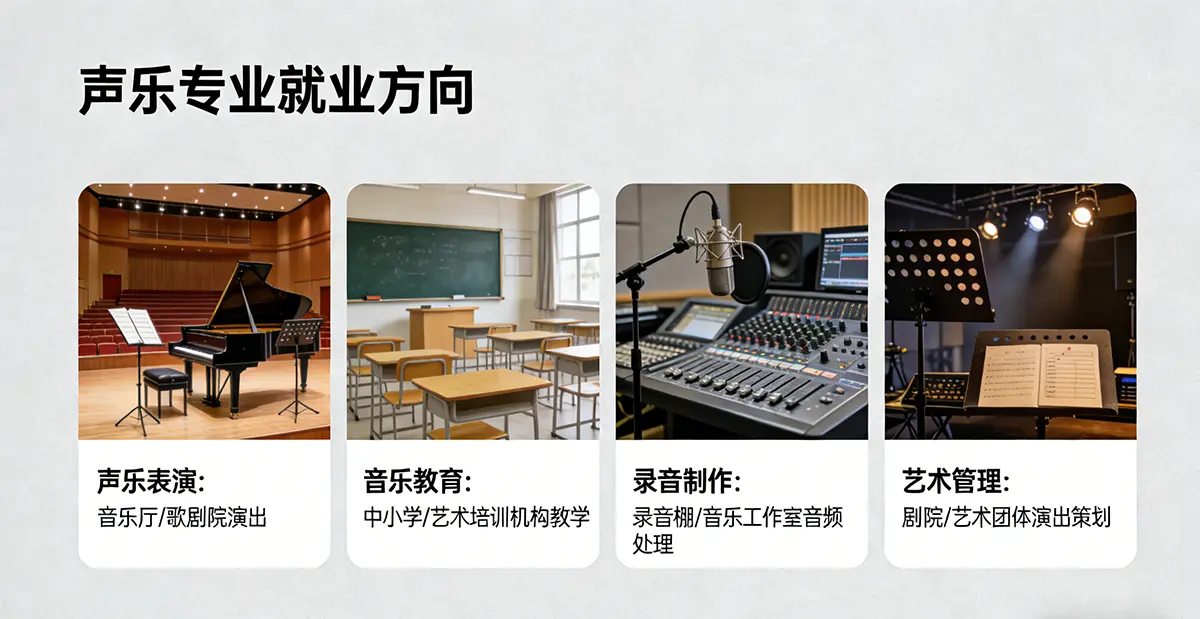
Career Paths and Positions for the Vocal Performance Major
| Core Employment Sectors | Typical Positions | Primary Responsibilities and Skill Application |
| Professional Performance Ensembles | Opera House Singer/Contract Artist, Symphony Orchestra/Chorus Soloist, Concert Soloist/Freelance Vocalist, Musical Theatre Performer | Participates in opera productions and performances; performs as a soloist in symphonic and choral works; presents solo recitals or guest performances; portrays roles in musical theatre productions. |
| Education and Training | University/Conservatory Voice Faculty, Primary/Secondary School/Youth Center/Training Institution Vocal Teacher, Private Vocal Studio Founder/Instructor | Engages in training the next generation of professional vocalists; provides vocal music outreach education, choir direction, or exam preparation; operates an independent teaching studio. |
| Music Production and Media | Recording Artist, TV/Radio Arts Program Producer/Singer, Opera House/Concert Hall Arts Education/Public Programs Officer | Participates in audio recordings for various media; involved in program production and performance; plans and executes public music education events. |
| Emerging and Freelance Roles | Online Content Creator/Vocal Pedagogy Blogger, Wedding/Event Singer, Vocal Coach/Artistic Trainer | Performs, teaches, and shares knowledge via new media platforms; performs at commercial events; provides professional vocal technique guidance. |
| Community and Cultural Services | Community/Cultural Center Music Officer, Choir Conductor | Organizes community vocal music activities, trains amateur choirs, and enriches public cultural life. |
Employment Rate and Industry Trends for the Vocal Performance Major
Employment Characteristics: “Pyramid Peak” Effect is Pronounced with Scarce Top Opportunities: The probability of becoming a top opera star or securing a contract with a premier opera house is extremely low, involving fierce competition. Strong Path Dependency and a Dual-Track System (Education/Performance): A significant number of graduates enter teaching. Securing a position in a stable performing ensemble is crucial for career stability. Highly Project-Based and Freelance-Oriented: Beyond salaried positions, much work exists as single opera productions, concerts, commercial gigs, and recording sessions, leading to income volatility and requiring strong self-management skills. Institutional Reputation and Mentor Relationships Are Crucial: Degrees from top conservatories and study under renowned teachers serve as vital endorsements for securing quality opportunities.
Industry Trends: Normalization of Online Performance and Digital Content Creation: The pandemic accelerated the adoption of online concerts. Hybrid online-offline performance models will persist, demanding multimedia adaptability from singers. Growth of the “Neo-Classical” and Crossover Fusion Market: Intimate concerts, immersive operas, and crossover works blending pop/electronic/world music attract younger audiences and create new platforms. Boom in Chinese Opera/Original Musical Theatre Production: Increased state support for domestic productions provides more locally-rooted roles and career development spaces for vocalists. Popularization of Arts Education and Aesthetic Upgrading: Growing societal demand for high-quality vocal music education creates a vast market for teachers, especially in premium one-on-one instruction. Widespread Adoption of Healthy, Scientific Vocal Practices: Scientific vocal training methods are being adopted by fields like broadcasting and teaching, expanding the application scope for vocal coaching.
Leading Global Institutions Offering the Vocal Performance Major
(Selected Schools - Listed in no particular order)
| Country/Region | Representative Institutions (Leading Institutions in Vocal Performance/Opera) |
| United States | The Juilliard School, Indiana University Jacobs School of Music (renowned for its Opera Theater), Manhattan School of Music, Curtis Institute of Music, New England Conservatory |
| United Kingdom | Royal Academy of Music, Royal Conservatoire of Scotland, Guildhall School of Music & Drama, National Opera Studio (a leading professional training program) |
| Italy | Conservatorio di Musica “Giuseppe Verdi” di Milano, Accademia Nazionale di Santa Cecilia (birthplace of opera, advantageous linguistic environment) |
| Germany/Austria | Hanns Eisler Academy of Music Berlin, University of Music and Performing Arts Munich, University of Music and Performing Arts Vienna (deep tradition in art song) |
| Russia | Moscow Conservatory, Saint Petersburg Conservatory |
| China | Central Conservatory of Music, Shanghai Conservatory of Music, China Conservatory of Music, Xinghai Conservatory of Music, Wuhan Conservatory of Music |
Ideal Candidates for the Vocal Performance Major
Individuals with exceptional vocal talent (timbre, range, volume) and a good musical ear. Those with a near-obsessive passion for singing, capable of enduring long-term, tedious, and sometimes painful technical training. Candidates with strong language learning aptitude and potential for dramatic performance. Those who desire to move audiences through song and performance on stage and thrive in the spotlight.
Core Competencies of the Vocal Performance Major
Scientific, stable, and expressive vocal technique: The foundation for all development. Multilingual singing ability and stylistic command: The precise interpretation of classic repertoire in Italian, German, French, Chinese, and other languages. Comprehensive stage presence: The integration of vocal skill, language, dramatic acting, and physicality to create characters. Strong mental fortitude and professional resilience: The capacity to handle competition, audition pressure, and maintain momentum through career fluctuations.
Study Recommendations for the Vocal Performance Major
Prioritize vocal health above all: Establish scientifically sound vocal habits to prevent injury; health is the lifeline of your career. Master languages, especially Italian and German: These are the keys to unlocking the core classical vocal repertoire. Actively seek stage experience, starting with small roles: Cherish every performance opportunity, whether in school concerts or small-scale opera productions—experience is invaluable. Systematically study pedagogy: Even for those focused on performance, understanding teaching methods provides clearer insight into one's own technique and paves the way for potential career transitions. Build a professional network and personal brand: Proactively attend masterclasses and competitions, and connect with coaches, conductors, and directors. Maintain a professional and positive presence on social media. Objectively self-assess and plan your optimal development path early.
Note: Program classifications may vary by institution. Please refer to the specific classification used by your target institution.
- The Previous Passage:Photography(Photo.)_摄影
- The Next Passage:没有了!
Human Geography Major_Geography(Geog.)_人文地理
The Human Geography Major explores the complex relationships between human activities and space, cul···

Atmospheric Sciences(Atmos. Sci.)_大气科学
Atmospheric science is the study of phenomena and evolutionary patterns within Earth's atmospher···

Earth Sciences(Earth Sci.)_地球科学
The Earth Science major focuses on studying the Earth system and its interactions, providing a scien···

Ship and Ocean Engineering(Ship Ocean Eng.)_船舶与海洋工程
Naval Architecture and Ocean EngineeringNaval Architecture and Ocean Engineering is a core engineeri···

