

Luxury Management(Luxury Mgmt)_奢侈品管理
Time:2026-06-26 Visits:0
Luxury Management Major
The Luxury Management Major integrates business, art, and consumer psychology to master the unique dynamics of luxury brands. This guide details its curriculum in brand strategy and retail experience, explores career paths within prestigious houses, analyzes key trends like digitalization and sustainability, and lists top international schools offering specialized programs.
1. Introduction to the Luxury Management Major
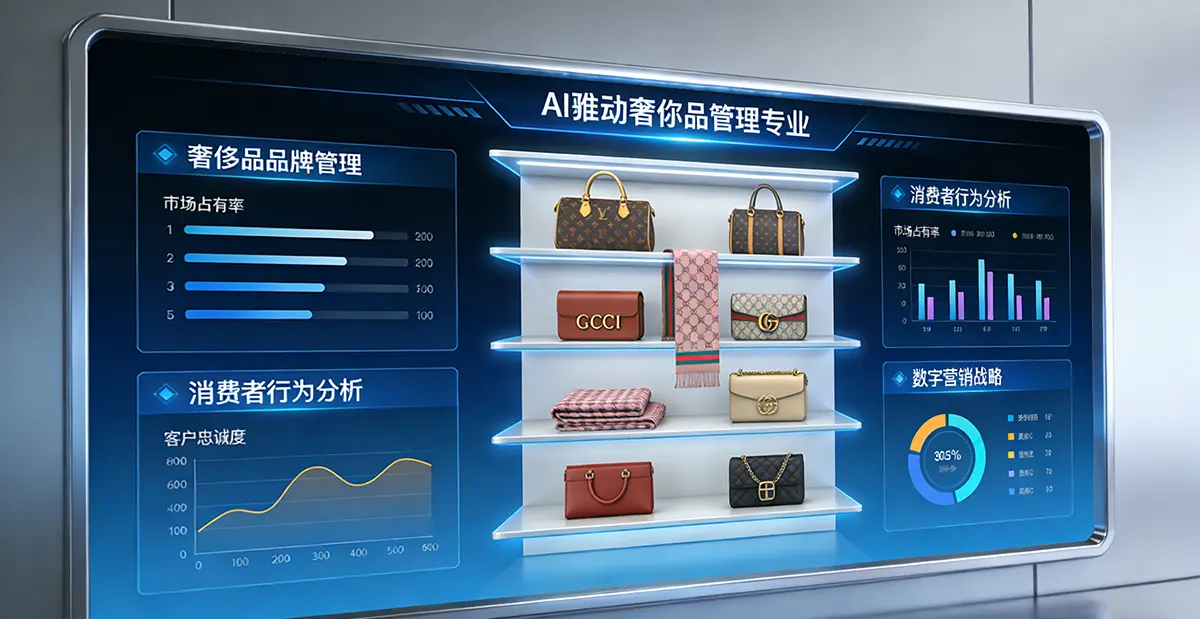
The Luxury Management Major is an interdisciplinary field that integrates business administration, marketing, art and culture, and consumer psychology. It focuses on the unique business models, brand value creation, omnichannel retailing, customer relationship management, and global market strategies of luxury brands. The Luxury Management Major cultivates versatile management professionals who appreciate both the artistic essence and craftsmanship of luxury goods while mastering modern business operations and digital marketing.
2. Core Curriculum of the Luxury Management Major
| Module Category | Core Courses |
| Business Management Core | Luxury Brand Management, Luxury Marketing, Luxury Retail & Customer Experience, Luxury Supply Chain & Operations, Financial Analysis & Pricing Strategies |
| Culture & Creativity | Introduction to the Luxury Industry & History, Art & Design History, Craftsmanship & Quality Perception, Luxury Law & Intellectual Property |
| Consumers & Markets | Luxury Consumer Behavior & Psychology, Global Luxury Market Analysis, Digital Marketing & Social Media Strategy |
| Practical Skills | Visual Merchandising & Display, Public Relations & Event Management, Buying & Merchandise Management, Business Planning, Industry Visits & Capstone Project/Internship |
3. Advanced Study Pathways for the Luxury Management Major
Academic Advancement:
* Master of Science/Master of Business Administration in Luxury Management: Advanced study at top business schools in France, Italy, the UK, etc., is a core pathway into the industry.
* Related Master’s Programs: Such as Fashion Management, Arts Management, or Brand Management.
* MBA (General Management): Preparation for senior management roles within luxury conglomerates.
* Entrepreneurship: Launching an independent brand or acting as a brand representative.

4. Career Paths for Luxury Management Graduates
Graduates of the Luxury Management Major find employment concentrated within the luxury industry ecosystem. Key destinations include:
* Brands (Primary): Marketing/Communications Specialist/Manager, Retail/Store Manager, Customer Relationship Management (CRM) Specialist, Merchandiser/Buyer, Business Development Manager.
* Retailers & Department Stores: Floor/Category Manager at premium department stores, Buyer, Visual Merchandiser.
* Service & Consulting Firms: Consultant at luxury consulting firms; Account Manager at advertising/PR agencies (luxury division).
* Media & E-commerce: Editor at fashion/luxury media; Operations/Buyer for luxury e-commerce platforms.
5. Employment and Industry Trends for the Luxury Management Major
Employment Characteristics: Employment for the Luxury Management Major is highly dependent on global luxury conglomerates (e.g., LVMH, Kering) and their ecosystems, with roles concentrated in international hubs. Practical experience and networks are crucial. Language proficiency (e.g., in English, French, Italian, Chinese) is a significant barrier. Starting salaries are moderate, but the experiential value and industry exposure are high.
Industry Trends:
* Central Role of the Chinese Market: Localized marketing, digital operations, and expansion into lower-tier cities are strategic priorities.
* Digital Transformation & Omnichannel Integration: Seamless online-offline experiences drive surging demand for digital talent.
* Sustainability & Ethical Consumption: “Sustainable luxury” is a key agenda, pushing brands toward eco-materials and transparent supply chains.
* Experience Economy & Brand Activation: Competition extends beyond products to immersive retail, cultural events, and membership services.
* Secondhand Luxury & Circular Economy: The rise of resale platforms introduces new business models and roles.

6. Leading Global Institutions
(Selected Schools - Listed in no particular order)
| Country/Region | Representative Institutions (Renowned Luxury Management Programs) |
| France | ESSEC Business School, EMLYON Business School, SKEMA Business School |
| Italy | SDA Bocconi School of Management, Politecnico di Milano, Istituto Marangoni |
| United Kingdom | University of the Arts London (London College of Fashion), University of Manchester |
| Switzerland | Ecole Hôtelière de Lausanne (EHL) |
| United States | New York University, Parsons School of Design |
| Asia | Singapore Management University, The Hong Kong Polytechnic University |
DisciplineMajor Recommendations
Ideal Candidates for the Luxury Management Major: Individuals with genuine passion and discernment for aesthetics, craftsmanship, brand narratives, and cultural history; those with exceptional interpersonal and service skills and an international perspective; and those who thrive in the fast-paced, high-pressure fashion industry.
Core Competencies: Deep brand appreciation and storytelling skills; exceptional client relationship management and emotional intelligence; a blend of digital savvy and respect for traditional craftsmanship; multilingual and cross-cultural communication abilities.
Study Recommendations:
1. Gain Industry Experience: Start with sales internships at luxury boutiques—the most effective entry point.
2. Build Personal Style & Network: Actively participate in industry events and showcase insights on professional platforms.
3. Master at Least Two Foreign Languages: English + French/Italian is a powerful combination; Chinese is a major asset for the China market.
4. Develop Foundational Business & Data Literacy: Deeply understand brand financial models, supply chains, and consumer data.
Note: Program categorization varies by institution. Please refer to the specific discipline classification used by the respective university.
- The Previous Passage:Business Studies(Bus Stud)_商业学
- The Next Passage:没有了!
Human Geography Major_Geography(Geog.)_人文地理
The Human Geography Major explores the complex relationships between human activities and space, cul···

Atmospheric Sciences(Atmos. Sci.)_大气科学
Atmospheric science is the study of phenomena and evolutionary patterns within Earth's atmospher···

Earth Sciences(Earth Sci.)_地球科学
The Earth Science major focuses on studying the Earth system and its interactions, providing a scien···

Ship and Ocean Engineering(Ship Ocean Eng.)_船舶与海洋工程
Naval Architecture and Ocean EngineeringNaval Architecture and Ocean Engineering is a core engineeri···

