

Pharmacy(Pharm.)_药学
Time:2026-06-15 Visits:0
Pharmacy Major (Medicinal Chemistry & Pharmacology Track)
The Pharmacy Major with a focus on Medicinal Chemistry and Pharmacology Fundamentals is a comprehensive discipline studying drug discovery, design, mechanisms of action, and application. Integrating chemistry and biology, it aims to cultivate professionals with core capabilities in innovative drug development. Graduates of this major are key contributors to the drug R&D value chain, pursuing careers in pharmaceutical companies, research institutes, hospitals, and regulatory agencies. This article systematically outlines its core curriculum, advanced study options, diverse career paths, and leading global institutions.
1. Introduction to the Pharmacy Major (Medicinal Chemistry & Pharmacology Track)
The Pharmacy Major (Medicinal Chemistry & Pharmacology Track) is a comprehensive applied discipline dedicated to the study of drug discovery, development, production, distribution, use, and management. Within this major, Medicinal Chemistry focuses on the design and synthesis of novel drugs—the science of “creating drugs.” Pharmacology concentrates on investigating the laws governing interactions between drugs and living systems (including pathogens), encompassing efficacy, toxicity, and metabolism—the science of “understanding drug action.” This track aims to cultivate interdisciplinary pharmaceutical professionals who master the core scientific principles of drug research and development and possess foundational capabilities for innovative drug creation.

2. Core Curriculum of the Pharmacy Major (Medicinal Chemistry & Pharmacology Track)
| Module Category | Core Courses |
| Chemistry Foundation Series | Inorganic Chemistry, Analytical Chemistry, Organic Chemistry, Physical Chemistry |
| Biology Foundation Series | Human Anatomy & Physiology, Biochemistry & Molecular Biology, Cell Biology, Microbiology & Immunology |
| Professional Core (Pharm Chem/Pharmacology) | Medicinal Chemistry (Natural Product Chem, Medicinal Synthesis, Computer-Aided Drug Design), Pharmacology (Basic, Clinical, Toxicology), Pharmaceutical Analysis, Pharmaceutics |
| Pharmaceutical Integration | Pharmacognosy, Pharmaceutical Affairs Management, Pharmacokinetics, Pharmaceutical Information Retrieval & Research Methods |
| Research Methods & Skills | Medicinal Chemistry Lab (Synthesis, Purification), Pharmacology Lab (Animal/Cell Models), Instrumental Analysis (HPLC, LC-MS), Pharmaceutical Formulation Lab, Biostatistics |
| Supporting & Frontier Areas | Biotechnology-based Drug Development, Pharmacogenomics, Drug Discovery Case Studies |
3. Advanced Study Pathways for the Pharmacy Major (Medicinal Chemistry & Pharmacology Track)
Pursuing a Master’s or PhD in Pharmacy, specializing in Medicinal Chemistry, Pharmacology, Pharmaceutics, or Pharmaceutical Analysis, is the core pathway for graduates of this Major aiming for careers in academic or industrial new drug R&D. Other focused options include a Master’s in Medicinal Chemistry or Pharmacology for specialized skill development, or transitioning into Medicine/Clinical Pharmacy to become a clinical pharmacist. The strong foundation also enables graduates to advance into broader Biomedical Sciences/Biotechnology, deepen studies in Chemistry/Chemical Biology, enter the Public Health/Regulatory Science sector, or combine business knowledge with an MBA for roles in pharmaceutical management, marketing, or investment.

4. Career Paths for the Pharmacy Major (Medicinal Chemistry & Pharmacology Track)
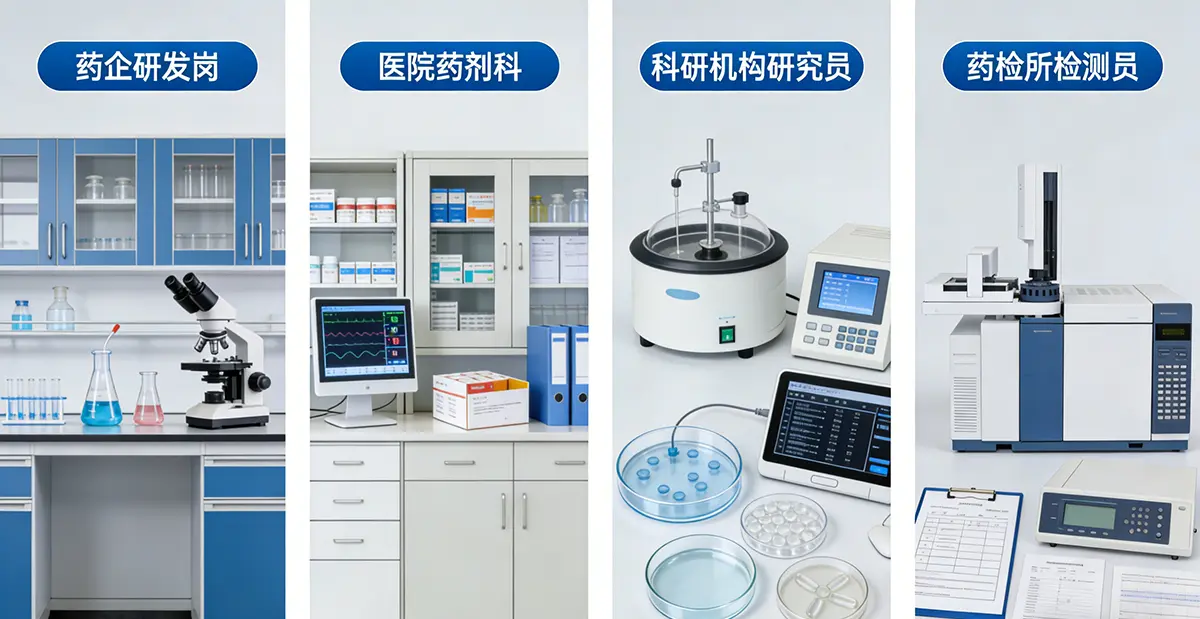
Graduates of the Pharmacy Major (Medicinal Chemistry & Pharmacology Track) enjoy exceptionally broad career prospects spanning the entire pharmaceutical value chain, from laboratory bench to patient bedside, pharmacy, and regulatory agencies. In the core area of Research and Development, they become medicinal chemists, pharmacologists, or process engineers in pharmaceutical and biotech companies, or pursue research careers in academia and CROs. Production and Quality Management offers roles in manufacturing, quality assurance/control, and regulatory affairs. The Clinical and Healthcare sector provides pathways to becoming clinical pharmacists or clinical trial professionals. Furthermore, the Pharmacy Major prepares graduates for careers in Distribution, Management, and Services, including roles in regulatory agencies, pharmacy operations, pharmaceutical consulting, and investment analysis.
5. Employment and Industry Trends for the Pharmacy Major
Employment is characterized by stable, counter-cyclical demand, with consistently high rates due to the essential nature of healthcare, though salary ranges vary significantly. Success is highly dependent on degree level and skills, with core R&D roles typically requiring a Master’s or PhD, while other sectors value professional certifications. Jobs are concentrated in major pharmaceutical hubs and large cities.
Key industry trends shaping opportunities for graduates of the Pharmacy Major include: the national strategic shift toward innovative drug R&D, driving demand for talent in medicinal chemistry and pharmacology; the rapid rise of biotechnology drugs (e.g., antibodies, gene therapies) requiring interdisciplinary expertise; the integration of AI and Big Data in drug discovery, creating hybrid roles; the growth of Precision Medicine and companion diagnostics; and the globalization of Chinese pharma, increasing need for professionals versed in international regulations (e.g., ICH guidelines).
6. Leading Global Institutions Offering the Pharmacy Major
Pharmacy is a vital discipline within medicine and life sciences, with numerous prestigious universities worldwide hosting leading schools of pharmacy.(Selected Institutions - No particular ranking)
| Country/Region | Representative Institutions (Top in Pharmacy/Medicinal Chemistry/Pharmacology) |
| United States | UNC Chapel Hill Eshelman School of Pharmacy, UCSF School of Pharmacy, University of Michigan College of Pharmacy, Harvard University (Chemical Biology) |
| United Kingdom | UCL School of Pharmacy, University of Cambridge, University of Nottingham |
| Europe | University of Copenhagen (Denmark), ETH Zurich (Switzerland), Leiden University (Netherlands) |
| Asia | National University of Singapore, University of Tokyo, China Pharmaceutical University, Shenyang Pharmaceutical University, Peking University School of Pharmaceutical Sciences, Fudan University School of Pharmacy |
| Other | University of Toronto (Canada), Monash University (Australia) |
DisciplineMajor Recommendations
Ideal Candidates for the Pharmacy Major (Medicinal Chemistry & Pharmacology Track):
This major is ideal for individuals with a keen interest in both chemistry and biology, who enjoy unraveling the logical connections between “disease, target, and drug.” They possess a rigorous scientific mindset, strong hands-on laboratory skills, and sound logical thinking. They are motivated to contribute to healthcare and can effectively bridge the gap between dedicated laboratory research and solving real-world health challenges.
Core Competencies of the Pharmacy Major (Medicinal Chemistry & Pharmacology Track):
The Pharmacy Major builds solid skills in medicinal chemistry synthesis and pharmacological experimentation. It develops the comprehensive ability to design and evaluate drugs based on an understanding of disease biology. Graduates gain systematic knowledge of the entire drug lifecycle—from R&D and production to distribution and use. The program also instills a professional ethos that prioritizes regulatory compliance, quality, and safety.
Learning Recommendations for the Pharmacy Major:
Strengthen your dual foundation in chemistry and biology—this is the essential bedrock for understanding drug fundamentals. Seek early and sustained laboratory experience to hone core skills in drug synthesis, bioactivity screening, formulation, or analysis. Stay informed about industry trends and regulatory policies, such as national drug innovation initiatives and ICH guidelines. Pursue high-value professional certifications, like the Licensed Pharmacist qualification, to broaden career options. Cultivate an interdisciplinary perspective by proactively learning about related fields such as basic medicine, bioinformatics, or artificial intelligence. Finally, define your career aspirations early—whether leaning towards lab R&D, industrial production, clinical services, or regulatory affairs—and strategically accumulate relevant experience.
*Note: Program classification may vary by institution; please verify the specific structure at your chosen university.*
- The Previous Passage:Hematology(Hematol.)_血液学
- The Next Passage:没有了!

Human Geography Major_Geography(Geog.)_人文地理
The Human Geography Major explores the complex relationships between human activities and space, cul···

Atmospheric Sciences(Atmos. Sci.)_大气科学
Atmospheric science is the study of phenomena and evolutionary patterns within Earth's atmospher···

Earth Sciences(Earth Sci.)_地球科学
The Earth Science major focuses on studying the Earth system and its interactions, providing a scien···
Ocean Sciences(Ocean Sci.)_海洋科学
PbootCMS是全新内核且永久开源免费的PHP企业网站开发建设管理系统,是一套高效、简洁、 强悍的可免费商用的···

