

German(German Studies)_德语
Time:2026-03-08 Visits:0
German Major
The German Major is designed to cultivate professionals with advanced German language proficiency and deep cultural understanding. This discipline systematically covers language skills, literature, linguistics, and regional studies, preparing graduates for diverse careers in translation, education, international business, and diplomacy. With growing ties between China and German-speaking nations, German majors are well-positioned for roles in cross-cultural communication and specialized industries. This resource outlines the program structure, core courses, global study opportunities, and employment trends for German language specialists.
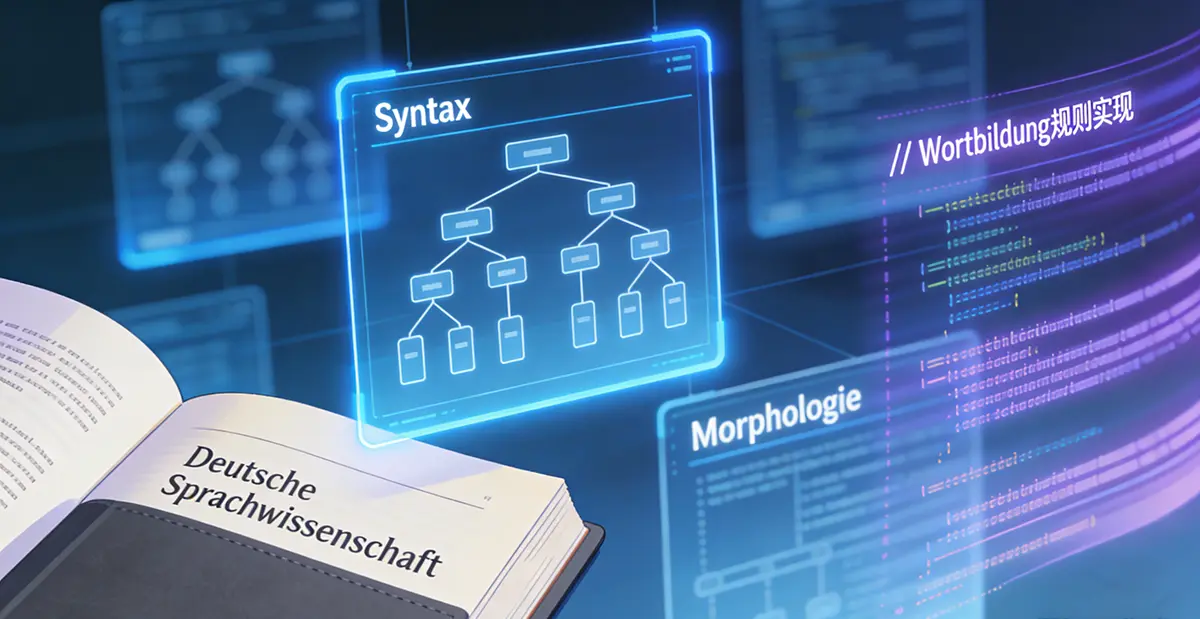
1. Introduction to the German Major
The German Major is a comprehensive humanities discipline centered on the German language, involving systematic study of the language, literature, culture, history, society, and contemporary affairs of German-speaking countries (Germany, Austria, Switzerland, etc.). This major is designed not only to develop students' exceptional comprehensive applied skills in German listening, speaking, reading, writing, and translation, but also, through in-depth academic training, to equip them with scientific analytical methods in linguistics, an understanding of German literary classics and intellectual movements, and insights into the political-economic systems and socio-cultural dynamics of the German-speaking world. The German Major aims to cultivate versatile talents with a solid linguistic foundation, profound cross-cultural comprehension, independent research capabilities, and an international perspective.
2. Core Courses in the German Major
| Module Category | Core Courses |
| Language Skills Core | Basic German/Comprehensive German, Advanced German, German Audio-Visual-Speaking, German Writing, German Grammar, German-Chinese/Chinese-German Translation and Interpretation |
| Literature and Culture | History of German Literature (from Old High German to Present), Selected Readings in German Literature (Novels, Poetry, Drama), Austrian/Swiss Literature, Literary Theory and Criticism |
| Linguistics | Introduction to German Linguistics, German Phonetics, German Lexicology, German Word Formation, German Text Linguistics, History of the German Language |
| Regional Studies and Society | Overview of Germany/German-speaking Countries, German History, German Politics and Economy, History of German Philosophical Thought (Kant, Hegel, Nietzsche, etc.), Special Topics in German Society and Culture, Intercultural Communication |
| Translation and Interpreting Practice | Translation Theory and Practice, Specialized Written Translation (Economics & Trade, Technology, Law), Consecutive Interpreting, Fundamentals of Simultaneous Interpreting (Advanced Course) |
| Regional and Interdisciplinary Studies | Sino-German/Sino-European Relations, European Union Studies, Analysis of German Media and International News Reporting, Arts and Cinema of German-speaking Countries |
| Practical Skills | Academic German Writing, Business German, German Language Testing (Preparation for TestDaF, DSH, etc.), Application of Computer-Assisted Translation Tools |
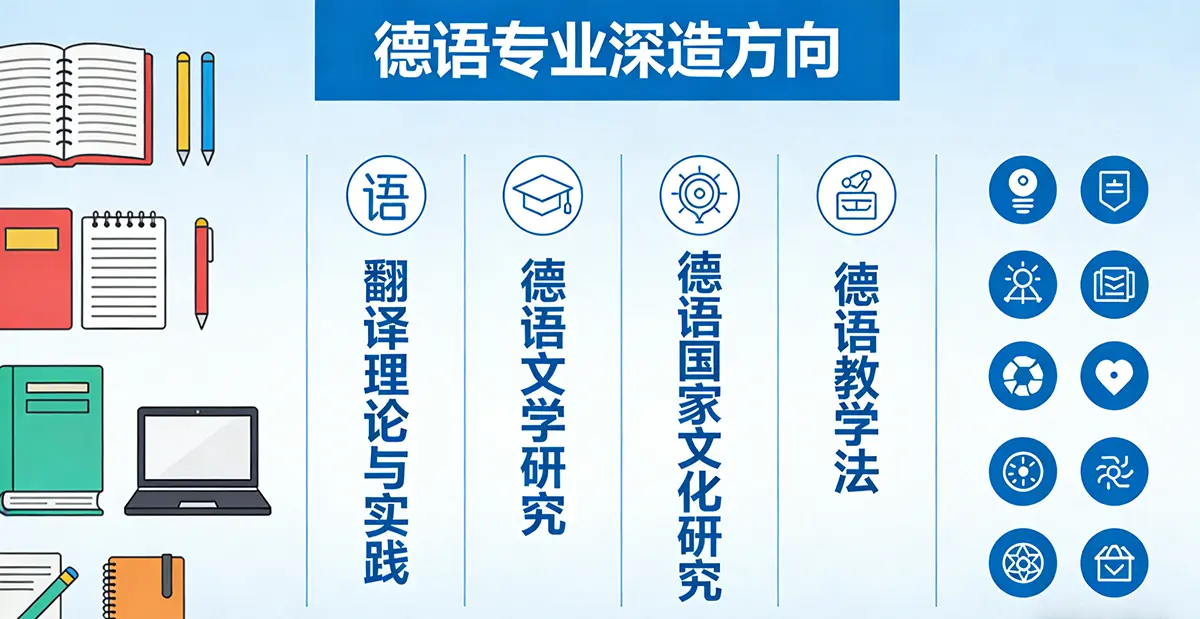
3. Advanced Study Pathways for the German Major
Master's/PhD in German Language and Literature/Germanic Studies: Enter the academic research track to become a university instructor or professional researcher.
Master's in Translation Studies/Conference Interpreting: Become a senior professional translator or researcher in translation studies.
Master's in China-Europe Studies/European Studies/International Relations: Focus on Germany/Europe as the core research subject and enter the field of policy research.
Master's in Germanic Linguistics/Applied Linguistics: Conduct in-depth research on the structure of the German language and teaching methodologies.
Master of Laws (German Law Specialization)/Master's in Economics: Leverage German language proficiency to specialize in German or European law and economics.
Master's in Teaching German as a Foreign Language: Specialize in the theory and methodology of teaching German to non-native speakers.
Master's in Cultural Management/Museum Studies: Enter cultural and artistic institutions to manage Sino-German cultural exchange projects.
4. Career Paths and Positions for German Majors
The core strength of the German Major lies in "precise language skills + specialized regional knowledge," enabling its graduates to pursue diverse and in-depth career options within the macro-context of close Sino-German and Sino-European cooperation.
| Core Employment Fields | Typical Positions | Primary Responsibilities and Skill Applicatio |
| Education and Research | University German Instructor/Researcher (typically requires a doctoral degree) | Engage in teaching and research on German language, literature, and culture. |
| Secondary School/International School German Teacher (requires teaching certification) | Conduct German language instruction and courses on cultures of German-speaking countries. | |
| Instructor/Curriculum Consultant at language training institutions (e.g., Goethe-Institut) | Engage in German language teaching, curriculum development, and examination coaching. | |
| Translation and Localization | Professional Translator/Translation Reviewer (Government, Enterprises, Publishing Houses) | Responsible for German-Chinese translation of technical documents, business contracts, literary works, and legal documents. |
| Conference Interpreter (Freelance or employed by agencies) | Provide consecutive or simultaneous interpretation services for international conferences and business negotiations. | |
| Localization Specialist (Technology, Automotive, Gaming Companies) | Responsible for the localization and adaptation of products, software, and games for the German-speaking market. | |
| Business and Corporate Management | Management Trainee, Administrative/Project Assistant for German/Chinese companies' German operations | Serve as a core communication bridge, responsible for coordination, translation, project management, and market support. |
| Germany Trade Specialist/Overseas Sales | Develop the German-speaking market, maintain client relationships, and manage business negotiations and contract follow-ups. | |
| Procurement/Supply Chain Specialist (involving suppliers in German-speaking regions) | Manage communication, sourcing, negotiation, and order management with suppliers in German-speaking regions. | |
| Government, Foreign Affairs & International Organizations | Diplomatic and Foreign Affairs Personnel (Ministry of Foreign Affairs, Embassies/Consulates in Germany/EU) | Engage in diplomatic reception, document drafting, policy research, and bilateral relations coordination. |
| Civil Servants (Ministry of Commerce, Ministry of Culture and Tourism, Local Foreign Affairs Offices, CCPIT, etc.) | Responsible for Germany/EU-related affairs, policy research, investment promotion, and cultural exchange project management. | |
| International Organization Staff (EU Headquarters, UN Agencies) | Engage in administrative management, project coordination, document translation, and research work. | |
| Media, Publishing, and Think Tanks | Media Correspondent in Germany/Europe, International News Editor | Engage in news reporting, current affairs commentary, and special topic planning. |
| German-Language Book Editor/Copyright Manager at Publishing Houses | Responsible for the acquisition, translation, editing, or copyright trading of German-language books. | |
| Think Tank/Research Institute Researcher on German/European Affairs | Conduct in-depth analysis and policy research on German politics, economy, society, and China-Europe relations. | |
| Engineering and Technical Support | Technical Support Engineer/Product Specialist (German companies in automotive, machinery, chemical, environmental sectors) | Serve as a communication hub between technical teams and headquarters/clients in German-speaking regions, responsible for technical document translation, product specification explanation, and customer training. |
5. Employment Rate and Industry Trends for German Majors
Employment Rate Characteristics:
"High Industry Relevance and Close Economic Interdependence": The job market is highly positively correlated with bilateral Sino-German/Sino-European trade, investment, and political relations. Job demand is strong during periods of economic prosperity and close cooperation.
"Small but Elite, Combining Competition and Opportunity": Compared to English, German is a less commonly taught language with a smaller total talent pool. Competition for top positions (e.g., senior interpreting, core management roles) is intense, but the professional barriers are higher, making them less easily replaceable.
"Interdisciplinary Background is Key": Graduates with "language-only" skills face challenges, while "German +" interdisciplinary talents (e.g., German + Law/Economics/Engineering/Computer Science) are highly competitive.
"Significant Variation in Starting Salaries and Platforms": Entering renowned German companies, government foreign affairs departments, or international organizations offers better starting salaries and development prospects; entry-level translation or clerical positions may offer modest starting pay.
Industry Development Trends:
Deepening and Transformation of Sino-German/Sino-European Cooperation: The focus of cooperation is expanding from traditional manufacturing to green technology (new energy, environmental protection), digital transformation, biomedicine, and technological innovation, generating new demand for specialized talent.
Intelligent and High-End Language Services: Basic written translation is impacted by machine translation, but demand for high-level technical translation, creative copywriting, legal/financial translation, and high-quality interpreting services is growing steadily.
Increased Corporate Demand for Cross-Cultural Management Skills: The development of German companies in China and Chinese companies in Germany requires not only linguistic bridges but also integrated professionals with deep knowledge of both business cultures, management mindsets, and compliance requirements.
Increased Demand for Public Diplomacy and Cultural Communication: China's cultural "going global" strategy and local cooperation with Germany require talent proficient in German and understanding of German audiences for cultural project planning and communication.
Integration of Germany's "Industry 4.0" and China's "Smart Manufacturing": In automation and the Internet of Things (IoT) fields, there is a scarcity of engineering support and project management talent proficient in both German and technology.
6. Major Global Institutions Offering the German Major
| Country/Region | Representative Institutions (Top Institutions in German/Germanic Studies) |
| Germany | Heidelberg University, Ludwig Maximilian University of Munich, Freie Universität Berlin, Humboldt University of Berlin, University of Göttingen (with a strong tradition in Germanic Studies) |
| Austria | University of Vienna |
| Switzerland | University of Zurich |
| China | Beijing Foreign Studies University (German Department with the longest history and strongest reputation), Shanghai International Studies University, Peking University, Nanjing University, Tongji University (a bridge for Sino-German cooperation, leveraging strengths in engineering alongside German), Guangdong University of Foreign Studies |
| Other Regions | Leiden University (Netherlands, strong in European Studies), University of Oxford, University of Cambridge (German Department under the Faculty of Modern Languages) |
Study and Development Recommendations for the German Major
Ideal Candidates: Those with a passion for learning the rigor and logic of German pronunciation and grammatical structures. Individuals with a strong interest in German/European history, philosophy, literature, music, and art. Those who are methodical, detail-oriented, and possess clear logical thinking. Individuals aspiring to become professional communicators and coordinators in various fields of Sino-German/Sino-European exchange.
Core Competitiveness of the German Major: Mastery of the Language: Achieving near-native accuracy and fluency, especially within specialized fields. In-depth Regional and Country Knowledge: Serving as a "living dictionary" not just of the language, but of German and even European political, economic, legal, and social systems. Cross-Cultural Communication and Integration Skills: The ability to accurately understand and bridge differences in Chinese and German thinking patterns, business practices, and work styles. Rapid Learning and Application Skills in Specialized Fields: The ability to quickly grasp the fundamental knowledge of an unfamiliar industry (e.g., automotive engineering, patent law) and perform effective linguistic mediation.
Study Recommendations for the German Major: Achieve "Excellence" in Language Proficiency: Aim for C1/C2 level (Common European Framework of Reference for Languages) as the linguistic threshold for entering high-end fields. Determine a "+" Specialization Early: Starting from the sophomore year, identify and deepen expertise in a complementary field (e.g., law, economics, fundamentals of engineering, computer science) through minors, electives, self-study, or internships. Strive for Long-Term Study Abroad Experience: Pursue exchange programs or dual degrees in Germany; immersive experience is the best way to enhance language skills and cultural understanding. Accumulate High-Quality Internships: Target German corporate headquarters/their Chinese branches, German Chambers of Commerce, Sino-German cooperative projects, relevant government departments, or media outlets. Obtain Authoritative Certifications: Such as a perfect score on TestDaF, DSH-3, or CATTI German translation and interpretation certificates, as solid proof of capability.
Note: Some university programs may be categorized under different disciplines. Please refer to the specific institution's actual classification.
- The Previous Passage:没有了!
- The Next Passage:East Asian Languages and Civilizations(EALC (此为领域内高度标准缩写))_东亚语言和文明
Human Geography Major_Geography(Geog.)_人文地理
The Human Geography Major explores the complex relationships between human activities and space, cul···

Atmospheric Sciences(Atmos. Sci.)_大气科学
Atmospheric science is the study of phenomena and evolutionary patterns within Earth's atmospher···

Earth Sciences(Earth Sci.)_地球科学
The Earth Science major focuses on studying the Earth system and its interactions, providing a scien···
Ocean Sciences(Ocean Sci.)_海洋科学
PbootCMS是全新内核且永久开源免费的PHP企业网站开发建设管理系统,是一套高效、简洁、 强悍的可免费商用的···

