

East Asian Languages and Civilizations(EALC (此为领域内高度标准缩写))_东亚语言和文明
Time:2026-03-08 Visits:1
East Asian Languages and Civilizations
East Asian Languages and Civilizations is the discipline that unlocks the cultural codes, historical threads, and intellectual origins of the world's most dynamic region. In 2026, amid the intensifying Indo-Pacific Strategy and the rising cultural influence of Asia, it is undergoing a profound transformation—shifting from classical Sinology to interdisciplinary regional studies, and from textual scholarship to digital humanities.
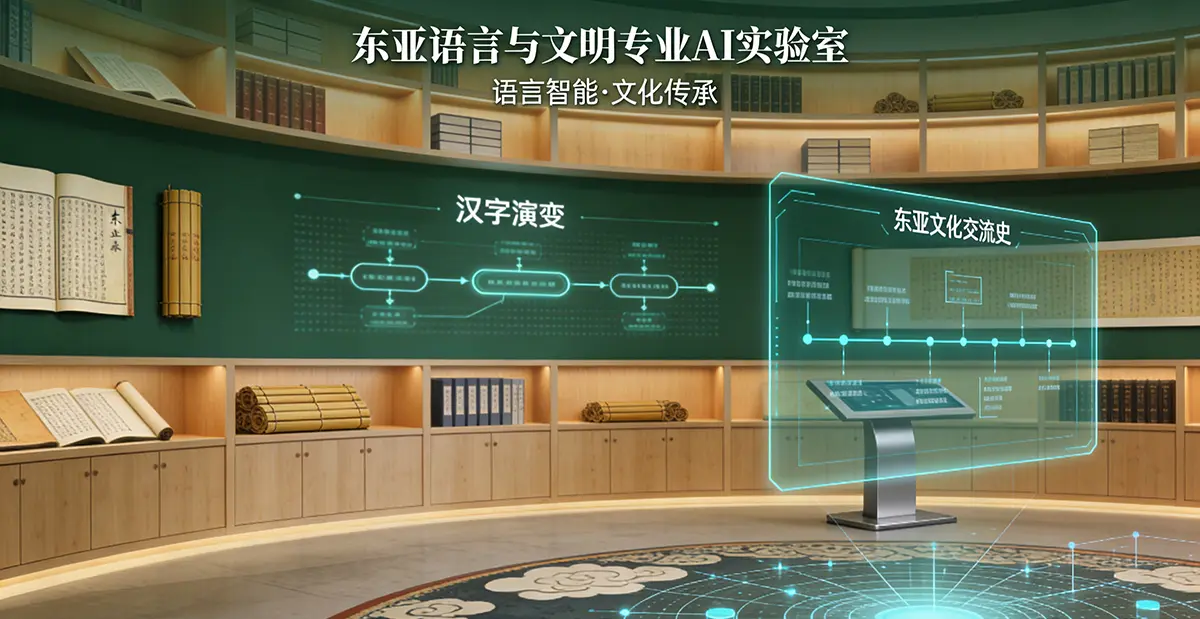
Program Overview: East Asian Languages and Civilizations
East Asian Languages and Civilizations (EALC) is a comprehensive humanities discipline that studies the languages, literatures, histories, philosophies, religions, arts, and material cultures of East Asia—primarily China, Japan, and Korea, and sometimes including Mongolia, Vietnam, Tibet, and others. Distinct from East Asian Studies (EAS), which emphasizes contemporary politics and economics, EALC focuses on in-depth interpretation and critical analysis of East Asian civilizational traditions. It emphasizes mastery of classical and modern languages, as well as close reading of primary sources.
If human civilization is likened to a vast starry sky, East Asian civilization forms a unique and brilliant constellation within it. Students majoring in EALC become the “star gazers” and “translators” of this constellation—they engage in dialogue across time and space with ancient sages by studying Qu Yuan's Chu Ci, Murasaki Shikibu's The Tale of Genji, and the philosophies of Confucius and Zhu Xi. They decipher the essence of Eastern aesthetics by analyzing Dunhuang murals, ukiyo-e prints, and Zen gardens; they leverage linguistic expertise to explore how Chinese characters have shaped the entire East Asian cultural sphere.
Program Distinctiveness from an International Perspective: EALC stands as an “elite discipline” at top research universities in Europe and America, typically housed within liberal arts colleges and deeply interdisciplinary with departments of East Asian Studies, History, Religion, and Art History. The United States is a major hub for East Asian studies, home to world-class academic institutions such as the Harvard-Yenching Institute and the Fairbank Center for Chinese Studies. European East Asian studies, meanwhile, carries a deep tradition of Sinology, emphasizing historical linguistics and classical texts. This is a field characterized by high academic standards, rigorous language requirements, and a distinct interdisciplinary focus.
Core Courses at International Institutions
EALC programs at top international universities emphasize a trinity of “language proficiency + close textual analysis + interdisciplinary perspectives.” Taking the undergraduate EALC program at the University of Southern California (USC) as an example, its curriculum is highly representative:
Core Requirements Modules:
- Cross-Cultural Overview Courses: Provide students with a broad regional introduction to East Asian philosophy, literature, film, and culture. Students must complete at least one within their first two years of enrollment.
- Cultural Studies Courses: Deepen understanding of cultural traditions within specific regions; recommended before pursuing more specialized thematic courses.
- Language Requirement: Must complete six semesters (three years) of study in one East Asian language or pass a placement exam demonstrating equivalent proficiency.
Specialized Elective Courses (USC example covering Chinese, Japanese, and Korean cultures):
| Course Category | Course Examples | Cultural Domain |
| Literature & Translation | Translation of Modern Korean Literature, Japanese Literature and Culture, The World of The Tale of Genji, Chinese Fiction, Japanese Fiction | Literary Studies, Comparative Literature |
| Film and Media | Introduction to Korean Cinema, Hallyu (Korean Cultural Wave), East Asian Languages and Societies | Film Studies, Media Studies, Cultural Studies |
| History and Civilization | Japanese Civilization, Korean Culture from Ancient to Modern Times, Chinese Civilization | History, History of Civilizations |
| Art and Material Culture | East Asian Art and Cultural Heritage, Material Culture of the Silk Road | Art History, Archaeology |
| Thought and Religion | Classical Chinese, Classical Japanese, Mythology, Folklore, and the Fantastic in Japanese Literature and Film | Philosophy, Religious Studies, History of Ideas |
| Contemporary Issues | Contemporary China: Cultural Politics and Social Realities, Ethnic Identity and Minority Politics in East Asia | Sociology, Political Science, Anthropology |
Other International Top-Tier Program Features:
- University of Pennsylvania: Focuses on East Asian literature, philosophy, religion, art, archaeology, and modern languages, with stringent language requirements (e.g., Classical Chinese, Modern Chinese, Japanese, or Korean).
- University of Chicago: Covers diverse cultures, themes, and historical periods, encouraging interdisciplinary and transregional projects. Offers language courses in Chinese, Japanese, Korean, Classical Chinese, and Academic Japanese.
- Columbia University: Emphasizes the application of critical methodologies and comparative research approaches.
- Ruhr University Bochum, Germany: Offers an 8-semester bachelor's degree program with core studies in Japan, Korea, and China, covering language, history, literature, society, and culture. Instruction is primarily conducted in German.

Advanced Academic Pathways for East Asian Languages and Civilizations Major
Master's and doctoral research focuses on highly specialized and cutting-edge fields, primarily encompassing the following areas:
Core Research Areas:
| Field | Research Content | Representative Institutions/Programs |
| Chinese Studies | Classical/Modern Chinese Literature, History, Philosophy, Art History, Archaeology | Nearly all top EALC departments |
| Japanese Studies | Japanese Literature (Classical to Modern), Buddhism, Japanese Art, Film Studies | Harvard, Stanford, Yale, USC |
| Korean Studies | Korean Literature, History, Film, Popular Culture, Gender Studies | Harvard, UCLA, USC |
| Inner Asia/Frontier Studies | Mongolian Studies, Tibetan Studies, Silk Road Civilizations | Harvard, Indiana University |
| East Asian Art and Archaeology | Chinese/Japanese Art History, Calligraphy, Chinese Painting, Buddhist Art, Material Culture | Princeton, Chicago, Penn |
| East Asian Buddhism | History of Buddhist Thought, Zen Buddhism, East Asian Buddhist Rituals | Harvard, Stanford, Berkeley |
| Linguistics | Chinese Linguistics, Japanese Grammar, Korean Literacy, Language and Society | East Asian Languages Departments at Various Institutions |
Emerging Frontier Areas:
- Digital Humanities and East Asian Studies: Utilizing GIS (Geographic Information Systems) to map cultural flows, conducting data mining and visualization analysis of classical texts.
- Korean Popular Culture (K-POP, Korean Dramas) Studies: Analyzing the global dissemination of the Korean Wave and its cultural-political impact.
- East Asian Environmental History: Examining historical transformations in human-nature relations across East Asia.
- Gender and Sexuality Studies: From female representations in classical East Asian literature to contemporary LGBTQ+ issues.
- Cold War East Asian Culture and Thought: Investigating cultural legacies and ideological confrontations shaped by the Cold War in East Asia.
- Diaspora and Transnational Studies: Researching East Asian migrants, overseas Chinese communities, and groups like Koreans in Japan.
International Career Pathways and Positions
The EALC program cultivates transferable skills in deep analytical thinking, cross-cultural understanding, and linguistic proficiency, opening diverse career opportunities for graduates.
Core Employment Sectors:
| Sector | Typical Employers | Representative Positions |
| Academic & Research | Universities (domestic/international), think tanks (e.g., Brookings Institution), research institutes | University professors, researchers, postdoctoral fellows |
| Government & International Organizations | Ministry of Foreign Affairs, Ministry of Culture, UNESCO, World Bank | Diplomats, cultural affairs officers, international program officers |
| Culture & Arts Institutions | Museums (Metropolitan, British), Art Galleries, Foundations, Auction Houses | Curator, Researcher, Art Consultant, Auction Specialist |
| Education & Cultural Programs | International Schools, Language Training Institutions, Overseas Chinese Schools | IB/AP Chinese/Japanese Teacher, Curriculum Designer |
| News and Media | International Media (BBC, NHK, New York Times), Cultural Publishing Institutions | Foreign Correspondents, Culture Editors, Content Strategists |
| Business and Consulting | Multinational Corporations (Google, Amazon, McKinsey), Consulting Firms | Cultural Advisors, International Market Analysts, Cross-Cultural Communication Specialists |
| Nonprofit & Foundations | Asia Society, Ford Foundation, China-Japan/China-Korea Friendship Associations | Program Officers, Cultural Exchange Planners |
Representative Global Positions:
1. University Professor/Researcher: Teaching and researching East Asian languages, literature, and history at universities—the primary academic path for PhD graduates.
2. Curator: Responsible for collecting, researching, and curating East Asian artworks in museums or galleries, requiring deep art history knowledge and language proficiency.
3. Diplomat: Stationed at embassies or consulates in East Asian countries, handling bilateral exchanges in political, economic, and cultural spheres.
4. Cultural Consultant: Advising multinational corporations or international brands on East Asian market customs and consumer psychology.
5. International Journalist/Editor: Produces in-depth reporting on East Asia for global media outlets or oversees cultural sections.
6. Language Instructor: Teaches Chinese, Japanese, or Korean as a second language in secondary schools, universities, or international schools.
7. Think Tank Researcher: Conducts policy analysis on East Asian security, economics, and diplomacy at think tanks.
Salary Levels (International Reference):
- United States: Median annual salary for East Asian studies majors is approximately $60,000. Harvard graduates (entering government or academia) can earn over $70,000 with a 95% employment rate; Yale graduates start at around $65,000; Stanford graduates (entering cultural and technology companies) earn approximately $72,000 annually.
International Employment Rates and Industry Trends
Employment Rate Data:
- Harvard University: 95% employment rate for graduates of East Asian Studies-related programs.
- Yale University: 93% of graduates employed or pursuing further studies within six months, with starting salaries of $65,000.
- Stanford University: 96% graduate employment rate with an average annual salary of $72,000.
- Overall Trend: Greater proficiency in multiple foreign languages enhances competitiveness and expands employment opportunities.
Industry Development Trends:
1. Methodological Revolution from “Classical Sinology” to “Digital Humanities”: Traditional textual criticism and bibliographical research methods are undergoing deep integration with digital technologies such as GIS (Geographic Information Systems), text mining, and data visualization. Researchers can now use digital tools to trace the dissemination paths of tens of thousands of Chinese texts or map the spatiotemporal distribution of Buddhist temples across East Asia.
2. Interdisciplinary Research as the Mainstream: EALC is increasingly intersecting with fields like film studies, media studies, gender studies, environmental history, and material culture studies. A course on the “Korean Wave” might simultaneously employ cultural studies theories, political economy frameworks, and fan culture analysis.
3. Surging Demand for Contemporary Cultural Studies: With the global popularity of the Korean Wave, Japanese anime, and Chinese science fiction (e.g., The Three-Body Problem), there is a strong demand for scholars and practitioners specializing in contemporary East Asian popular culture, cultural industries, and digital media. Universities like Stanford have introduced cutting-edge courses such as “Korean Popular Culture.”
4. Policy-Driven Talent Demand: Against the backdrop of the Indo-Pacific Strategy, governments and think tanks in the U.S. and Western nations increasingly seek regional experts capable of in-depth analysis of East Asian politics, economics, and security issues. Professionals proficient in East Asian languages and attuned to cultural nuances hold distinct advantages in diplomacy, intelligence, and policy analysis.
5. Intensifying competition for talent in cultural soft power: China, Japan, and South Korea are all increasing investments in overseas cultural outreach, requiring large numbers of professionals who understand their own cultures and can engage in cross-cultural communication. These individuals work in translation, publishing, curation, cultural exchange, and related fields.
6. Diversifying career paths for PhDs: Traditionally focused on academia, PhD employment is increasingly expanding into non-academic sectors such as museums, libraries, foundations, think tanks, and technology companies.
Ideal Candidates for East Asian Languages and Civilizations Major
If you possess the following qualities, you'll gain a competitive edge in the global arena:
1. A genuine passion for East Asian culture: Willingness to dedicate significant time to reading classical texts, watching art films, and researching historical details—not merely for utilitarian purposes.
2. Linguistic aptitude and patience: Requires extensive time to master a language fundamentally distinct from English (Chinese, Japanese, Korean), including complex writing systems, grammatical structures, and honorific hierarchies.
3. Strong reading and writing skills: Intensive close reading of primary sources and academic paper writing demand exceptional comprehension and written expression abilities.
4. Interdisciplinary curiosity: Willingness to freely traverse literature, history, philosophy, art, religion, and other fields to establish cross-disciplinary connections.
5. Critical thinking: Unsatisfied with ready-made conclusions, you enjoy asking “why” and can examine East Asian cultural phenomena from diverse perspectives.
6. Attention to detail: From the usage of a single ancient Chinese particle to a subtle hue in ukiyo-e art, crucial cultural codes often lie hidden in minutiae.
7. Open and inclusive mindset: You can understand and respect different cultural values, transcending ethnocentric biases.
Core Competencies of the East Asian Languages and Civilizations Program
The program's core strength lies in its systematic capacity to progress from “linguistic decoding” to “cultural deep description” and ultimately to “inter-civilizational dialogue”:
Advanced Language Proficiency: Mastery of one or more East Asian languages (modern and classical), enabling students to read primary texts, consult original sources, conduct in-depth interviews, or undertake archival research. This forms the bedrock of all advanced scholarship.
Close Reading and Interpretation: Conducting detailed analysis of literary, philosophical, and historical texts to grasp literal meanings, metaphorical symbols, historical contexts, and intellectual trajectories.
Interdisciplinary Integration: Synthesizing knowledge across literature, history, philosophy, art history, religion, and other fields to develop a holistic understanding of East Asian civilization.
Critical Analysis and Theoretical Application: Ability to employ academic frameworks such as cultural theory, postcolonial theory, and gender theory to critically analyze East Asian cultural phenomena, moving beyond mere description.
Cross-Cultural Communication and Translation Competence: Effectively communicates and translates across cultures, conveying not only linguistic equivalents but also underlying meanings and cultural logics.
Independent Research and Innovation: Formulates valuable research questions, collects and analyzes data, and develops original scholarly perspectives.
Leading Institutions Worldwide
EALC maintains strong presence across the world's top research universities. Below are select institutions leading in this field:(Selected Schools - Listed in no particular order)
United States (Global Academic Hub):
| Institution | Programs/Specialties | Research Strengths |
| Harvard University | Department of East Asian Languages and Civilizations; Fairbank Center for Chinese Studies; Yenching Institute | Classical/modern Chinese literature, East Asian Buddhism, Inner Asian history, East Asian art; global academic powerhouse with unparalleled library resources |
| Columbia University | Department of East Asian Languages and Cultures; Weidman Center for East Asian Studies | East Asian literature, culture, history; Emphasis on critical methodology and comparative studies; One of the largest and most diverse East Asian cultural research hubs in the U.S. |
| Princeton University | Department of East Asian Studies; East Asian Art and Archaeology Program | Chinese/Japanese art and archaeology, political economy research; Emphasis on creative research capabilities |
| Yale University | Department of East Asian Languages and Literatures; Council on East Asian Studies | Chinese literature, Japanese literature; Collaborative PhD program with Film Studies |
| Stanford University | Department of East Asian Languages and Cultures; East Asian Studies Center | Chinese literature, history, philosophy, linguistics; emphasizes technology-culture intersections (East Asian Digital Humanities) |
| University of California, Berkeley | Department of East Asian Languages and Cultures | Asian linguistics, literature, history, religious traditions; faculty includes multiple leading scholars from the Association for Asian Studies |
| University of Pennsylvania | Department of East Asian Languages and Civilizations | East Asian history, literary history, linguistics, art history, philosophy, religion; rigorous language requirements |
| University of Chicago | Department of East Asian Languages and Civilizations | Covers broad cultures, themes, and historical periods; encourages interdisciplinary and transregional projects |
| University of Southern California | Department of East Asian Languages and Cultures | Flexible curriculum with options in Chinese, Japanese, Korean; Covers literature, film, history, media, etc. |
| Washington University in St. Louis | Graduate Program in East Asian Languages and Cultures | MA/PhD in Chinese/Japanese Language and Literature; PhD in Comparative Literature |
| Cornell University | Department of Asian Studies | Covers East Asia, Southeast Asia, and South Asia; interdisciplinary faculty |
| University of California, Los Angeles | Department of Asian Languages and Cultures; Master of Arts in East Asian Studies (School of International Studies) | One of the largest departments of its kind in the U.S.; interdisciplinary comparative cultural studies |
Europe:
| Institution | Program/Features |
| University of Cambridge | Strong East Asian Studies, particularly renowned for Chinese Studies |
| University of Oxford | Long-established East Asian Studies covering Chinese, Japanese, and Korean languages and cultures |
| School of Oriental and African Studies (SOAS), University of London | A major hub for Asian Studies in Europe and globally, covering East Asia, Southeast Asia, and South Asia |
| Leiden University | A traditional European center for Sinology with extensive East Asian library collections |
| University of Bonn | Leading German institution for East Asian studies with deep Sinology traditions |
| University of Heidelberg | Distinguished in East Asian art history and historical research |
| University of Paris III | Representative French institution for East Asian studies |
| Ruhr University Bochum | Offers a Bachelor's in “East Asian Languages and Cultures” covering China, Japan, and Korea, taught in German |
Canada, Australia, Asia:
| Institution | Programs/Features |
| University of Toronto | Strong East Asian Studies department covering Chinese, Japanese, and Korean languages and cultures |
| University of British Columbia | Leading Canadian center for East Asian studies with extensive Asian library collections |
| Australian National University | Australia's leading institution for Asia-Pacific studies, with strong East Asian research |
| The University of Hong Kong | Chinese Studies School, Chinese Department, Japanese Studies Department, Korean Culture courses |
| The University of Tokyo | Graduate School of Interdisciplinary Cultural Studies and Graduate School of Humanities and Sociology cover relevant fields |
Recommended Learning Path for East Asian Languages and Civilizations Major
1. Build a Solid Foundation (Undergraduate Stage): Focus on language training and humanities education. Dedicate significant time to mastering one East Asian language (Chinese, Japanese, or Korean), aiming to read original texts and academic literature. Simultaneously, take introductory courses in East Asian history, literature, philosophy, and art history to establish a comprehensive framework of civilizational history.
2. Build Specialized Framework (Mid-to-Late Undergraduate): Select a focus area based on personal interests (e.g., classical Chinese literature, modern Japanese history, Korean cinema). Begin studying classical languages (Classical Chinese, Classical Japanese). Actively participate in seminar discussions to learn research paper writing. Pursue a one-year exchange program in your target country for cultural immersion and language enhancement.
3. Focus and Deepen (Master's Phase):
Select appropriate program types:
- Academic Track (PhD Prep): Choose research-oriented MA programs (e.g., Harvard, Columbia, or Chicago's EALC MA) to strengthen research methodologies, engage in close reading of primary sources, and define doctoral research focus. Typically requires submission of a Writing Sample.
- Application-Oriented: Opt for programs emphasizing contemporary politics, economics, or cultural studies (e.g., Columbia's MA in East Asian Regional Studies) for careers in government, business, or international organizations.
Prepare application materials:
- Language scores: TOEFL 100+/IELTS 7.0+ (for top U.S. institutions), GRE 315+ (optional for some schools).
- Writing Sample: Critical! Demonstrate research capability, critical thinking, and writing proficiency. Topics should align with target professors' research areas.
- Personal Statement: Clearly articulate research interests, academic background, and future plans.
- Letters of Recommendation: Preferably from professors related to your research interests.
4. Future Planning and Internationalization (Throughout the Process):
- Second Language Advantage: Mastering a second East Asian language beyond English (e.g., Japanese or Korean for native Chinese speakers) significantly enhances competitiveness and research breadth.
- Academic Networking: Attend conferences (e.g., AAS Annual Conference), monitor target professors' research activities, and establish connections.
- Expand International Experience: Pursue overseas exchanges, summer programs (e.g., Peking University or University of Tokyo summer initiatives), fieldwork opportunities abroad, or museum internships.
- Digital Humanities Skills: Learn digital tools like GIS, text mining, and data visualization to add new dimensions to your research.
- Monitor Industry Trends: Stay informed about hiring needs in think tanks, museums, international organizations, and multinational corporations to align academic training with career development.
East Asian Languages and Civilizations is a discipline that delves into the depths of East Asian civilization. It demands both reverence and patience for classical texts, alongside sharpness and curiosity toward contemporary culture; it requires solid linguistic foundations coupled with an interdisciplinary perspective. In return, it offers a unique lens to truly understand the civilization that shaped over half the world's population in this era of globalization, along with a vast stage to showcase your talents across academia, diplomacy, culture, business, and beyond.
- The Previous Passage:German(German Studies)_德语
- The Next Passage:French(French Studies)_法语
Human Geography Major_Geography(Geog.)_人文地理
The Human Geography Major explores the complex relationships between human activities and space, cul···

Atmospheric Sciences(Atmos. Sci.)_大气科学
Atmospheric science is the study of phenomena and evolutionary patterns within Earth's atmospher···

Earth Sciences(Earth Sci.)_地球科学
The Earth Science major focuses on studying the Earth system and its interactions, providing a scien···
Ocean Sciences(Ocean Sci.)_海洋科学
PbootCMS是全新内核且永久开源免费的PHP企业网站开发建设管理系统,是一套高效、简洁、 强悍的可免费商用的···

