

Clinical Medicine(Clin. Med.)_临床医学
Time:2026-03-08 Visits:2
Clinical Medicine
Clinical medicine stands as the most central and practical applied discipline within the field of medicine. It directly engages with patients, focusing on the diagnosis, treatment, and prevention of diseases. While basic medical science explores the “why” of diseases in laboratories, clinical medicine addresses the “how” at the patient's bedside. It is both a science and an art concerning humanity, life, and care.
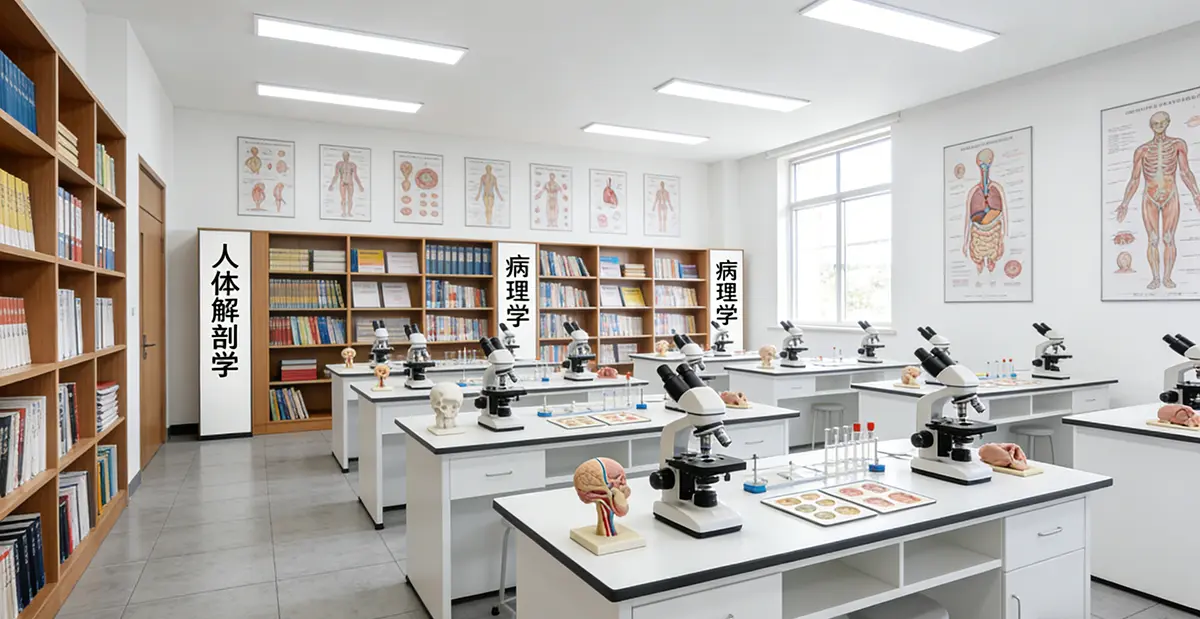
Clinical Medicine Program Overview: Direct Practitioners in Safeguarding Life
Centered on “bedside presence,” clinical medicine determines treatment plans through medical history, physical examinations, and modern medical technologies—integrating clinical manifestations with pathological mechanisms. Its mission is to alleviate suffering, restore health, and safeguard life. It is a knowledge-intensive, highly practical field requiring lifelong learning.
Its core missions include:
- Diagnosis: Accurately determining disease nature through medical history, physical examination, and auxiliary tests.
- Treatment: Developing and implementing personalized therapeutic plans using medications, surgery, psychology, rehabilitation, and other modalities.
- Prevention and Rehabilitation: Guiding disease prevention, promoting functional recovery post-illness, and enhancing patients' quality of life.
- Care and Communication: Understanding patients' suffering and fears, providing compassionate care, and building trusting doctor-patient relationships.
Core Curriculum at International Institutions
The clinical medicine curriculum is highly consistent globally, generally following the principle of “foundational studies in the early years, clinical training in the later years, with humanities integrated throughout.” Below is a consolidated example using the curricula of the National University of Singapore (NUS) and the University of Cambridge.
| Stage | Core Course Examples | Learning Objectives |
| Basic Medical Sciences | Human Anatomy and Physiology, Basic Biology, Pathophysiology, Molecular Medicine, Pharmacology Fundamentals, Medical Statistics | Understand human structure and function in health and disease states; master the biological foundations of disease. |
| Clinical Core Curriculum | Internal Medicine, Surgery, Obstetrics and Gynecology, Pediatrics, Psychiatry, Family Medicine, Neurology | Systematic study of clinical manifestations, diagnostic methods, and treatment principles for major specialty diseases. |
| Clinical Skills and Practice | Clinical Methods (History Taking and Physical Examination), Communication Skills, Clinical Reasoning, Practical Procedures, Evidence-Based Medicine | Develop core competencies to translate theoretical knowledge into clinical practice, learning how to engage with and manage patients. |
| Humanities Integrated Throughout | Medical Ethics, Social and Behavioral Determinants, Physician-Patient Communication, Professionalism, Narrative Medicine | Cultivates humanistic care, ethical decision-making, and professional ethics while understanding medicine's social dimensions. |
| Clinical Training Phase | Core department rotations (internal medicine, surgery, obstetrics and gynecology, pediatrics, emergency medicine, etc.), specialty electives, community healthcare practice, research projects | Assume patient management responsibilities under supervision in real clinical settings, completing the transition from medical student to physician. |
Advanced Study Pathways in Clinical Medicine Major
Advanced training in clinical medicine follows a highly structured framework, typically aligned with professional registration and specialty training.
- Standardized Residency Training: Upon graduation, medical students must complete a systematic, standardized 3-year rotational training program (in China) at training bases affiliated with large teaching hospitals. This is the mandatory pathway to becoming a qualified clinician, often integrated with a professional master's degree (known as the “four certificates in one”).
- Specialty Residency Training: After completing residency, some physicians pursue subspecialty training (e.g., cardiovascular medicine, neurosurgery, medical oncology) for deeper expertise, typically lasting 2-4 years.
- Specialty Advancement & Fellowships: After becoming a specialist, physicians may pursue short- or medium-term training at leading domestic or international medical centers to master cutting-edge techniques (e.g., interventional ultrasound, Da Vinci robotic surgery) or deepen expertise in subspecialties (e.g., epilepsy surgery, pediatric hematology/oncology).
- Clinical Doctor of Philosophy (PhD): Aims to cultivate “physician-scientists” with both profound clinical expertise and independent research capabilities. Programs typically include advanced research training and doctoral thesis work, producing graduates who drive medical advancement.
- Dual Degree Programs (MD+PhD, MD+MBA, MD+MPH): Leading universities offer dual-degree programs to develop interdisciplinary medical professionals, including medical scientists, healthcare administrators, and public health specialists.

International Career Pathways and Positions
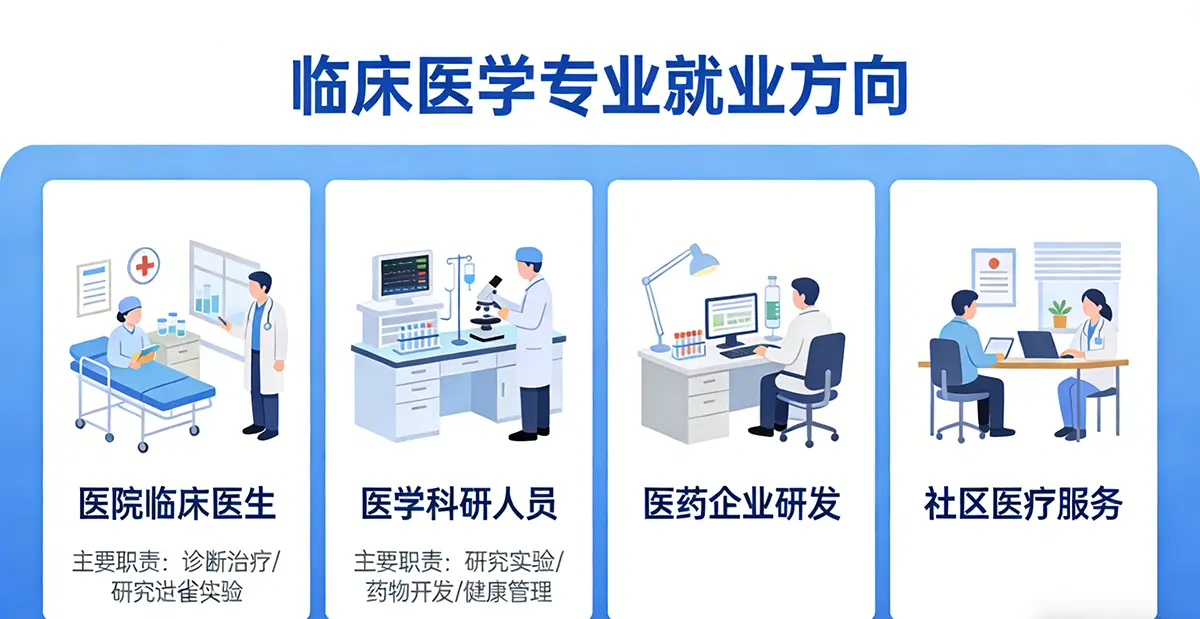
Career trajectories for clinical medicine graduates are well-defined, primarily centered around healthcare services and related fields.
| Industry Sector | Common Positions | Brief Job Responsibilities |
| Healthcare Institutions | Resident Physician, Attending Physician, Associate Chief Physician/ Chief Physician | Diagnose, treat, and manage diseases across hospital departments (internal medicine, surgery, pediatrics, emergency medicine, etc.). This represents the primary and core employment direction. |
| Primary Care | General Practitioner, Family Physician, Community Doctor | Provide continuous, comprehensive primary medical care and public health services to residents at community health centers, township hospitals, or private clinics. |
| Public Health & Administration | Disease Prevention & Control Specialist, Health Administrator, Healthcare Policy Maker | Engage in disease surveillance, health promotion, health policy research, and regulatory oversight at institutions like Centers for Disease Control, Health Commissions, and Medical Insurance Bureaus. |
| Medical Education & Research | Medical School Professor, Clinical Instructor, Clinical Researcher | Conduct medical talent cultivation and clinically-driven scientific research at medical schools or hospital research centers. |
| Pharmaceutical and Healthcare Industry | Medical Advisor, Clinical Research Physician, Pharmacovigilance Physician, Medical Affairs Specialist | Provide specialized medical support for drug/device R&D, clinical trials, and market promotion at major pharmaceutical companies, medical device firms, or contract research organizations. |
| Health Management and Technology | Health Managers, Medical Content Reviewers, Medical AI Product Managers | Working in health management organizations, internet healthcare companies, and medical AI startups, applying medical knowledge to serve broader health needs. |
Global Employment Rates and Trends
Employment Rate: Clinical medicine maintains exceptionally high employment rates globally, approaching 100%, representing a classic “seller's market.”
- In Canada, employment prospects for clinical and laboratory medicine specialists are rated “very good.” Provinces face widespread physician shortages, particularly in remote areas.
- At the University of Cyprus in Nicosia, a remarkable 99.9% of medical graduates secure residency or research positions at globally renowned medical centers.
- In China, demand for qualified clinicians remains robust amid the “Healthy China” initiative and grassroots healthcare system enhancements, especially in high-demand fields like general practice, pediatrics, psychiatry, and emergency medicine.
Salary Levels: Physicians in all countries belong to the upper-middle-income bracket, with earnings increasing significantly with seniority and experience. In the United States, the median annual income for medical scientists (including physicians) exceeds $95,000. In Canada, most specialists are classified as high-income earners.
Industry Trends:
- Shift from “disease-centered” to “health-centered” care: Healthcare models are undergoing profound transformation, expanding physicians' roles from disease diagnosis and treatment to comprehensive lifecycle health management, disease prevention, and rehabilitation—increasing demand for general practitioners.
- Precision Medicine and Personalized Treatment: Leveraging genomics, proteomics, and other data to deliver more accurate diagnoses, risk predictions, and targeted therapies requires physicians to develop stronger research and data interpretation skills.
- AI-Empowered Healthcare: AI will play an increasingly vital role in image interpretation, diagnostic assistance, drug development, and more. Future physicians must learn to collaborate with AI, utilizing it as a tool to enhance diagnostic efficiency and quality.
- New Medical Sciences and “Medicine + X”: Medicine is undergoing deep integration with disciplines like science, engineering, humanities, and information technology. Multidisciplinary medical professionals (e.g., Medicine + AI, Medicine + Materials) will lead future medical innovation.
- The Return to Humanism: Amid rapid technological advancement, the medical community increasingly recognizes the importance of humanistic care. Cultivating compassionate physicians and rebuilding doctor-patient trust are core challenges for future medical education.
Suitable Candidates and Core Competencies for Clinical Medicine Major
If you possess the following qualities, you may find a sense of belonging and fulfillment in the field of clinical medicine:
- Strong altruism and empathy: A genuine desire to help others, deriving deep satisfaction from patients' recovery, and the ability to understand and empathize with others' suffering.
- Passion and perseverance for lifelong learning: Medical knowledge evolves rapidly, requiring continuous reading of literature, updating expertise, and readiness for lifelong learning.
- Exceptional resilience and emotional stability: Facing life-and-death situations, illness, patient communication pressures, and heavy workloads demands robust psychological fortitude and emotional regulation.
- Rigorous logical thinking and decision-making skills: Ability to swiftly make sound clinical judgments amid complex, uncertain information.
- Strong communication and teamwork skills: Healthcare is not a solo endeavor; it requires efficient collaboration with patients, families, nurses, and other specialists.
Core Competency: Your core value lies in the integrated ability to apply vast medical knowledge to specific patient situations, make sound decisions, and implement them effectively. This encompasses not only solid medical knowledge and clinical skills (the “three fundamentals”) but also clinical reasoning, empathetic communication, ethical decision-making, and professional integrity. You safeguard not “disease,” but “the person afflicted by disease.”
Leading Global Institutions
Based on the 2025 Shanghai Ranking's World Class Disciplines and THE World University Rankings, the top global institutions in Clinical Medicine are:(Selected Schools - Listed in no particular order)
United Kingdom
University of Oxford, University of Cambridge, Imperial College London, University College London
United States
Harvard University, Johns Hopkins University, Stanford University, Yale University, University of Pennsylvania, University of California, San Francisco, The University of Texas MD Anderson Cancer Center, University of California, Los Angeles
Canada
University of Toronto
Germany
University of Heidelberg
Australia
University of Melbourne
China
The Chinese University of Hong Kong, Tsinghua University, Peking University, Fudan University, Shanghai Jiao Tong University, West China Medical Center of Sichuan University, Sun Yat-sen University, etc.
Recommended Learning Path for Clinical Medicine Major
1. Undergraduate Phase: Solidify the “Three Fundamentals,” Start Clinical Training Early, and Gain Extensive Clinical Experience
- Core Focus: Diligently master foundational medical courses (Anatomy, Physiology, Pathology, Pharmacology), which form the cornerstone of clinical reasoning. Simultaneously, begin clinical exposure to understand physicians' work through early clinical experiences.
- Practice: Prioritize bridge courses like Diagnostic Medicine and General Surgery. Repeat practice of history-taking, physical examination, and basic procedures at clinical skills centers. Use vacations for hospital internships or community healthcare placements to develop patient communication skills and understand primary care.
- Humanities: Actively study medical ethics, medical psychology, and related courses. Read humanities literature to cultivate empathy and professional integrity.
2. Post-Graduation Phase: Residency and Specialty Training to Define Professional Direction
- Core: Enter a standardized residency training program for a systematic rotation lasting 3 years (or longer). This pivotal period requires mastering common disease management and fundamental procedures under departmental mentors.
- Selection: Discover your true passion for a specialty (e.g., internal medicine, surgery, pediatrics) during rotations.
- Advancement: If aiming for top hospitals or a “physician-scientist” career, consider pursuing a specialized or academic doctoral degree. Combine this with intensive research training during residency to enhance both clinical and research capabilities.
3. Specialist Physician and Lifelong Learning Phase
- Positioning: After completing residency, enter subspecialty training (fellowship) to become an expert in a specific field (e.g., interventional cardiologist, hepatobiliary surgeon). You will assume responsibility for independently diagnosing and treating complex, critically ill patients.
- Future: As a senior specialist, you may become a department leader, clinical research initiator, or medical education mentor. Regardless of your role, maintain a lifelong learning mindset: stay abreast of medical advancements, continuously refine your skills, and dedicate yourself to nurturing the next generation of physicians.
Clinical medicine is a challenging yet profoundly meaningful path. It calls to those who care deeply for humanity and yearn to alleviate suffering through knowledge and skill.
- The Previous Passage:Oral Medicine_口腔医学
- The Next Passage:Clinical and Health Sciences(Clin. Health Sci.)_临床与健康

Human Geography Major_Geography(Geog.)_人文地理
The Human Geography Major explores the complex relationships between human activities and space, cul···

Atmospheric Sciences(Atmos. Sci.)_大气科学
Atmospheric science is the study of phenomena and evolutionary patterns within Earth's atmospher···

Earth Sciences(Earth Sci.)_地球科学
The Earth Science major focuses on studying the Earth system and its interactions, providing a scien···
Ocean Sciences(Ocean Sci.)_海洋科学
PbootCMS是全新内核且永久开源免费的PHP企业网站开发建设管理系统,是一套高效、简洁、 强悍的可免费商用的···

