

Clinical and Health Sciences(Clin. Health Sci.)_临床与健康
Time:2026-03-08 Visits:2
Clinical and Health (Social Health Track) Major
The Clinical and Health (Social Health Track) Major focuses on the social determinants of health and health equity, cultivating interdisciplinary professionals capable of designing and implementing social health interventions in both clinical and community settings. Its curriculum integrates medical foundations, social sciences, and health policy, preparing students for emerging fields such as patient navigation, community health project management, health policy analysis, and health equity research. Exploring this major is a key step towards becoming an agent of change in transforming healthcare systems towards greater equity and a stronger focus on societal well-being.
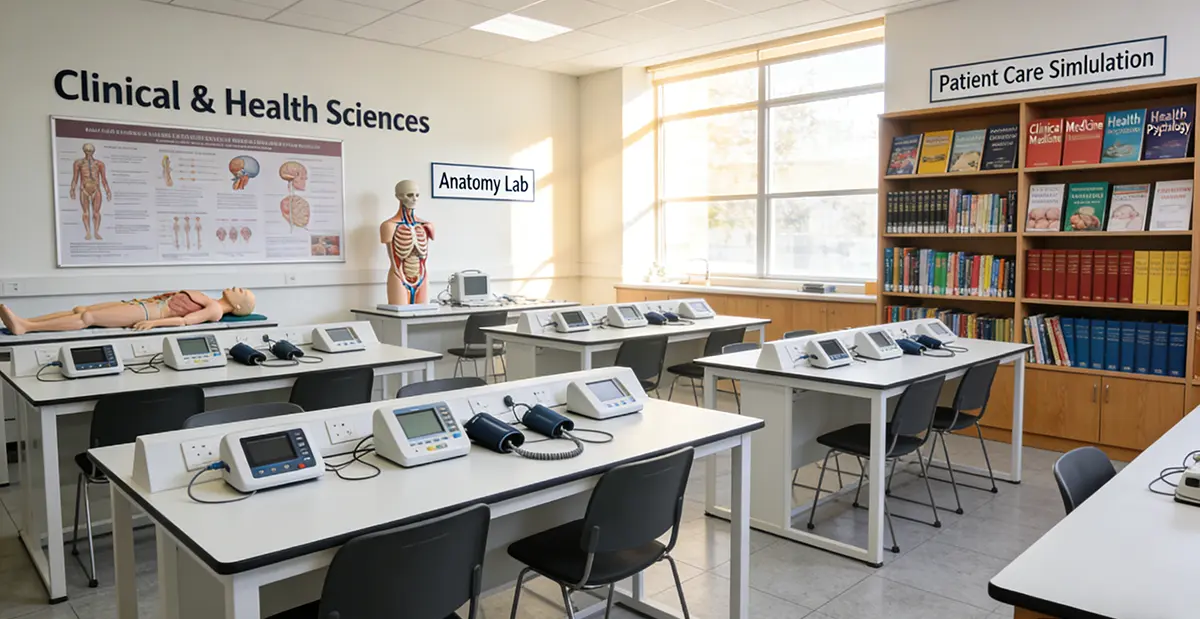
1. Introduction to the Clinical and Health (Social Health Track) Major
The Clinical and Health (Social Health Track) Major is an interdisciplinary discipline that integrates clinical medicine, public health, social sciences, and behavioral sciences. It focuses on the social determinants of health and disease, emphasizing the expansion from individual clinical practice to population health promotion, and is dedicated to addressing health inequities. This major cultivates versatile professionals who understand the logic of clinical medicine and master social science research methods, enabling them to design, implement, and evaluate social health interventions within medical institutions, communities, and public health systems.
2. Core Curriculum of the Clinical and Health (Social Health Track) Major
| Module Category | Core Courses |
| Foundations of Medicine and Health | Introduction to Basic Medical Sciences, Introduction to Clinical Medicine, Principles of Epidemiology, Preventive Medicine, Introduction to Global Health |
| Social Science Core | Medical Sociology, Health Psychology, Social Medicine, Medical Anthropology, Health Behavior Theory |
| Health Equity and Policy | Social Determinants of Health, Research on Health Inequalities, Health Policy Analysis, Health Economics, Bioethics |
| Research and Methodology | Qualitative Research Methods (Interviews, Focus Groups), Mixed Methods Research, Project Design and Evaluation, Community Health Diagnosis |
| Practical Intervention Areas | Chronic Disease Management and Community Intervention, Mental Health and Social Support, Elderly Health and Social Care, Maternal and Child Health Promotion, Doctor-Patient Communication and Health Literacy |
| Skills and Frontiers | Health Education and Health Promotion Strategies, Community Organization and Mobilization, Health Project Management and Budgeting, Digital Health and Social Media Applications |
3. Advanced Study Pathways for the Clinical and Health (Social Health Track) Major
Master of Public Health (MPH): To further specialize in health policy, community health, or health behavioral science.
Master of Social Work (MSW): To qualify as a clinical social worker, focusing on psychosocial interventions.
Doctor of Philosophy (PhD) in Medical Sociology/Anthropology: To engage in academic theoretical research on health and society.
Doctor of Philosophy (PhD) in Health Services Research: To study the accessibility, quality, and equity of healthcare services.
Master of Science in Nursing or Occupational Therapy: To deepen the practice of psychosocial dimensions within these clinical professions.
Master of Laws (LL.M.) or Master of Public Policy (MPP): To specialize in health policy, healthcare regulation, or patient advocacy.

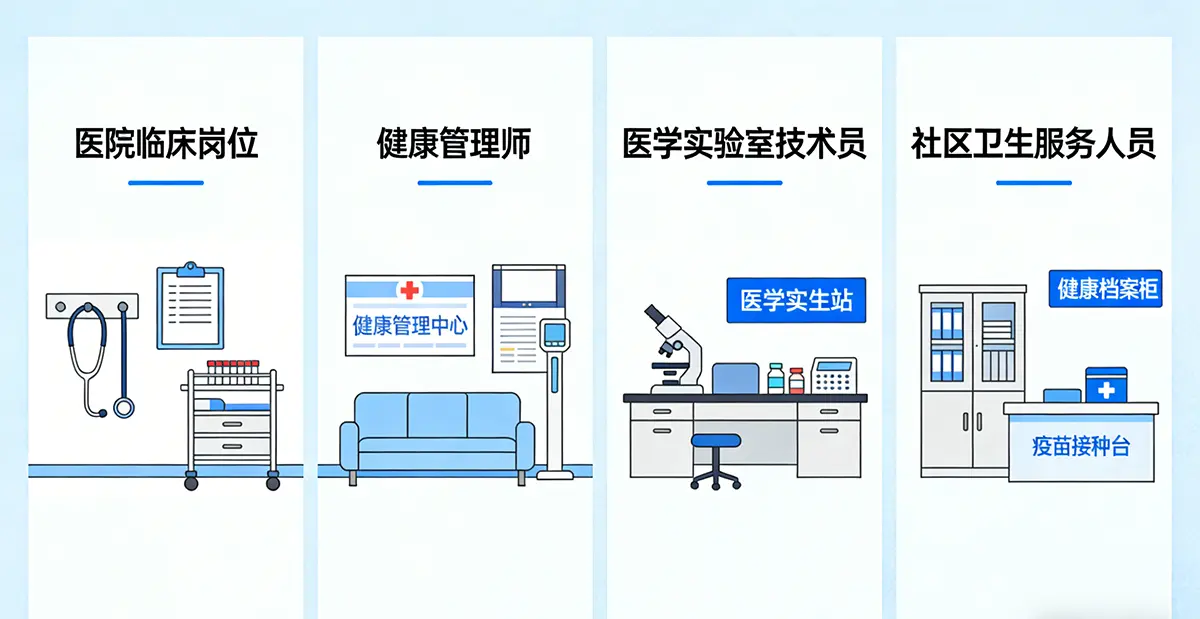
4. Career Pathways and Positions for the Clinical and Health (Social Health Track) Major
Graduates possess unique advantages in “interface” roles that connect clinical systems with community and society.
Core Employment Sectors | Typical Positions | Primary Responsibilities
Healthcare Institutions | Patient Navigator / Case Manager | Assists patients (especially those with chronic conditions or cancer) in coordinating medical and social services to overcome barriers to care.
| Patient Liaison / Health Coach | Provides guidance on behavioral change to improve patient self-management and doctor-patient communication.
| Community Health Worker Program Manager | Responsible for the design, implementation, and management of community health projects affiliated with hospitals.
Public Health & Community Organizations | Community Health Program Specialist/Manager | Designs and executes health promotion programs at Centers for Disease Control (CDC) or community health centers.
| Health Equity Researcher / Advocate | Researches health inequality issues at research institutions or non-profits to drive policy change.
Government & Non-Profit Organizations | Health Policy Analyst | Analyzes the impact of policies on vulnerable populations at health commissions, medical insurance bureaus, or think tanks.
| Non-Profit Program Manager | Manages health projects for specific populations (e.g., persons with disabilities, the elderly) at foundations or public welfare organizations.
Corporate and Health Technology | Corporate Health Benefits Consultant | Designs employee wellness programs (EAP) and benefit packages for corporations.
| User Experience Researcher (Digital Health) | Studies how to make digital health products better meet the socio-cultural needs of users, particularly the elderly and those with chronic conditions.
International Organizations | Program Officer (Health and Social Development) | Works on health-related social development projects at institutions like the United Nations Development Programme (UNDP) or the World Bank.
5. Employment Rate and Industry Trends for the Clinical and Health (Social Health Track) Major
Employment Rate Characteristics
“Emerging Field with Growing Demand”: As concepts like “patient-centered care” and “value-based healthcare” become widespread, healthcare institutions’ demand for socio-psychological interventions to improve patient experience and reduce readmission rates is rising, creating new positions.
“Dispersed Roles Requiring Proactive Pursuit”: Job opportunities may be distributed across hospitals, communities, government, and non-profit sectors, requiring graduates to have a clear career focus and self-promotion skills.
“Significant Value, Yet Challenging to Quantify”: The outcomes of this work (e.g., improved patient satisfaction, enhanced health literacy) can be difficult to measure directly, necessitating mastery of scientific project evaluation methods to demonstrate its value.
Industry Development Trends
Shift from “Disease Treatment” to “Health Creation”: Healthcare systems are transitioning from passive treatment to proactive health management, highlighting the importance of social and behavioral interventions.
Health Equity Becomes a Core Agenda: In the post-pandemic era, governments and international organizations are prioritizing the resolution of health inequalities stemming from race, income, and geography.
Community-Integrated Health Services: The push for deep integration between hospitals and community services (social services, long-term care, mental health) requires substantial coordination and management talent.
The Social Dimension of Digital Health: As telemedicine and health apps are promoted, there is increasing focus on bridging the “digital divide” to ensure technological inclusivity.
Social-Behavioral Management of Chronic Diseases: For chronic conditions like diabetes and hypertension, community-based models such as peer support and health coaching are becoming standard components of care.
6. Leading Global Institutions for Related Programs
This track is typically offered as an interdisciplinary program or a key focus area within schools of public health, medicine, or social sciences.
Country/Region | Representative Institutions (Example Program/Focus Names)
United States | University of California, San Francisco/Berkeley (Joint Program in Medical Sociology), Harvard University (Social and Behavioral Sciences), Johns Hopkins University (Department of Health, Behavior and Society), University of Michigan (Health Behavior and Health Education)
United Kingdom | University College London (Health and Society), University of Edinburgh (Global Health and Society), London School of Hygiene & Tropical Medicine (Social Science Approaches to Public Health)
Canada | University of Toronto (Dalla Lana School of Public Health - Social and Behavioural Health Sciences Division), McGill University (Medical Sociology Focus)
Netherlands | Maastricht University (Health and Society), University of Amsterdam (Medical Anthropology and Sociology)
Australia | University of Sydney (Health and Society), University of Melbourne (Social Health and Equity)
China | Peking University (School of Public Health - Department of Social Medicine and Health Education), Fudan University (School of Public Health - Health Education and Promotion), Peking Union Medical College (School of Humanities and Social Sciences - Courses related to Medical Sociology)
7. DisciplineMajor Recommendations
Ideal Candidates for the Clinical and Health (Social Health Track) Major
Individuals passionate about medicine and health, but more focused on the social, economic, and psychological root causes of disease.
Those possessing strong empathy, communication skills, and cultural sensitivity, adept at building trust with people from diverse backgrounds.
Problem-solvers committed to creating sustainable health improvements at systemic and community levels.
Those not satisfied with a purely biomedical perspective and who desire to understand health from a broader viewpoint.
Core Competencies of the Clinical and Health (Social Health Track) Major
Cross-disciplinary Translation Ability: To effectively communicate and translate between clinical language, community needs, and policy discourse.
Community Engagement and Mobilization Skills: To work deeply within communities, collaborating with stakeholders to design and implement interventions.
Mixed-Methods Research Competence: To comprehensively evaluate health issues and the impact of social interventions by combining quantitative data with qualitative insights.
Systems Thinking: To understand how individual health is shaped by family, community, healthcare systems, and social policies.
Study Recommendations for the Clinical and Health (Social Health Track) Major
Build a Dual Foundation in “Medicine + Social Sciences”: Understand basic disease pathology and clinical processes while solidly mastering sociological and anthropological theories and methods.
Engage in Frontline Practice Early and Often: Seek volunteer or internship opportunities in hospital social work departments, community health centers, or non-profit organizations to accumulate hands-on experience.
Develop Your “Toolkit”: Become proficient in qualitative analysis software (e.g., NVivo), project management, and evaluation frameworks.
Build Your Professional Network: Proactively connect with public health practitioners, clinical social workers, community organizers, and policy advocates to understand different roles.
Stay Informed on Policy Developments: Opportunities in health equity are often closely linked to new policy initiatives and funding directions; maintain awareness of these shifts.
*Note: Some institutions may categorize this major under different disciplines. Please refer to the specific classification used by the institution.*
- The Previous Passage:Clinical Medicine(Clin. Med.)_临床医学
- The Next Passage:Epidemiology(Epidemiol.)_流行病学

Human Geography Major_Geography(Geog.)_人文地理
The Human Geography Major explores the complex relationships between human activities and space, cul···

Atmospheric Sciences(Atmos. Sci.)_大气科学
Atmospheric science is the study of phenomena and evolutionary patterns within Earth's atmospher···

Earth Sciences(Earth Sci.)_地球科学
The Earth Science major focuses on studying the Earth system and its interactions, providing a scien···

Ocean Sciences(Ocean Sci.)_海洋科学
PbootCMS是全新内核且永久开源免费的PHP企业网站开发建设管理系统,是一套高效、简洁、 强悍的可免费商用的···

