

Chemical Engineering(Chem. Eng.)_化学工程
Time:2026-03-08 Visits:2
Chemical Engineering
Chemical engineering is the “engineering magic” that transforms laboratory chemical principles into large-scale industrial reality. It's not just about chemical reactions, but also about how to economically, safely, and efficiently design and operate complex industrial processes that convert raw materials into products essential to our lives.
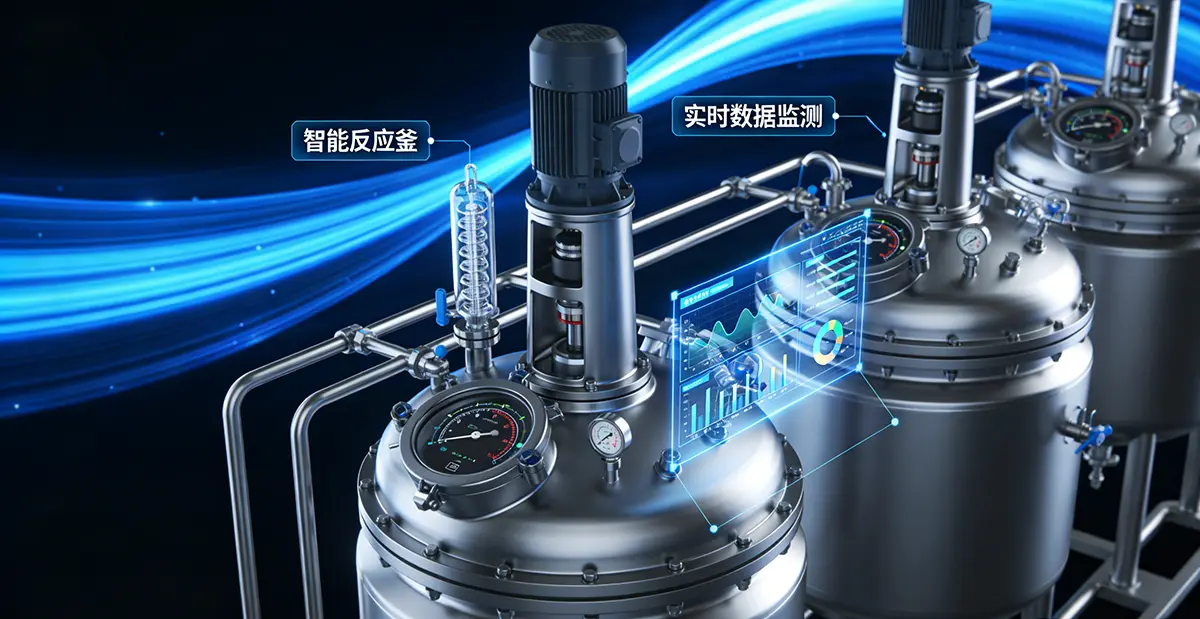
Introduction to Chemical Engineering Major: The Bridge Between Lab and Industry
The core mission of chemical engineering is to study and solve key technical challenges in production processes—including the laws governing chemical and physical transformations, as well as related equipment design, operation, and optimization control. It transcends pure chemistry, deeply integrating mathematics, physics, and engineering.
Its “magic” can be understood this way:
Foundational Sciences: Chemistry, physics, and mathematics form its theoretical bedrock.
Core Engineering: Designs and scales production processes through principles like “three transfers and one reaction” (mass transfer, heat transfer, momentum transfer, and reaction engineering).
Final Products: Transforms crude oil into plastics, air into fertilizers, and biomass into fuels—serving industries ranging from energy and materials to pharmaceuticals and food.
Core Courses at International Institutions
A typical chemical engineering undergraduate curriculum guides you from building a solid scientific foundation to mastering core engineering thinking, culminating in exploration of cutting-edge interdisciplinary fields.
| Course Stage | Core Course Examples | Learning Objectives |
| Engineering Fundamentals | Chemical Thermodynamics, Mass/Heat Transfer, Chemical Reaction Engineering, Chemical Engineering Principles (including separation techniques like distillation and extraction) | Master the core “inner workings” of chemical engineering, understanding why processes occur and how to control them. |
| Tools and Practice | Process Control and Automation, Chemical Process Design, Simulation Software (e.g., Aspen Plus), Data Analysis and Machine Learning | Learn to use an engineer's “tools” to apply theory in practice and optimize processes. |
| Frontiers and Interdisciplinary | Sustainable Energy Chemistry, Biochemical Engineering & Pharmaceuticals, Polymer Materials Engineering, Environmental Chemical Engineering, Industry 4.0 (Data Engineering/Additive Manufacturing) | Explore cutting-edge fields to address contemporary challenges in energy, environment, and health. |
| Mathematical Foundations | Advanced Mathematics, University Physics, Physical Chemistry, Organic Chemistry | Build a robust scientific foundation for all engineering applications. |
Advanced Study Pathways in Chemical Engineering Major
Your undergraduate studies provide a solid foundation, while master's or doctoral programs allow you to delve deeply into specific domains. Key research directions include:
- Chemical Engineering: Focuses on enhancing and innovating traditional chemical processes, such as novel separation technologies, microreactor technology, and process systems engineering.
- Materials Chemistry: A highly interdisciplinary field with materials science, researching the preparation and engineering applications of polymer materials, energy materials, nanomaterials, and biomass materials.
- Energy Chemistry: Addressing future energy systems, focusing on efficient and clean utilization of coal/biomass, hydrogen energy and fuel cells, carbon capture and storage, and lithium-ion battery materials.
- Industrial Catalysis: Core efforts involve designing and developing novel, highly efficient catalysts—key to enhancing chemical reaction efficiency and reducing energy consumption—widely applied in petroleum refining and fine chemical synthesis.
- Biochemical Engineering: Utilizes biotechnologies (e.g., fermentation, enzyme catalysis) to produce chemicals, pharmaceuticals, and biofuels, serving as a vital foundation for synthetic biology.

International Career Paths and Positions
Chemical engineering graduates are true “jack-of-all-trades” in the global job market, capable of entering virtually any industry related to processes and products.
| Industry Sector | Common Positions | Brief Job Responsibilities |
| Traditional Chemicals & Energy | Process Engineer, Production Engineer, Project Engineer | Optimize production processes, resolve on-site technical issues, ensure safe, stable, and efficient plant operations. |
| Cutting-Edge R&D & Design | R&D Engineer, Product Development Engineer, Design Engineer | Develop new products (e.g., biodegradable plastics, novel drugs) and processes in laboratories or design institutes; perform conceptual and detailed plant design. |
| Environment and Sustainability | Environmental Engineer, Sustainability Consultant | Design industrial waste treatment solutions, conduct carbon footprint assessments, and support corporate green transformation. |
| High-Tech and Consulting | Data Analyst, Process Simulation Specialist, Engineering Consultant | Optimize production using big data and simulation software, or provide expert advice on corporate technology investments and strategic planning. |
Notable Employer Examples: BASF, Dow, ExxonMobil, Shell, Saudi Aramco, Pfizer, Procter & Gamble, Tesla Battery R&D Center, etc.
Global Employment Rates & Trends
Employment Rate: Global demand for chemical engineers remains consistently strong. For instance, the University of Surrey reports a 94% employment or further study rate for its chemical engineering master's graduates, reflecting strong market recognition of this discipline.
Industry Trends:
- Green and Sustainable: This is the primary driver. As global carbon neutrality goals advance, chemical engineers play irreplaceable roles in carbon capture, hydrogen technology, biomass refining, and plastic circular economy initiatives.
- Digitalization and Intelligence (Industry 4.0): Chemical engineering is deeply integrating with data science and artificial intelligence. Future engineers must master big data, machine learning, and digital twin technologies to optimize production and achieve “smart manufacturing.”
- Interdisciplinary Convergence: Crossovers with synthetic biology, nanotechnology, and advanced materials continuously spawn new industries and applications.
Ideal Candidates for Chemical Engineering and Core Competencies
If you possess these traits, you may thrive in chemical engineering:
- Curiosity and a Mathematical Mindset: Driven by curiosity about “how things are made” and unafraid to analyze and solve problems using mathematics and physics.
- Systems thinker: Able to view complex industrial processes as interconnected wholes rather than isolated units.
- Problem solver: Thrives on challenges, devises creative solutions, and prioritizes practical feasibility and economic viability.
- Detail-oriented and safety-conscious: Demonstrates strong responsibility toward safety, environmental protection, and economic efficiency in chemical production.
Core Competencies: Beyond solid technical knowledge, your core strengths lie in translating fundamental science into practical engineering value and applying interdisciplinary systems thinking.

Leading Global Institutions
According to the 2025 QS World University Rankings by Subject, top chemical engineering programs are distributed globally:(Selected Schools - Listed in no particular order)
| Country/Region | Representative Institutions |
| United States | Massachusetts Institute of Technology, Stanford University, University of California, Berkeley, California Institute of Technology |
| United Kingdom | University of Cambridge, University of Oxford, Imperial College London, University of Manchester |
| Continental Europe | ETH Zurich, Delft University of Technology, Technical University of Munich |
| Asia | National University of Singapore, Nanyang Technological University, Tsinghua University, University of Tokyo |
| Canada | University of Toronto, University of British Columbia, McGill University |
| Australia | University of Melbourne, Monash University, University of Queensland |
| New Zealand | University of Canterbury (the country's first institution to offer this program) |
Recommended Learning Path for Chemical Engineering Major
1. Undergraduate Phase: Build a Strong Foundation and Explore Interests
- Core: Dedicate yourself to mastering foundational courses in mathematics, physics, chemistry, and core chemical engineering principles (mass transfer, reaction engineering, thermodynamics). This forms the cornerstone of your future development.
- Practical Experience: Actively participate in lab courses, course design projects, and simulation software (e.g., Aspen Plus). Aim to secure summer internships or join faculty research projects during your sophomore or junior years to gain real-world industry exposure.
- Vision: Monitor industry developments and stay informed about cutting-edge trends like sustainability and digitalization.
2. Master's Level: Specialize and Pursue Certification
- Goal: Select a specialized field (e.g., energy, materials, bioprocessing) for in-depth study. Master's programs in many countries serve as the pathway to professional engineer (PE) certification.
- Enhancement: Develop independent research capabilities and complex problem-solving skills through challenging projects and theses. Consider sandwich programs incorporating a year-long internship to gain valuable international work experience.
3. Doctoral & Postdoctoral Stages: Pushing Frontiers, Driving Innovation
- Positioning: If you are passionate about scientific research and eager to explore the unknown, the doctoral stage is your stage. Under your advisor's guidance, you will conduct in-depth research for 3-5 years on a specific scientific or engineering challenge (e.g., developing novel catalysts, designing carbon capture materials).
- Future Paths: PhD graduates typically pursue careers as R&D scientists, university faculty, or core R&D positions in high-tech companies.
- The Previous Passage:Aerospace Engineering(Aerosp. Eng.)_航空航天工程
- The Next Passage:Robotics(Robot.)_机器人学
Human Geography Major_Geography(Geog.)_人文地理
The Human Geography Major explores the complex relationships between human activities and space, cul···

Atmospheric Sciences(Atmos. Sci.)_大气科学
Atmospheric science is the study of phenomena and evolutionary patterns within Earth's atmospher···

Earth Sciences(Earth Sci.)_地球科学
The Earth Science major focuses on studying the Earth system and its interactions, providing a scien···
Ocean Sciences(Ocean Sci.)_海洋科学
PbootCMS是全新内核且永久开源免费的PHP企业网站开发建设管理系统,是一套高效、简洁、 强悍的可免费商用的···

