

Aerospace Engineering(Aerosp. Eng.)_航空航天工程
Time:2026-03-08 Visits:2
Aerospace Engineering
Aerospace engineering is a cutting-edge discipline focused on developing aircraft and launching them into the skies and space. Amidst the digital and green revolution, it is poised for a new wave of transformative opportunities. From domestically produced large aircraft to commercial space ventures, from drones to hypersonic vehicles, this field encompasses every facet of humanity's exploration of the skies and the cosmos.

Aerospace Engineering Major Overview
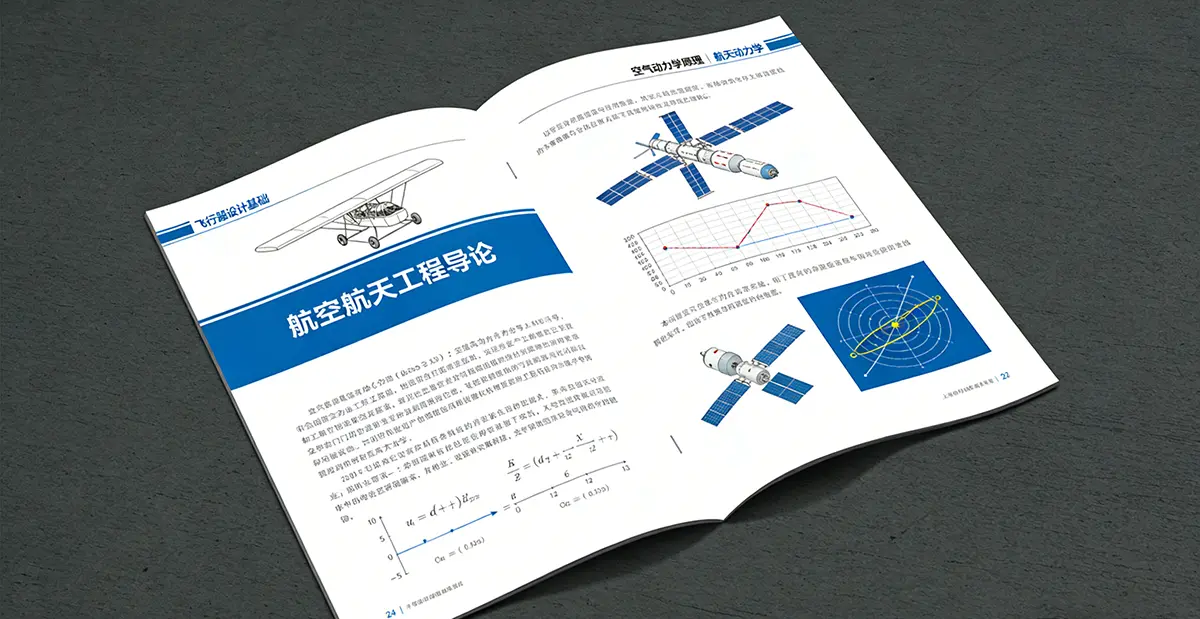
Aerospace engineering is the discipline that studies the design, manufacturing, testing, and operation of aircraft, helicopters, drones, satellites, rockets, missiles, space stations, and other flying vehicles. It is divided into two major branches: aeronautical engineering (focusing on aircraft operating within the atmosphere) and astronautical engineering (focusing on spacecraft operating beyond the atmosphere).
If humanity's quest to conquer the skies and cosmos were an epic saga, aerospace engineers are its chroniclers—applying aerodynamics, propulsion theory, structural mechanics, and control science to transform visionary concepts into gravity-defying reality. This field demands students possess a solid foundation in mathematics and physics, systematic engineering thinking, and the ability to solve complex systems problems.
International Perspective: Aerospace engineering is a high-tech strategic discipline often tied to national security in most countries, potentially limiting international students' access to core research areas. Yet it remains a highly globalized field, with international collaborations (e.g., the International Space Station, commercial aircraft global supply chains) offering vast opportunities for talent.
Core Courses at International Institutions
Aerospace engineering curricula at top global universities emphasize integrating theory with practice, typically following a modular structure of “core fundamentals + specialized deepening + integrated projects.” The University of Nottingham in the UK offers a representative example:
Core Fundamentals Module (Years 1 & 2):
- Aerospace Design and Materials: Application of CAD tools (e.g., CATIA), design processes, manufacturing techniques, material selection
- Aerospace Electronics and Computation: Circuit theory, communication systems, electrical systems, avionics
- Statics and Dynamics: Force analysis, stress-strain relationships, beam bending, momentum conservation, transmission systems
- Aircraft Design and Performance: Aircraft classification and configurations, design processes, flight envelopes, static stability
- Fluid Mechanics and Aerodynamics: Atmospheric physics, Bernoulli's equation, shock waves, lifting surfaces, fluid-structure interaction
- Integrated Projects and Mathematics: Report writing, MATLAB programming, team projects (designing scale model aircraft)
Specialization Deepening Module (Junior Year):
- Aerospace Structures and Dynamics: Composite materials, semi-rigid shell structures, thin-walled beams, static/fatigue failure
- Flight Dynamics and Control: Rigid Body Dynamics, Equation of Motion Linearization, Trim and Control
- Thermodynamics and Propulsion: Brayton Cycle, Gas Turbine Principles, Compressible Flow Applications
- Computational Modeling Techniques: Finite Element Analysis (FEA), Computational Fluid Dynamics (CFD)
Integrated Practice Module (Senior Year):
- Individual/Team Design Projects: Full lifecycle from requirements definition to virtual product, including “manufacturing and testing” phases
- Aerospace Industry Organizations: Product types, market landscape, supply chains, R&D, airworthiness certification
- Professional Practice and Innovation: Health and Safety, Ethics, Project Management, Airworthiness Fundamentals, Human Factors
Additional Course Features from Leading International Institutions: Purdue University offers two interdisciplinary master's degree options—“Accelerated Aerospace Engineering Management” and “Aerospace Engineering Management and Professional Practice”—with the latter incorporating a full year of industry collaboration/internship experience.
Advanced Study Pathways for Aerospace Engineering Major
Master's and doctoral research fields are highly specialized and cutting-edge. Taking Virginia Tech as an example, its graduate research topics include:
Aerodynamics and Propulsion:
- Transonic aerodynamics of turbine blades
- Bionic trailing edge noise control
- Hypersonic Flow
- Plasma Propulsion
Structures and Materials:
- Composite Structural Mechanics
- Lightweight Structure Optimization
- Aeroelasticity
- High-Temperature Materials
Dynamics and Control:
- Dynamics and Control of Low-Earth Orbit Tensioned Monolithic Systems
- Visual Inertial Navigation for Small UAVs
- Autonomous Systems
- Cyber-Physical Security
Space Engineering:
- Small Satellite Technology
- Space System Design
- Orbital Mechanics
- Deep Space Exploration
Emerging Interdisciplinary Areas:
- Digital Twins: Approximately 45% of companies adopt AI and digital twin technologies
- Hybrid Electric Propulsion: About 28% of propulsion R&D projects focus on hybrid electric propulsion systems
- Autonomous Systems: Roughly 37% of companies concentrate on autonomous systems
- Composite Material Integration: Approximately 41% of companies prioritize composite material integration
International Career Paths and Positions
Aerospace engineering graduates are highly sought-after globally, with career opportunities spanning the entire industry chain—from design and manufacturing to testing, operations, and management.
Core Industrial Sectors:
| Sector | Typical Employers | Representative Positions |
| Commercial Aviation | Airbus, Boeing, Embraer | Design Engineer, Aerodynamics Engineer, Flight Test Engineer |
| Space/Aerospace | NASA, ESA, SpaceX, Blue Origin | Satellite Systems Engineer, Propulsion Engineer, Mission Design Engineer |
| Defense/Military | Lockheed Martin, RTX, BAE Systems | Systems Engineer, Guidance and Control Engineer, Stealth Technology Specialist |
| Engine Manufacturing | Rolls-Royce, GE Aviation | Propulsion Systems Engineer, Thermodynamic Analyst, Turbomachinery Designer |
| Avionics | Honeywell, Thales | Avionics Engineer, Embedded Systems Engineer, Navigation Specialist |
| Supplier/Consulting | GKN, Spectris, Major Consulting Firms | Manufacturing Engineer, Technical Consultant, Supply Chain Specialist |
| Government/Research | National Aerospace Agencies, Research Laboratories | Researcher, Test Engineer, Policy Analyst |
Representative Global Positions (Based on Latest Industry Data):
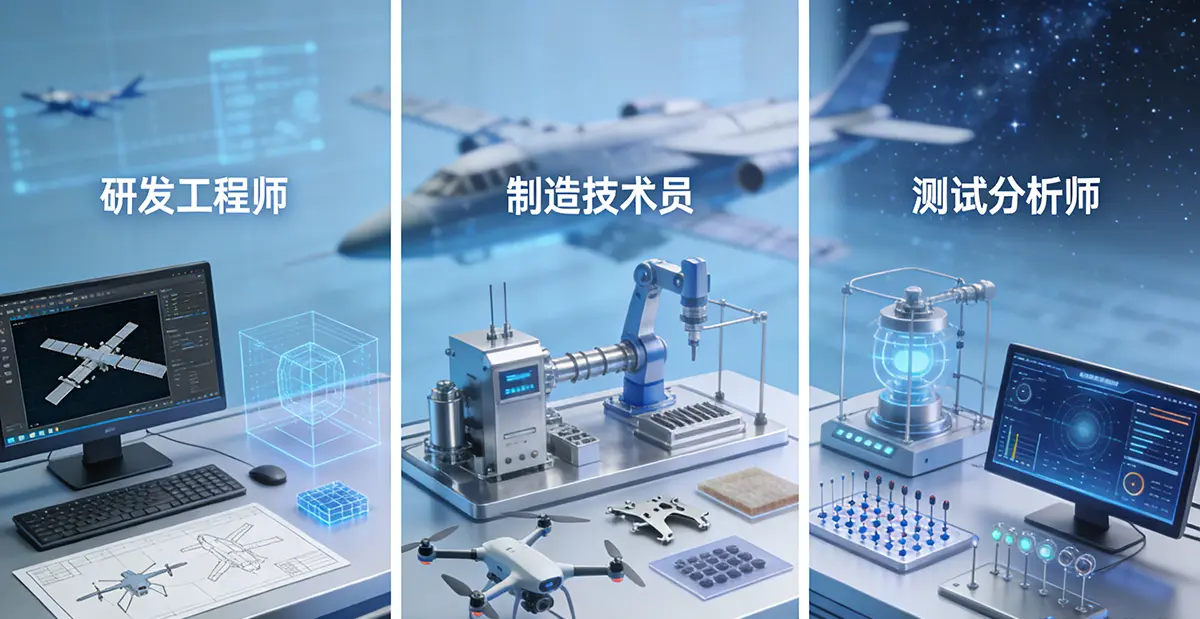
1. Aerodynamics Engineer: Studies air interaction with surfaces like wings and fuselages to optimize lift, reduce drag, and enhance fuel efficiency using CFD and wind tunnel testing
2. Propulsion Systems Engineer: Specializes in systems powering aircraft, from jet engines to rocket thrusters, involving thermodynamics, combustion science, and materials engineering
3. Avionics Engineer: Handles electronic systems used in aviation and space exploration, including navigation, radar, communications, flight control, and monitoring systems
4. Flight Test Engineer: Tests aircraft during all flight phases to evaluate performance, safety, and design compliance, collaborating with test pilots, data analysts, and design teams
5. Satellite Systems Engineer: Designs, launches, operates, and maintains satellites for communications, Earth observation, navigation, and defense, involving system integration, orbital planning, and payload management
Global Employment Rates and Industry Trends
Employment Rates and Salaries:
- Median annual salary for aerospace engineers in the U.S.: $105,000 (approximately RMB 760,000)
- Unemployment rate: 1.9% (significantly below the national average)
- Percentage of practitioners holding advanced degrees: 48.9%
Industry Trends:
1. Accelerated Digital Transformation:
- Approximately 45% of companies adopt AI and digital twin technologies
- About 42% invest in AI for predictive maintenance and autonomous system design
- Roughly 37% utilize additive manufacturing
2. Green/Sustainable Aviation:
- About 42% of companies invest in fuel efficiency technologies
- Approximately 35% transition to carbon fiber composites for weight reduction
- Around 28% of propulsion R&D projects focus on hybrid-electric propulsion systems
3. Autonomous Systems & Drones: ~33% of innovation funding directed toward unmanned aerial systems; ~37% of companies focus on autonomous systems; drone and satellite initiatives projected to grow segment share by 31%
4. Commercial Space Boom: ~26% of engineering resources allocated to low-Earth orbit technologies; space industry financing accounts for 23% of total engineering investment
5. Persistent Talent Shortage: Approximately 38% of aerospace companies believe engineering talent shortages impact innovation timelines, with about 32% delaying projects due to lack of skilled engineers
6. Cross-Industry Convergence: Approximately 22% of aerospace polymer projects explore biomedical-grade coatings, reflecting synergistic innovation in materials science
Regional Development Landscape:
- North America: Accounts for 38% global share, with approximately 45% focused on defense systems
- Europe: 24% share, with 42% focused on propulsion and engine efficiency
- Asia-Pacific: 21% share, with 38% focused on domestic aviation expansion
- Middle East/Africa: 17% share, with 34% focused on defense and strategic projects
Ideal Candidates for Aerospace Engineering Major
You'll gain a competitive edge in the global arena if you possess these traits:
1. Exceptional foundational math and physics: Aerodynamics, propulsion theory, and structural mechanics all rely on deep mathematical and physical principles—the cornerstone of this field
2. Systems engineering mindset: Ability to consider how local designs impact the entire aircraft system and understand subsystem interactions
3. Exceptional hands-on and practical skills: Enjoy building models, operating wind tunnels, and debugging equipment—translating theory into action
4. Genuine passion for flight: Deep curiosity and enthusiasm for aircraft, rockets, and satellites, with a drive to understand their inner workings
5. Rigorous attention to detail: Aerospace involves life safety, demanding exceptional responsibility and meticulous focus on specifics
6. Adaptability to international environments: English is the universal language of the industry; strong English communication skills are a fundamental requirement
7. Resilience in the face of challenges: Must navigate potential employment restrictions for international students, yet this also sparks broader innovation opportunities
Core Competencies of Aerospace Engineering Major
The core strength of this discipline lies in its comprehensive system integration capabilities from concept to physical realization:
Aerodynamic Modeling and Analysis: Applying fluid dynamics theory to establish aircraft aerodynamic models, predicting and analyzing performance metrics such as lift, drag, and stability
Multiphysics Coupling Simulation: Capability to simultaneously address aerodynamic, structural, thermal, and control multiphysics coupling issues using tools like CFD and FEA for precise simulation
Systems Engineering and Design Capability: Ability to decompose complex requirements into subsystem specifications, coordinate the entire design-manufacturing-testing workflow, and ensure overall optimization
Advanced Materials Application: Deep understanding of advanced materials like composites and high-temperature alloys, with targeted application in aircraft design
Airworthiness/Certification Awareness: Incorporates airworthiness regulations and certification requirements from the design phase to ensure global regulatory approval
Interdisciplinary Technology Integration: Integrates emerging technologies such as AI, digital twins, and autonomous control with aerospace engineering to develop innovative products
Major Global Institutions Offering Programs
(Selected Schools - Listed in no particular order)
China
Beijing University of Aeronautics and Astronautics、Northwestern Polytechnical University、Nanjing University of Aeronautics and Astronautics、Beijing Institute of Technology、Harbin Institute of Technology、National University of Defense Technology、Tsinghua University、Shanghai Jiao Tong University
United Kingdom
Cranfield University 、University of Cambridge
Italy
Politecnico di Milano、University of Rome、Politecnico di Torino
Israel
Technion – Israel Institute of Technology
New Zealand
University of Canterbury
United States
Massachusetts Institute of Technology、Purdue University-West Lafayette、Georgia Institute of Technology、University of Michigan-Ann Arbor、California Institute of Technology、University of Colorado Boulder、Virginia Tech、University of Texas at Austin、Texas A&M University、Stanford University、Embry-Riddle Aeronautical University、University of Illinois Urbana-Champaign
Netherlands
Delft University of Technology
South Korea
Seoul National University、Korea Advanced Institute of Science and Technology
Other Strong Institutions
Imperial College London, Technical University of Munich, National University of Singapore, Université Paris-Saclay, The Hong Kong Polytechnic University, Nanyang Technological University, University of Toronto, University of Oxford, ETH Zurich, The University of Tokyo, etc.
Recommended Learning Path for Aerospace Engineering Major
1. Build a Solid Foundation (Undergraduate Stage): Focus on mathematics, physics, and mechanics. Master advanced mathematics, linear algebra, university physics, theoretical mechanics, materials mechanics, and fluid mechanics—these form the cornerstone for all subsequent specialized courses. Simultaneously, become proficient in MATLAB/Python programming and CAD software (e.g., CATIA, SolidWorks).
2. Build Professional Framework (Mid-to-Late Undergraduate): Delve into core courses like Aerodynamics, Flight Mechanics, Propulsion Principles, Structural Mechanics, and Automatic Control. Actively participate in practical projects, such as the University of Nottingham's “Team Design Project”—designing and manufacturing scale model aircraft. Secure internships at airlines, research institutes, or relevant enterprises.
3. Focus and Deepening (Master's Stage): Select a research direction aligned with personal interests (e.g., aerodynamics, propulsion, structures, control, aerospace). Actively pursue industrial internships at companies like Airbus, Boeing, or Rolls-Royce. For the master's thesis, prioritize topics closely tied to industry or cutting-edge research.
4. Future Planning and Internationalization (Throughout):
Language and Perspective: Obtain IELTS or TOEFL certification. Learning the local language is beneficial if pursuing further studies in German- or French-speaking regions. Stay informed about cutting-edge developments through international conferences (e.g., AIAA SciTech Forum) and academic journals.
Skill Map: Align with industry demands to strategically develop competencies. For example: - Aerodynamics: Master CFD software (e.g., ANSYS Fluent) - Structures: Master FEA software (e.g., Abaqus) - Control Systems: Master Simulink
Security Clearance Considerations: Research international student employment policies in your target country. U.S. aerospace engineering involves classified research with restrictions for non-citizens. Returning to China for career development is also a viable option, as the nation's aerospace industry is rapidly expanding.
Advanced Study Pathways: Nearly half (48.9%) of U.S. aerospace engineering professionals hold advanced degrees, making graduate study the mainstream choice. Consider Purdue University's “Bachelor's to Master's Continuation Program.”
- The Previous Passage:Advanced Computer Science(Adv. Comput. Sci.)_高级计算机
- The Next Passage:Chemical Engineering(Chem. Eng.)_化学工程

Human Geography Major_Geography(Geog.)_人文地理
The Human Geography Major explores the complex relationships between human activities and space, cul···

Atmospheric Sciences(Atmos. Sci.)_大气科学
Atmospheric science is the study of phenomena and evolutionary patterns within Earth's atmospher···
Earth Sciences(Earth Sci.)_地球科学
The Earth Science major focuses on studying the Earth system and its interactions, providing a scien···
Ocean Sciences(Ocean Sci.)_海洋科学
PbootCMS是全新内核且永久开源免费的PHP企业网站开发建设管理系统,是一套高效、简洁、 强悍的可免费商用的···

