

Painting(Painting)_绘画学
Time:2026-03-18 Visits:1
Painting Major
The Painting Major focuses on mastering visual language, technique, and creative expression. This guide details its core courses in diverse media, career paths from studio artist to educator, key industry trends, and leading global fine arts institutions for aspiring painters.
1. Program Introduction
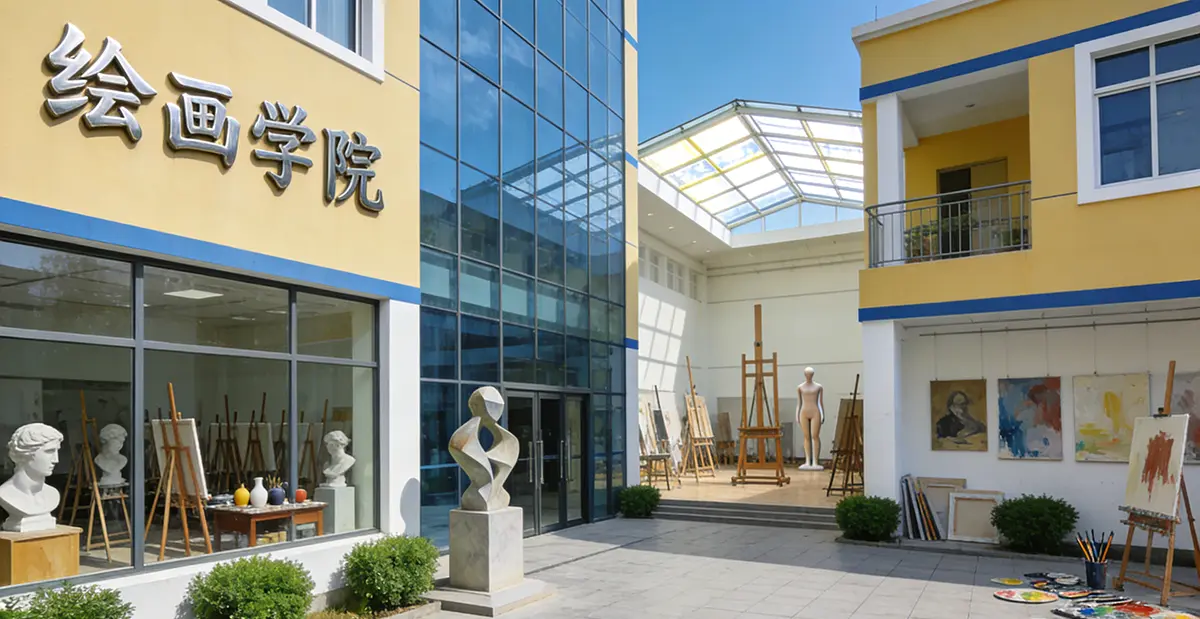
The Painting Major is an artistic discipline centered on the research and practice of visual language, painting media and materials, creative thinking, and expression. It systematically equips students with mastery of the fundamental principles of pictorial form, historical context, stylistic development, and contemporary expansions within painting. Emphasizing the development of personalized artistic expression and independent creative concepts built upon a foundation of classical techniques, the Painting Major trains not only solid skills in realism and expression but also guides students to explore the diverse possibilities and spiritual depth of painting within contemporary art contexts and socio-cultural landscapes. It serves as a foundational cradle for nurturing professional artists, art educators, and creators in related fields.
2. Core Curriculum of the Painting Major
| Module Categories | Core Courses |
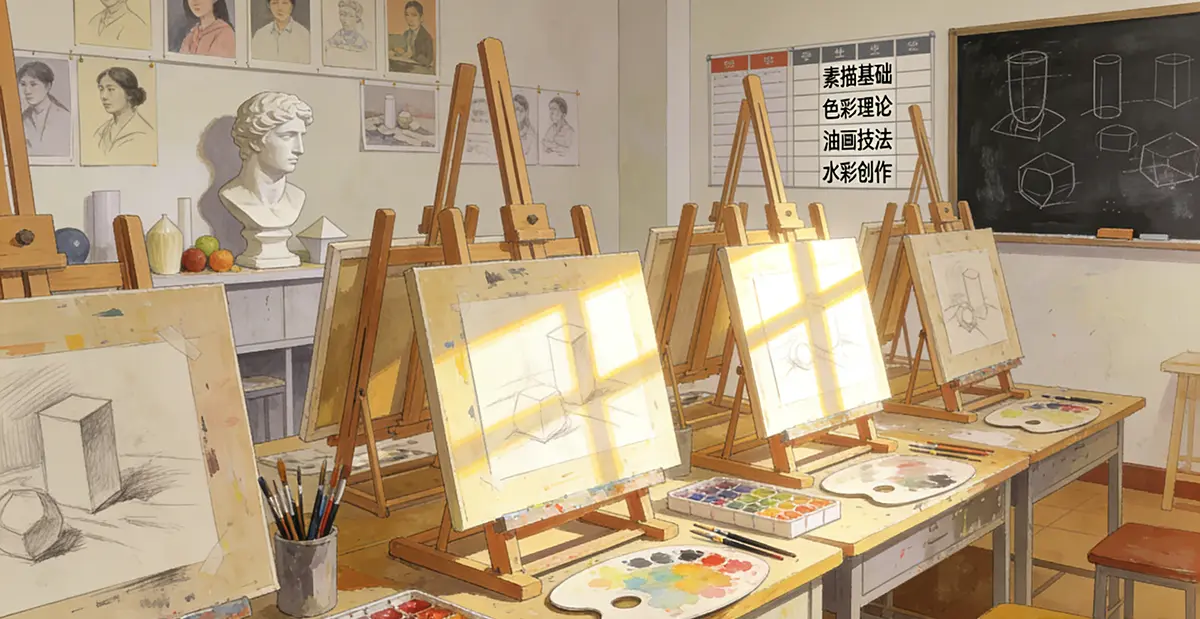
| Foundational Formative Skills | Drawing (Still Life, Portrait, Figure), Color Theory, Composition, Perspective & Anatomy, Sketching |
| Painting Media and Techniques | Oil Painting Materials & Techniques, Chinese Painting (Figure, Landscape, Flower-and-Bird) Materials & Techniques, Watercolor/Gouache Techniques, Printmaking Fundamentals (Woodcut, Intaglio, Screen Printing), Mixed Media Painting, Mural Fundamentals |
| Creation and Concept | Creative Composition, Thematic Painting Creation, Experimental Painting Creation, Contemporary Painting Language Research, Creative Thinking Training |
| History and Theory | Chinese and Western Art History, History of Painting Styles, Modern and Contemporary Art Movements, Introduction to Art, Fundamentals of Aesthetics |
| Sketching and Practice | Landscape Sketching, Figure Drawing, Social Investigation and Art Practice, Studio Project Creation |
| Expansion and Interdisciplinary Studies | Fundamentals of Digital Painting, Photography Fundamentals, Art Criticism and Writing, Fundamentals of Exhibition Curation |
| Research and Electives | Painting Materials Science, Master Copying and Research, Artist Case Studies, Non-Representational Painting Research |
3. Advanced Study Pathways for the Painting Major
Master's/Ph.D. (Creation and Research): Painting Creation and Research (Mainstream Path): Deepens personal artistic language within a specific medium (e.g., oil painting, Chinese painting, printmaking) or direction, develops a mature artistic identity, and culminates in a series of creative works and a thesis. Experimental Art/Contemporary Art Research: Transcends单一 painting genres to engage in intermedia and interdisciplinary comprehensive artistic creation and research.
Master's (Applied and Related Fields): Art Management/Curatorial Studies: Shifts focus toward curation, administration, and criticism within the art ecosystem. Art Education: Specializes in the theory and methodology of painting instruction for schools or community institutions. Art Conservation and Restoration: Conducts in-depth research into the physical and chemical properties of painting materials and restoration techniques. Digital Art/Illustration: Integrates modern technology to expand into more application-oriented fields of visual creation.
Interdisciplinary Advanced Studies: Aesthetics/Art Theory: Transitions from practice to纯 theoretical research. Design Studies: Shifts toward related fields such as visual communication and fashion design. Cultural and Creative Industries: Advances into broader domains of cultural product development and marketing.
4. Career Paths and Positions for Painting Majors
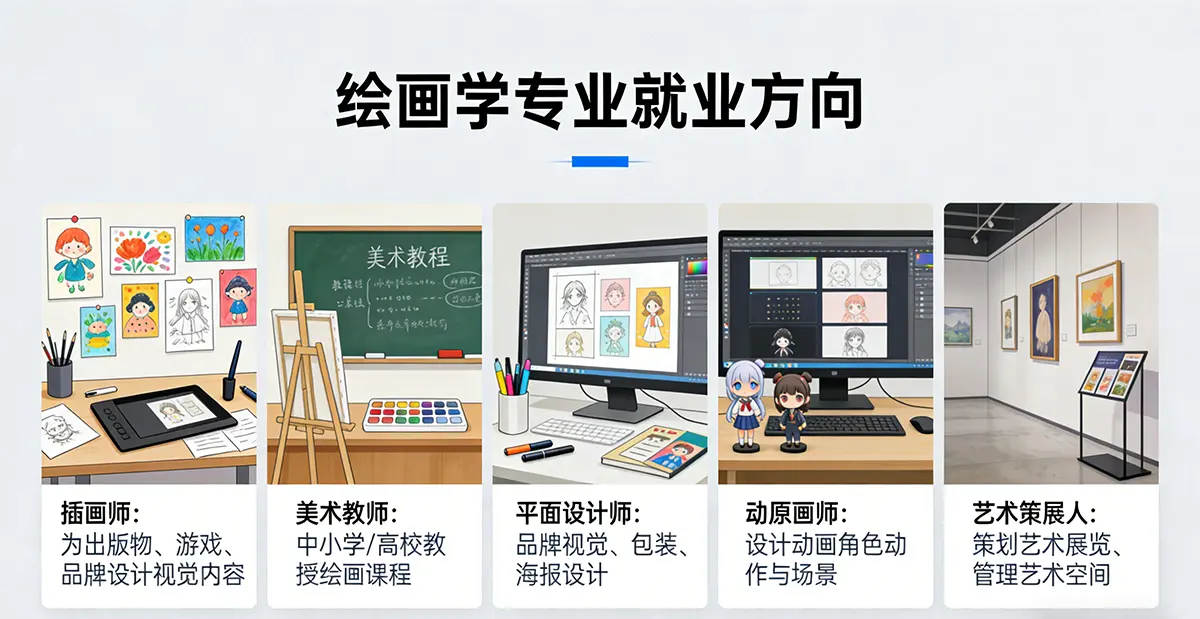
The employment landscape is characterized by “concentration in core creative fields and diversification into multiple application domains.”
Core Art Fields (Directly Related to the Major): Professional Artist: Engages in independent creation, exhibition, and sales through platforms like galleries, museums, art fairs, and residency programs. Art Institution Professionals: Curatorial Assistants, Academic Specialists, Exhibition Coordinators, Public Education Officers at museums, galleries, and art centers. Higher Education & K-12 Teachers: University art faculty, visual arts instructors (requires relevant teaching certification).
Applied Visual Arts (Skill Transfer): Art & Design Industry: Illustrator, Concept Artist, Concept Designer (for gaming, film, animation, publishing companies), Art Director. Cultural Communication & Media: Art Editor, Layout Artist, Visual Designer, Cultural Journalist. Public Art & Decoration: Mural Artist, Decorative Painter, Art Derivative Designer.
Freelancing & Entrepreneurship: Independent Illustrator/Contracted Artist: Undertakes commercial commissions or manages a personal brand. Art Education Entrepreneur: Establishes a personal studio or training institution offering art classes for children or adults. Art Content Creator: Generates value through content creation, online teaching, and knowledge monetization.
Related Support Industries: Art Market: Gallery Manager, Art Dealer, Auction House Specialist. Cultural Institutions: Art Administrators at cultural centers, community art centers, and federations of literary and art circles.
5. Employment Rates and Industry Trends for the Painting Major
Employment Rate Characteristics: “Predominance of non-standard employment”: The proportion of graduates directly becoming full-time professional artists is low, with a long path to success. Most graduates pursue flexible employment (freelancing, project-based collaboration), hybrid careers (applying skills in design, education, etc.), or further studies as primary pathways. “Dual barriers of skill and concept”: Establishing oneself in core artistic fields requires not only exceptional technical skill but also a unique artistic vision, sustained creative energy, and a certain level of social connections and networking resources. “High dependence on urban resources”: Employment opportunities are highly concentrated in first-tier and new first-tier cities with rich cultural and artistic ecosystems. “Significant income disparity”: Income ranges from initial instability to high earnings for successful artists or seasoned professionals, reflecting pronounced polarization.
Industry Trends: “Media convergence and boundary expansion”: Painting is no longer confined to the canvas; its integration with digital technology, video, installation, and performance art is a major trend, fostering new visual forms. “Art market stratification and digitalization”: The high-end gallery and art fair market develops alongside the mass-market art consumption sector (e.g., art derivatives, online art trading, art therapy), with online platforms for展示, sales, and social interaction playing an increasingly prominent role. “Growing demand for public art and community aesthetic education”: Urban renewal, rural revitalization, and community building create demand for public art projects and aesthetic education普及, providing new实践 spaces for painting professionals. “Art IP and cross-industry collaboration”: Collaboration between artists and commercial brands, fashion, and technology is becoming more frequent, leading to in-depth commercial development of art IP. “Tighter integration of academic and market concerns”: Galleries and collectors increasingly focus on works with clear academic lineage and theoretical underpinnings, pushing artists to combine practical skills with critical thinking.
6. Leading Global Institutions Offering the Painting Major
Painting is a core discipline at art academies, offered relatively less frequently at comprehensive universities.
| Country/Region | Representative Institutions (Top or Renowned Schools in Painting) |
| United States | Rhode Island School of Design (RISD), Yale University School of Art, School of the Art Institute of Chicago (SAIC), New York Academy of Art, Maryland Institute College of Art (MICA) |
| United Kingdom | Royal College of Art (RCA, postgraduate only), University of the Arts London (UAL, e.g., Chelsea College of Arts, Camberwell College of Arts), Glasgow School of Art, Slade School of Fine Art (University College London) |
| Italy | Accademia di Belle Arti di Firenze, Accademia di Belle Arti di Roma, Accademia di Belle Arti di Brera (Milano) |
| Germany | Kunstakademie Düsseldorf, Universität der Künste Berlin (UdK) |
| France | École nationale supérieure des Beaux-Arts de Paris, École nationale supérieure des Arts Décoratifs (ENSAD) |
| Russia | Repin Institute of Arts (St. Petersburg), Surikov Institute of Arts (Moscow) |
| China | Central Academy of Fine Arts (CAFA, Schools of Oil Painting, Printmaking, Mural Painting, Chinese Painting), China Academy of Art (School of Painting Arts), Sichuan Fine Arts Institute, Guangzhou Academy of Fine Arts, Academy of Arts & Design, Tsinghua University (Department of Painting) |
| Japan | Tokyo University of the Arts (Faculty of Fine Arts), Kyoto City University of Arts |
| Other | Royal Academy of Art, The Hague (KABK); Royal Academy of Fine Arts Antwerp (AP Hogeschool) |
DisciplineMajor Recommendations
Ideal Candidates for the Painting Major:
Individuals with exceptional sensitivity to visual imagery, color, and form, coupled with a powerful desire for expression. Those who possess immense patience, concentration, manual dexterity, and resilience, capable of enduring long-term, solitary creative processes. People with independent critical thinking, a rich emotional world, and sustained cultural reflection. Those with broad interest in and attention to art history, contemporary culture, and social issues.
Core Competencies for the Painting Major:
Mastery of solid绘画 modeling skills and mature techniques in at least one core medium (e.g., oil painting, Chinese painting). Development of a distinctive artistic language with personal识别度 and an evolving creative methodology. Ability to write artist statements, articulate artistic concepts, and communicate creative ideas effectively. Possession of basic skills in self-promotion, project proposal writing, and exhibition planning/execution.
Learning Recommendations for the Painting Major:
“Diligently hone technical skills (‘hand功夫’)”: Invest substantial time in foundational training in drawing, color, sketching, and long-term creative projects. “Build a conceptual framework (‘mind体系’)”: Systematically study art history and theory to clarify the position of your personal work within historical lineages and contemporary discourse. “Extensively observe and read (‘观看与阅读’)”: Frequently view original works by masters (utilize art galleries and museums), read经典 art books, and follow important contemporary artists and exhibitions. “Dare to experiment and break boundaries (‘实验与突破’)”: On the foundation of mastering tradition, courageously experiment with new materials, media, and concepts to expand the boundaries of painting. “Actively participate and engage (‘参与和交流’)”: Participate in studio critiques, campus exhibitions, and artist lectures to build a network of peers and mentors. “Plan career pathways (‘职业路径’)”: Begin considering and exploring potential paths as a professional artist, educator, or practitioner in applied fields early on, and accumulate relevant portfolio work or internship experience.
Note: Some institutions may categorize this major under different disciplines. Please refer to the specific classification used by the institution.
- The Previous Passage:Advertising Art and Design(Adv. Art & Des.)_广告艺术设计
- The Next Passage:Interaction Design(IxD (业界标准缩写))_交互设计
Human Geography Major_Geography(Geog.)_人文地理
The Human Geography Major explores the complex relationships between human activities and space, cul···

Atmospheric Sciences(Atmos. Sci.)_大气科学
Atmospheric science is the study of phenomena and evolutionary patterns within Earth's atmospher···
Earth Sciences(Earth Sci.)_地球科学
The Earth Science major focuses on studying the Earth system and its interactions, providing a scien···
Ocean Sciences(Ocean Sci.)_海洋科学
PbootCMS是全新内核且永久开源免费的PHP企业网站开发建设管理系统,是一套高效、简洁、 强悍的可免费商用的···

