

Oral Biology Research(Oral Biol. Res.)_口腔生物学研究
Time:2026-03-08 Visits:4
Oral Biology Research Major
The Oral Biology Research Major is a foundational interdisciplinary field integrating developmental biology, microbiology, and materials science, dedicated to uncovering the mechanisms of health and disease in oral and maxillofacial tissues at the molecular and cellular levels. It serves as a crucial bridge between basic research and clinical oral medicine, providing innovative theories for combating dental caries, periodontal disease, and enabling tissue regeneration. This article systematically outlines the core curriculum, advanced study pathways, career prospects, and leading global institutions for this major, offering comprehensive guidance for students aspiring to explore the frontiers of oral science.
1. Introduction to the Oral Biology Research Major
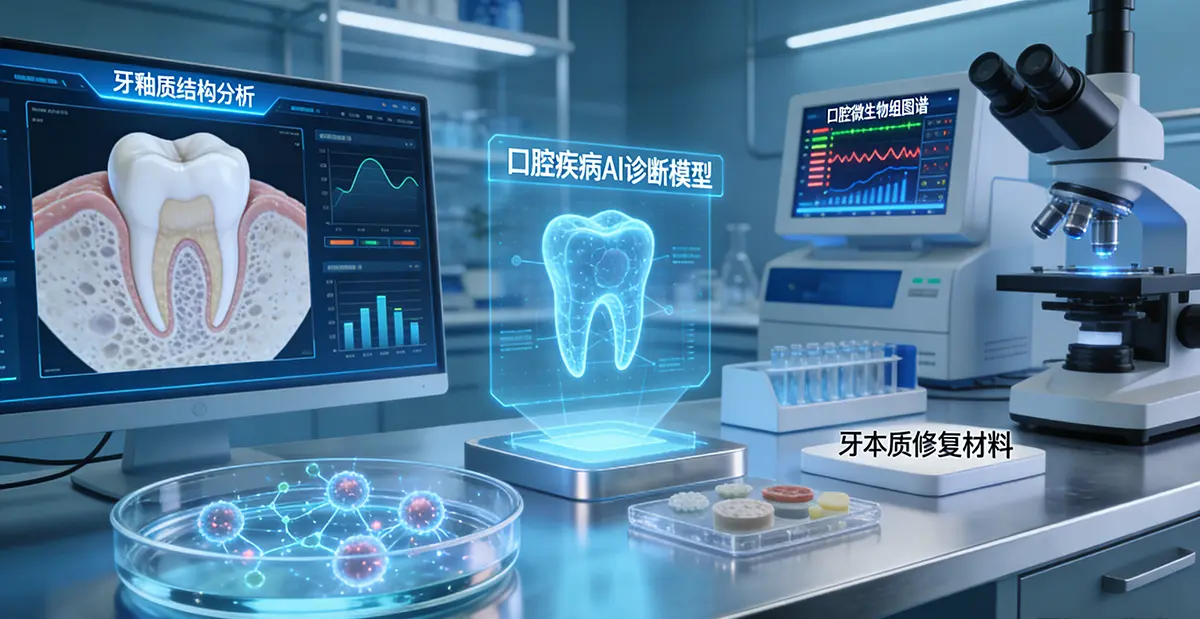
The Oral Biology Research Major is a fundamental interdisciplinary discipline specifically dedicated to studying the normal structure, function, development, regeneration, and related disease mechanisms of oral and maxillofacial tissues, including teeth, periodontium, mucosa, salivary glands, and temporomandibular joints. By integrating knowledge from multiple disciplines such as developmental biology, microbiology, immunology, materials science, and genetics, this major aims to unravel the mysteries of oral health at the molecular, cellular, and tissue levels. It provides an innovative theoretical foundation for the prevention and treatment of diseases like dental caries, periodontal disease, oral mucosal disorders, oral cancer, and craniofacial developmental anomalies. The Oral Biology Research Major serves as a critical bridge linking basic science with clinical oral medicine, driving the advancement of dentistry towards precision, regeneration, and minimally invasive approaches.
2. Core Curriculum of the Oral Biology Research Major
| Module Category | Core Courses |
| Core Oral Basic Sciences | Oral Anatomy, Histology & Embryology, Oral Physiology, Oral Biochemistry, Oral Molecular Biology |
| Disease Mechanism Research | Oral Microbiology & Immunology, Oral Pathology, Etiology of Dental Caries, Etiology of Periodontal Diseases, Oral Cancer Biology |
| Development, Regeneration & Materials | Craniofacial Developmental Biology, Oral Hard Tissue Biology (Enamel, Dentin, Bone), Oral Soft Tissue Biology, Principles of Oral Regenerative Medicine, Oral Biomaterials Science |
| Research Techniques & Methods | Oral Laboratory Animal Science, Oral Cell Culture Techniques, Oral Microbiome Analysis, Fundamentals of Oral Biomechanics, Oral Tissue Engineering & 3D Bioprinting, Bioinformatics in Oral Research |
| Supporting & Interdisciplinary Fields | Head & Neck Anatomy, Genetics, Pharmacology, Biostatistics, Research Ethics & Scientific Writing |
| Introduction to Clinical Translation | Overview of Oral Medicine, Case Studies in Translational Oral Medicine |
3. Advanced Study Pathways for the Oral Biology Research Major
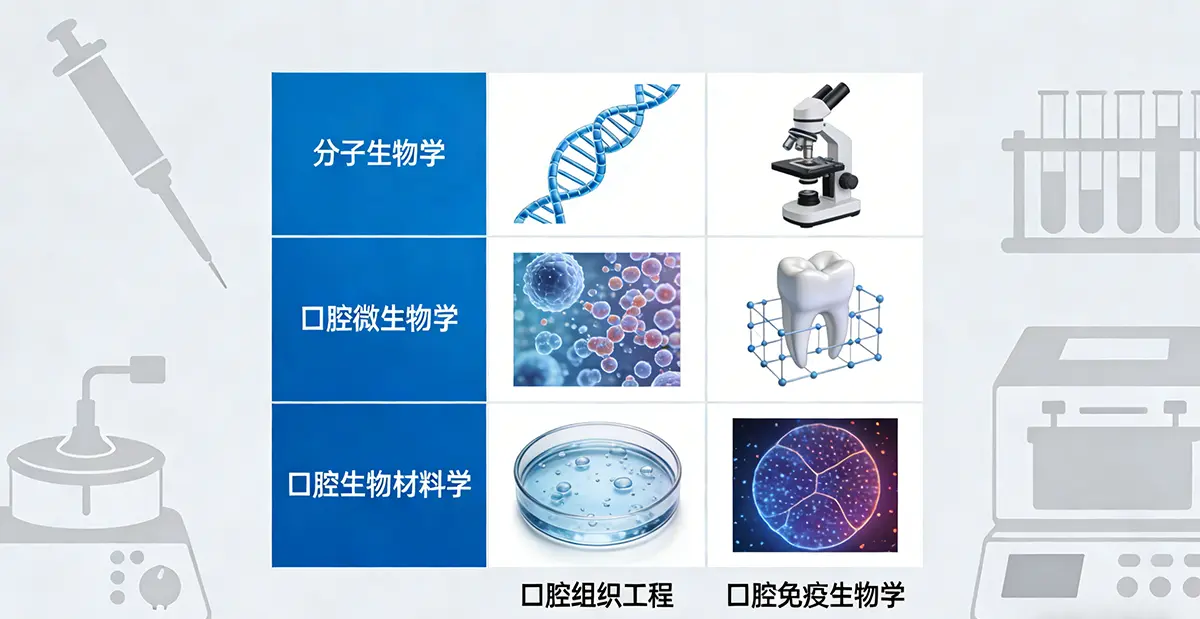
Graduates of the Oral Biology Research Major typically pursue a PhD in Oral Biology or Biomedical Sciences to engage in cutting-edge mechanistic research on oral diseases, representing the primary pathway into academia. Another key route is the Doctor of Dental Surgery/Medicine (DDS/DMD), the professional degree for clinical practice; a strong research background from this major provides a significant advantage for admission to top dental schools and paves the way for a future as a “physician-scientist.” Professional Master’s degrees offer focused advancement, including a Master of Oral Science for deepening expertise in areas like microbiology, a Master’s in Biomaterials/Bioengineering for R&D on implants and scaffolds, or an MPH with an Oral Health focus for public health research. Furthermore, the Oral Biology Research Major provides an excellent foundation for interdisciplinary advancement into fields such as Microbiology, Immunology, or Stem Cell Biology with an oral applications focus.
4. Career Paths for the Oral Biology Research Major
The Oral Biology Research Major offers clear career trajectories, primarily serving the oral health sector in research, education, industry, and advanced clinical support. In the core area of Academic Research and Education, graduates become professors, researchers, or postdoctoral fellows (typically requiring a PhD) in university dental schools or national key laboratories, conducting frontier research. Within the Biopharmaceutical and Medical Device Industry, graduates of the Oral Biology Research Major find roles as R&D scientists developing novel oral care ingredients, as engineers/scientists creating next-generation dental implants and biomaterials at device companies, or as developers of diagnostic tools and regenerative therapies in biotech firms. The Clinical Support & Translational pathway includes positions as translational researchers or clinical trial coordinators in hospital-based research centers, or as public health program specialists. Furthermore, the Oral Biology Research Major prepares graduates for Professional Services roles such as scientific editors for dental journals, medical writers, or patent/regulatory affairs specialists within the oral health domain.
5. Employment and Industry Trends for the Oral Biology Research Major
Employment is characterized by a “specialized niche expertise” model. While the overall job market is smaller than broader biomedical fields, it features high barriers to entry and strong job alignment, leading to relatively structured competition. Advanced degrees (typically a PhD) are often required for independent research or high-end product development roles. Positions offer stability in academia and strong growth potential in industry, driven by increasing demand for innovative oral health and aesthetic products.
Key industry trends creating opportunities for graduates of the Oral Biology Research Major include: the burgeoning research on the oral-systemic health link via the microbiome, positioning the mouth as a diagnostic window; advances in regenerative dentistry and bioactive materials moving towards clinical application; the comprehensive integration of digitalization and AI in diagnosis and treatment planning; the focus on minimally invasive and preventive dentistry technologies; and the emergence of precision oral medicine based on genetic insights.
6. Leading Global Institutions Offering the Oral Biology Research Major
The Oral Biology Research Major is typically offered as a core graduate program focus within top-tier university dental schools or as a key concentration under biomedical science programs.
| Country/Region | Representative Institutions (Global Leaders in Oral Research) |
| United States | University of Michigan School of Dentistry, UNC Chapel Hill School of Dentistry, Harvard School of Dental Medicine, UCSF School of Dentistry |
| Europe | University of Gothenburg, Sweden (world-leading in caries/periodontal research), Vrije Universiteit Amsterdam/University of Amsterdam (ACTA), King's College London Dental Institute |
| Japan | Tokyo Medical and Dental University (TMDU) |
| China | West China School of Stomatology (Sichuan University), Peking University School of Stomatology, Shanghai Ninth People's Hospital (Shanghai Jiao Tong University), Wuhan University School of Stomatology |
DisciplineMajor Recommendations
Ideal Candidates for the Oral Biology Research Major:
This major is ideal for individuals with a deep research interest in the complex biology of the unique oral microenvironment, who seek to go beyond clinical skills alone. Successful candidates possess excellent manual dexterity, keen observational skills, and logical thinking, thriving on microscopic exploration. They aspire to become researchers advancing dental science or innovative clinical practitioners, and are prepared for the demands of long-term, meticulous laboratory work.
Core Competencies of the Oral Biology Research Major:
The Oral Biology Research Major builds deep, specialized knowledge of the unique biology and disease mechanisms of oral tissues. It develops proficiency in oral-specific experimental techniques, such as microbial culture, hard tissue histology, and cell-material interaction assays. Graduates gain strong interdisciplinary integration skills, effectively combining core biology with principles from materials science, engineering, and computational science. Crucially, the program cultivates a translational mindset focused on applying basic discoveries to clinical or product development challenges.
Learning Recommendations for the Oral Biology Research Major:
Seek training at a renowned dental school or laboratory, as the platform and mentor are critical. Master core research methodologies by becoming proficient in at least one key area, such as microbiomics, molecular biology, or biomaterial characterization. Develop clinical perspective; understanding current oral healthcare practices and unmet needs is valuable even for research-focused careers. Build complementary interdisciplinary skills, such as bioinformatics, basic programming, or materials analysis, to enhance competitiveness. Actively participate in academic exchanges; the oral research field has a strong professional community, and international conferences are key for networking and staying at the forefront.
*Note: Program classification may vary by institution; please verify the specific structure at your chosen university.*
- The Previous Passage:Basic Medical Sciences(Basic Med. Sci.)_基础医学
- The Next Passage:Oral Medicine_口腔医学

Human Geography Major_Geography(Geog.)_人文地理
The Human Geography Major explores the complex relationships between human activities and space, cul···

Atmospheric Sciences(Atmos. Sci.)_大气科学
Atmospheric science is the study of phenomena and evolutionary patterns within Earth's atmospher···

Earth Sciences(Earth Sci.)_地球科学
The Earth Science major focuses on studying the Earth system and its interactions, providing a scien···

Ocean Sciences(Ocean Sci.)_海洋科学
PbootCMS是全新内核且永久开源免费的PHP企业网站开发建设管理系统,是一套高效、简洁、 强悍的可免费商用的···

