

Korean(Korean Studies)_韩语
Time:2026-03-08 Visits:2
Korean Language Major
The Korean Language Major provides comprehensive training in the Korean language, along with in-depth study of Korean literature, history, society, and the dynamic Hallyu cultural industry. This discipline prepares graduates for diverse careers in translation, international business, education, entertainment, and cross-cultural communication between China and Korea. With expertise in both language and contemporary Korean culture, majors are well-positioned for roles in fast-growing sectors. This guide outlines the program's structure, core courses, global study opportunities, and employment trends.
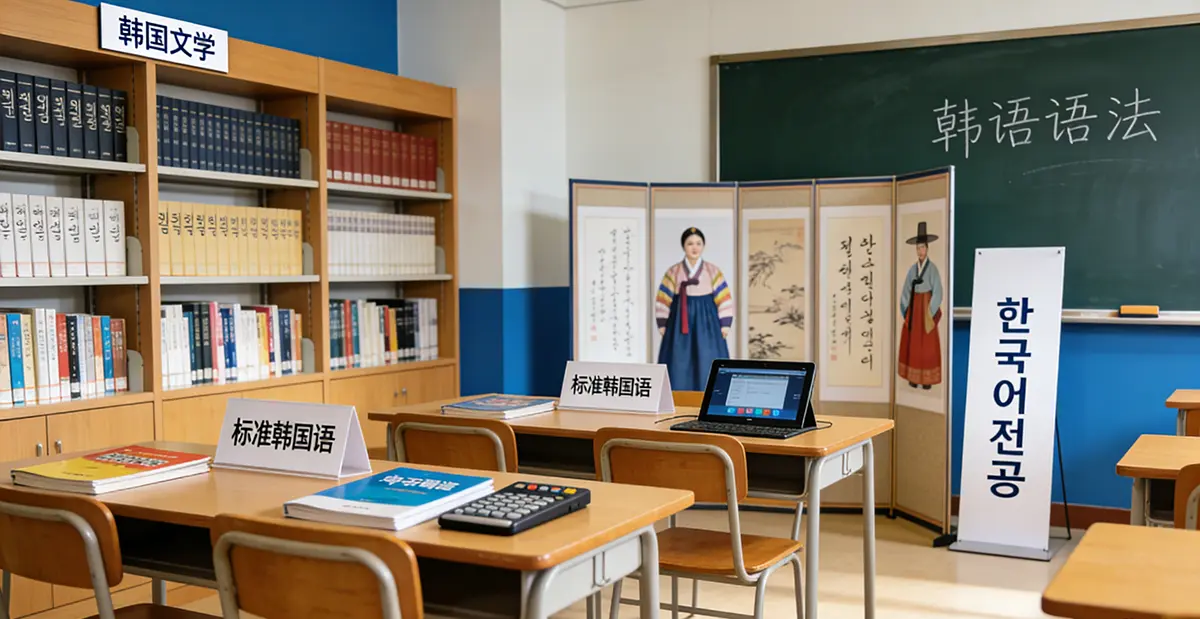
1. Introduction to the Korean Language Major
The Korean Language Major is an interdisciplinary humanities discipline centered on the Korean language, systematically studying the language, literature, history, society, political economy, and international relations of both South Korea and the Korean Peninsula. This major is designed not only to develop students’ exceptional comprehensive applied skills in Korean listening, speaking, reading, writing, and translation, but also to foster a deep understanding of the historical context of the Korean Peninsula, inter-Korean relations, social culture, and modern industrial models. Against the backdrop of the complex “politically cool but economically warm” interaction between China and South Korea, and the continuous global expansion of “Hallyu” (Korean Wave) influence, the Korean Language Major aims to cultivate versatile talents with solid language proficiency, keen cultural insight, independent analytical capabilities, and innovative application skills.
2. Core Courses in the Korean Language Major
| Module Category | Core Courses |
| Language Skills Core | Basic Korean/Comprehensive Korean, Advanced Korean, Korean Audio-Visual-Speaking, Korean Writing, Intensive Korean Grammar, Korean-Chinese/Chinese-Korean Translation and Interpretation |
| Literature and Culture | History of Korean Literature (Ancient to Modern), Selected Readings in Korean Literature, Introduction to North Korean Literature, Literary Theory and Criticism |
| Linguistics | Introduction to Korean Linguistics, Korean Phonetics, Korean Lexicology, Korean Grammar, History of the Korean Language, Sociolinguistics and the Honorific System |
| Regional Studies and Society | Overview of South Korea/The Korean Peninsula, Korean History, North Korean History, Korean Politics and Economy, Special Topics in Contemporary Korean Society, North Korean Studies, China-South Korea/China-North Korea Relations, Intercultural Communication |
| Translation and Interpreting Practice | Translation Theory and Practice, Specialized Translation (Business, Entertainment, Legal, Technical), Consecutive Interpreting, Fundamentals of Simultaneous Interpreting |
| Regional and Interdisciplinary Studies | Korean Peninsula Studies, Northeast Asian International Relations, Korean Business Management and Culture, Hallyu Studies (K-pop, Film/TV, Variety Shows), Korean Art and Design |
| Practical Skills | Academic Korean Writing, Business Korean, Korean Language Testing (Preparation for TOPIK Level 6), Application of Computer-Assisted Translation Tools, Korean Information Retrieval and Analysis |
3. Advanced Study Pathways for Korean Language Majors
Master's/PhD in Korean Language and Literature: Enter the academic research track to become a university professor or professional researcher.
Master's in Korean Studies/Area Studies: Conduct in-depth interdisciplinary research on Korean politics, economy, society, and culture.
Master's in Translation Studies/Conference Interpreting: Become a senior professional translator or researcher in translation studies.
Master's in Teaching Korean as a Foreign Language: Specialize in the theory and methodology of teaching Korean to non-native speakers.
Master's in Media/Cultural Content Studies: Research the production, dissemination, and industry of Hallyu (Korean Wave) content.
Master's in Business (e.g., Business Administration, International Trade): Leverage proficiency in Korean to pursue advanced studies and careers in business.
Master's in International Relations/Political Science: Focus on the Korean Peninsula and Northeast Asia to enter the field of policy research.
4. Career Paths and Positions for Korean Language Majors
The core strengths of the Korean Language Major lie in the “deep integration of language skills with the popular culture industry” and its unique position within Northeast Asia’s geopolitical and economic landscape, offering graduates diverse career paths that combine commercial vitality with strategic value.
| Core Employment Fields | Typical Positions | Primary Responsibilities and Skill Application |
| Education and Research | University Korean Instructor/Researcher (typically requires a PhD) | Engage in teaching and research on Korean language, literature, and culture. |
| Secondary School/International School Korean Teacher (requires teaching certification) | Deliver Korean language instruction and courses on Korean culture. | |
| Instructor/Curriculum Developer at Korean Language Training Institutions | Provide TOPIK exam preparation, study abroad counseling, and oral communication instruction. | |
| Entertainment and Content Industry | Overseas Business Specialist at Entertainment/Talent Agencies | Manage overseas artist promotion, fan community operations, and market strategy analysis for the Chinese market. |
| Localization Translator/Operations Specialist at Gaming Companies | Handle translation, testing, community management, and marketing for Korean game localization. | |
| Content Acquisition/Dubbing Coordinator at Film/TV Production/Distribution Companies | Evaluate Korean film/TV rights acquisition, manage dubbing production, and plan promotional campaigns. | |
| Business and Corporate Management | Management Trainee/Administrative/HR Specialist at Korean Companies (Samsung, Hyundai, etc.) | Handle internal communication, human resources, and administrative support within Sino-Korean joint ventures or Korean enterprises. |
| Korea Trade Specialist/Cross-Border E-commerce Operator | Engage in China-Korea import/export operations or manage cross-border e-commerce platforms targeting the Korean market. | |
| Marketing Specialist for Cosmetics/Fashion Brands | Oversee marketing promotions and client relations for Korean beauty and fashion brands in the Chinese market. | |
| Translation and Localization | Professional Translator/Proofreader (Entertainment, Legal, Technical) | Translate and review subtitles, legal contracts, and technical manuals. |
| Freelance Subtitle Translator/Individual Translator | Provide translation services for video platforms, self-media, or individual clients. | |
| Localization Project Manager (IT, Gaming Companies) | Manage the end-to-end localization process for Korean projects, coordinating translation, testing, and release. | |
| IT and Internet | Software Development/Testing Engineer for Korean Projects | Handle technical development and communication for Korea-focused projects in software outsourcing firms. |
| Product/Operations Specialist at Internet Companies (Korea-related business) | Manage operations and user growth for internet products related to the Korean market or content. | |
| Government, Foreign Affairs & Think Tanks | Civil Servant (Ministry of Commerce, Foreign Affairs Offices, Culture & Tourism Bureaus, etc.) | Handle affairs related to economic cooperation, cultural exchange, and investment promotion with Korea. |
| Korean Peninsula Affairs Researcher at Research Institutes | Conduct analysis and research on peninsula dynamics, Korean policies, and Sino-Korean relations at think tanks or universities. | |
| Tourism and Events | Korea Tour Product Manager/Tour Guide | Design and lead tour groups to Korea or serve Korean tourists visiting China. |
| Project Executive at Event Companies (China-Korea exhibitions/events) | Plan, organize, and coordinate on-site logistics for China-Korea conferences and exhibitions. |
5. Employment Rate and Industry Trends for Korean Language Majors
Employment Rate Characteristics:
“High Industry Concentration, Susceptible to Entertainment Sector Fluctuations”: The job market is closely tied to the fortunes of the Hallyu cultural industry and the investment strategies of Korean enterprises in China, with positions heavily concentrated in cultural entertainment, beauty/fashion, cross-border e-commerce, and IT outsourcing.
“Intense Competition, Highly Saturated, and Replaceable”: Numerous institutions offer Korean programs, resulting in a large supply of graduates. The relatively accessible nature of the language also brings competition from non-majors with strong skills. Traditional roles in translation and administration face higher replaceability.
“Emerging Roles Offer Flexibility but Less Stability”: The entertainment, e-commerce, and self-media sectors provide many flexible and interesting positions, but project-based work is common, offering less career stability compared to traditional industries.
“Significant Starting Salary Variation; Advancement Relies on Composite Skills”: Roles in entertainment, e-commerce, and IT may offer higher starting salaries, but long-term progression heavily depends on industry experience, networking, and “Korean +” composite abilities (e.g., operations, planning, technology).
Industry Development Trends:
“Hallyu 4.0” and Deep Digital Integration: Expansion from traditional film/TV and music into digital content like webtoons, online novels, virtual idols, and games, creating new demands for translation, operations, and IP management.
“Re-linking” and Diversification of Sino-Korean Industrial Cooperation: Strengthened collaboration in high-tech fields like semiconductors, new energy, and biopharmaceuticals requires Korean language professionals with specialized knowledge.
Cross-Border E-commerce as a Stable Employer: The continuous entry of Korean cosmetics, apparel, and food products into China via cross-border platforms sustains demand for related operations, marketing, and customer service roles.
Significant Impact of Machine Translation on Entry-Level Positions: Rapidly improving machine translation quality for subtitles and simple documents is squeezing basic translation work, forcing professionals to move into advanced proofreading, creative translation, localization management, and interpreting.
The Long-Term Complexity of the Korean Peninsula Situation: Ensures sustained demand for talent specializing in peninsula studies, security analysis, and related diplomatic affairs.
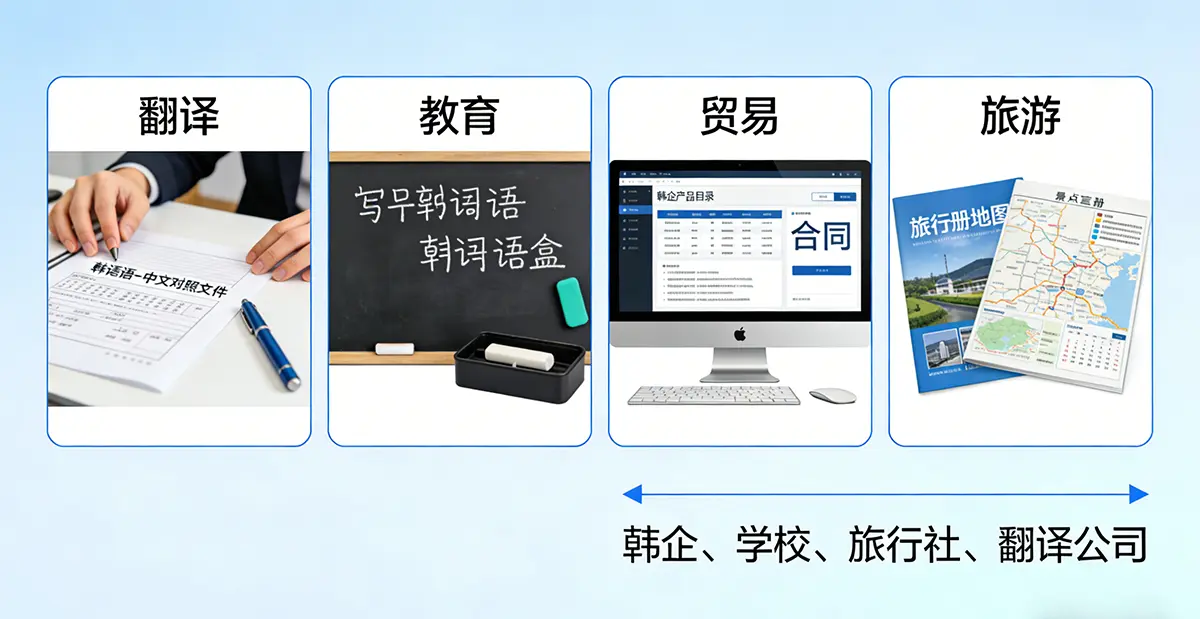
6. Major Global Institutions Offering the Korean Language Major
| Country/Region | Representative Institutions (Leading Institutions in Korean Language/Studies) |
| South Korea | Seoul National University, Korea University, Yonsei University (collectively “SKY”), Hankuk University of Foreign Studies, Sungkyunkwan University |
| North Korea | Kim Il-sung University, Kim Hyong-jik University of Education |
| China | Beijing Foreign Studies University (top-tier School of Asian and African Studies), Shanghai International Studies University, Peking University, Yanbian University (key center for Korean ethnic culture and language studies), Shandong University, Guangdong University of Foreign Studies |
| United States | Harvard University, University of California, Berkeley, Columbia University, University of Hawaii at Manoa (strong in Asia-Pacific studies) |
| Japan | Tokyo University of Foreign Studies, Osaka University |
Recommendations for Korean Language Majors
Ideal Candidates: Individuals with a natural interest in and affinity for the Korean language and Hangul script. Avid enthusiasts of Korean popular culture (K-pop, Korean dramas, variety shows) who aspire to turn this passion into a career. Outgoing personalities who are skilled communicators with a keen sensitivity to the fashion, entertainment, and new media industries. Those with a rational interest in Northeast Asian geopolitics and the ability to objectively analyze Korean Peninsula issues.
Core Competitiveness of the Korean Language Major: Superior Practical Korean Proficiency: Beyond achieving TOPIK Level 6, emphasizes mastery of authentic spoken language, internet slang, and specialized terminology across various fields. Deep Understanding of the Hallyu Cultural Industry: Move beyond being a consumer to become an industry observer and analyst, comprehending its production, dissemination, and business models. Strong Cross-Cultural Marketing and Community Management Skills: Know how to effectively promote Korean cultural products to Chinese audiences or introduce Chinese products to the Korean market. Learning Agility and Adaptability in Fast-Changing Industries: The entertainment and e-commerce sectors evolve rapidly, requiring continuous learning of new knowledge, platforms, and trends.
Study Recommendations for Korean Majors: Aim for a high score on TOPIK Level 6: This is the fundamental credential for employment, with oral proficiency being particularly critical. Choose one vertical field for deep specialization: Based on interest, dedicate your university years to in-depth exploration of one area—“Entertainment Industry,” “Cross-Border E-commerce,” “Game Localization,” “Beauty & Fashion,” or “Korean Peninsula Studies”—and accumulate relevant knowledge, portfolio work, or internship experience. Maximize online resources and communities: Actively participate in fan subtitle groups, purchasing agent communities, and industry forums; this serves as both practical experience and a vital networking channel. Master at least one specialized hard skill: Such as video editing, new media operations, data analysis, basic programming, or market research, to form a powerful combination with your Korean language skills. Strive for an exchange program or internship in Korea: Study or work experience in Korea provides decisive advantages for language improvement, cultural understanding, and job seeking. Closely monitor developments in China-Korea relations to cultivate a broader perspective.
Note: Some university programs may be categorized under different disciplines. Please refer to the specific institution’s actual classification.
- The Previous Passage:Communication Studies(Comm. Stud.)_沟通学
- The Next Passage:Chinese(Chinese Studies 或 Sinology (汉学))_汉语
Human Geography Major_Geography(Geog.)_人文地理
The Human Geography Major explores the complex relationships between human activities and space, cul···

Atmospheric Sciences(Atmos. Sci.)_大气科学
Atmospheric science is the study of phenomena and evolutionary patterns within Earth's atmospher···

Earth Sciences(Earth Sci.)_地球科学
The Earth Science major focuses on studying the Earth system and its interactions, providing a scien···

Ocean Sciences(Ocean Sci.)_海洋科学
PbootCMS是全新内核且永久开源免费的PHP企业网站开发建设管理系统,是一套高效、简洁、 强悍的可免费商用的···

