

Japanese(Japanese Studies)_日语
Time:2026-03-08 Visits:2
Japanese Language Major
The Japanese Language Major provides comprehensive training in the Japanese language, along with in-depth study of Japan's literature, history, society, and business culture. This discipline prepares graduates for diverse careers in translation, international business, education, and cross-cultural communication between China and Japan. With expertise in both language and contemporary Japanese industry trends, majors are well-positioned for roles in manufacturing, IT, trade, and content localization. This guide outlines the program's structure, core courses, global study opportunities, and employment trends.
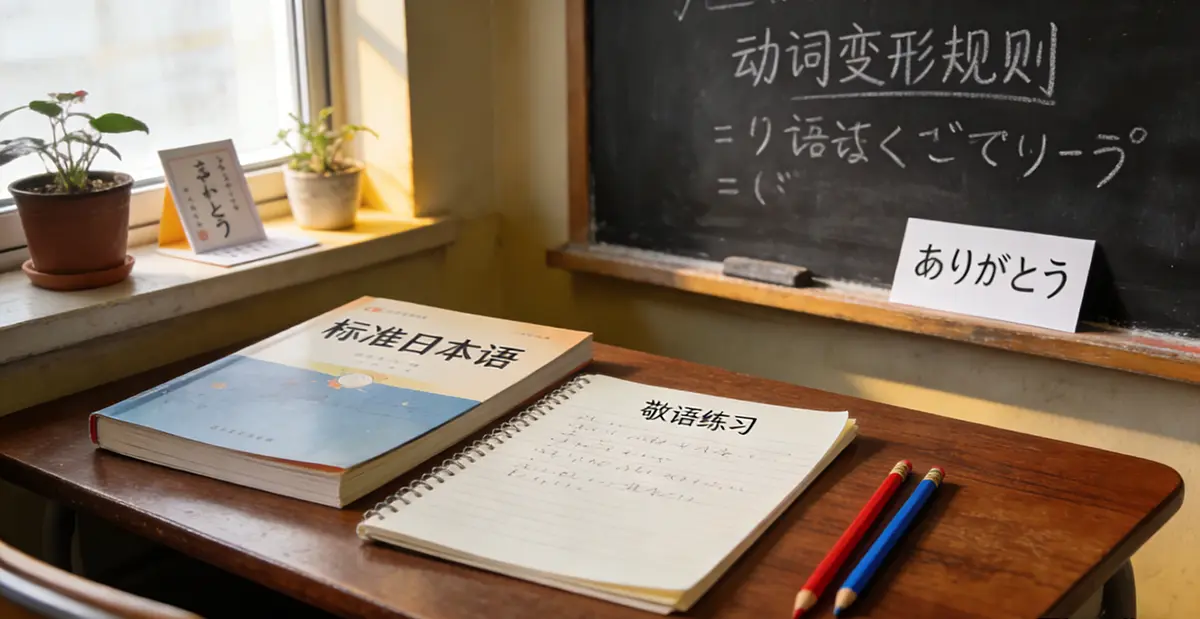
1. Introduction to the Japanese Language Major
The Japanese Language Major is an interdisciplinary humanities discipline centered on the Japanese language, systematically studying Japanese linguistics, literature, culture, history, society, economics, and international relations. This major is designed not only to develop students' exceptional comprehensive applied skills in Japanese listening, speaking, reading, writing, and translation, but also to foster a deep understanding of Japan's unique cultural psychology, social structure, and modern development models. Against the backdrop of close economic and cultural exchanges and complex diplomatic relations between China and Japan, the Japanese Language Major aims to cultivate versatile talents with solid linguistic proficiency, keen cross-cultural insight, independent analytical capabilities, and a rational, objective perspective.
2. Core Courses in the Japanese Language Major
| Module Category | Core Courses |
| Language Skills Core | Basic Japanese/Comprehensive Japanese, Advanced Japanese, Japanese Audio-Visual-Speaking, Japanese Writing, Intensive Japanese Grammar, Japanese-Chinese/Chinese-Japanese Translation and Interpretation |
| Literature and Culture | History of Japanese Literature (Ancient to Modern), Selected Readings in Japanese Literature (Classical, Modern/Contemporary Fiction, Poetry, etc.), Japanese Literary Theory and Criticism |
| Linguistics | Introduction to Japanese Linguistics, Japanese Phonetics, Japanese Lexicology, Japanese Grammar, History of the Japanese Language, Sociolinguistics and Honorifics Studies |
| Regional Studies and Society | Overview of Japan, Japanese History, Japanese Politics and Economy, Japanese Society and Culture, History of Japanese Thought, Intercultural Communication (Sino-Japanese Comparison) |
| Translation and Interpreting Practice | Translation Theory and Practice, Specialized Translation (Business, Science & Technology, Legal, Literary), Consecutive Interpreting, Fundamentals of Simultaneous Interpreting |
| Regional and Interdisciplinary Studies | History and Current State of Sino-Japanese Relations, East Asian Regional Studies, Japanese Business Management and Operations, Japanese Popular Culture Studies (Anime, Film, Video Games), Japanese Art and Design |
| Practical Skills | Academic Japanese Writing, Business Japanese, Japanese Language Testing (Preparation for JLPT N1/N2), Application of Computer-Assisted Translation Tools |
3. Advanced Study Pathways for Japanese Language Majors
Master’s/PhD in Japanese Language and Literature: Enter the academic research track to become a university professor or professional researcher.
Master’s in Japanese Studies/Area Studies: Conduct in-depth interdisciplinary research on Japanese politics, economy, society, and history.
Master’s in Translation Studies/Conference Interpreting: Become a senior professional translator or researcher in translation studies.
Master of Education (Japanese Language Education): Specialize in the theory and methodology of teaching Japanese to non-native speakers.
Master of Laws (Comparative Law, Intellectual Property Law) / Master’s in Business (e.g., Management Studies): Leverage proficiency in Japanese to pursue advanced studies and careers in legal or business fields.
Master’s in Media/Cultural Studies: Research Japanese media, popular culture, and its global dissemination.
Master’s in International Relations/Public Policy: Focus on Japan and East Asia to enter the field of policy research.

4. Career Paths and Positions for Japanese Language Majors
The core strength of the Japanese Language Major lies in “precise language skills + in-depth country-specific expertise.” Its graduates play an indispensable bridging role in the long-term, complex, and close economic, trade, and cultural exchanges between China and Japan.
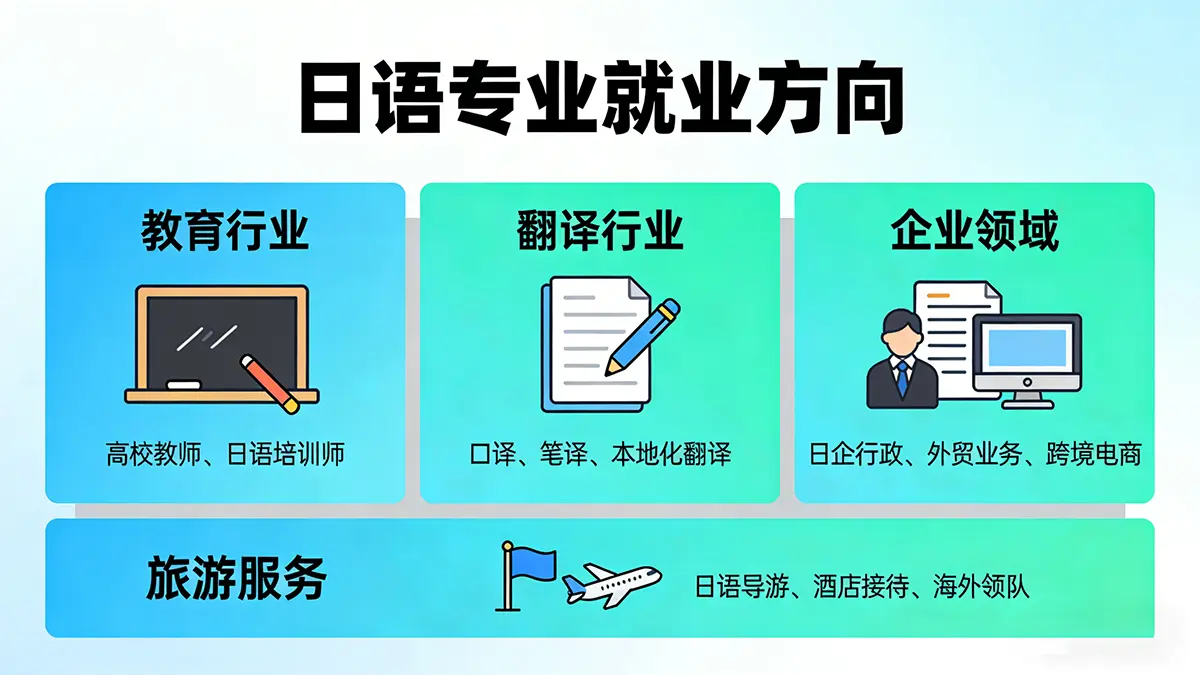
| Core Employment Fields | Typical Positions | Primary Responsibilities and Skill Application |
| Education and Research | University Japanese Instructor/Researcher (typically requires a PhD) | Engage in teaching and research on Japanese language, literature, and culture. |
| Secondary School/International School Japanese Teacher (requires teaching certification) | Deliver Japanese language instruction and courses on Japanese culture. | |
| Instructor/Curriculum Developer at Japanese Language Training Institutions | Provide JLPT exam preparation and business Japanese instruction. | |
| Translation and Localization | Professional Translator/Translation Reviewer (Japanese Companies, Law Firms, Publishers) | Translate technical documentation, business contracts, legal documents, and literary works. |
| Conference Interpreter/On-site Interpreter (Manufacturing, Trade Negotiations) | Provide interpretation services for business negotiations, technical exchanges, and international conferences. | |
| Localization Specialist/Game Localization Translator (IT, Gaming Companies) | Handle Japanese translation and cultural adaptation for software, games, and anime content. | |
| Business and Corporate Management | Management Trainee/General Affairs/HR/Finance Specialist at Japanese Companies | Serve as the core communication link between Chinese and Japanese parties, handling internal administration, human resources, finance, and coordination. |
| Japan Trade Specialist/Sales Representative | Develop the Japanese market, maintain corporate clients, and manage orders, logistics, and business negotiations. | |
| Production Engineering/Quality Control Specialist at Japanese Manufacturing Companies | Act as a technical translator, process coordinator, and document manager on the production floor. | |
| IT and Internet | Japan-focused Software Development Engineer/Test Engineer | Responsible for the development, testing, and technical communication of Japan-related projects in software outsourcing or product companies. |
| IT Consultant/BPO Project Manager | Provide IT solutions to Japanese clients or manage business process outsourcing projects. | |
| Government, Foreign Affairs & Think Tanks | Civil Servant (Ministry of Commerce, Foreign Affairs Offices, CCPIT, National Intellectual Property Administration, etc.) | Manage economic cooperation, investment promotion, cultural exchange, and policy research related to Japan. |
| Japan Studies Researcher at Research Institutions | Conduct in-depth analysis of Japanese politics, economics, and security policy at think tanks or university research institutes. | |
| Media, Publishing & Cultural Tourism | Japan-focused Journalist/Editor at Media Outlets | Engage in Japan-related news reporting, feature planning, and content translation/editing. |
| Japanese Book Editor/Copyright Manager at Publishing Houses | Oversee the acquisition, translation, editing, or copyright trading of Japanese books. | |
| Japan Route Product Manager/Tour Guide in Tourism Industry | Design travel itineraries to Japan for Chinese tourists or serve Japanese tourists visiting China. | |
| Emerging Fields | Cross-border E-commerce Operator (Platforms/Independent Sites Targeting Japan) | Manage store operations, marketing, customer service, and supply chain coordination. |
| Freelancer (Independent Translator, Content Creator, Personal Shopping Consultant) | Provide personalized services leveraging language proficiency and professional knowledge. |
5. Employment Rate and Industry Trends for Japanese Language Majors
Employment Rate Characteristics:
“Strong Dependence on Japanese Companies, High Industry Concentration”: The job market is closely linked to the operational performance and investment strategies of Japanese enterprises in China, traditionally concentrated in manufacturing (automotive, electronics, machinery), trade, and IT services.
“Stable Demand but Intense Competition and Saturation”: Due to numerous program offerings and a large graduate pool, competition for high-quality positions is exceptionally fierce, driving up requirements for language proficiency (typically demanding high JLPT N1 scores) and overall competency.
“IT/Internet Sector as a Major Employer”: Fields like Japan-oriented software development and BPO (Business Process Outsourcing) absorb a significant number of Japanese language graduates, particularly favoring those with combined “Japanese + IT” skills.
“Starting Salaries and Career Ceilings”: Entry-level salaries at Japanese firms may lag behind some high-demand industries. Additionally, the traditional promotion culture within Japanese companies presents limitations, motivating many professionals to seek opportunities at Chinese enterprises or pursue freelance careers.
Industry Development Trends:
Strategic Transformation of Japanese Firms in China: Shifting from the “world’s factory” model to “China+1” supply chain adjustments, with increased focus on sales in the Chinese market, digital transformation, and new energy vehicles. Talent demand is pivoting from production management toward marketing, R&D, and strategic roles.
Continued Growth in Service Trade and IT Outsourcing: Strong demand persists in Japanese software outsourcing, game localization, and cross-border e-commerce operations, serving as primary destinations for graduates.
Deepening Sino-Japanese Cultural Exchange and Content Industry Collaboration: The import and co-development of anime, gaming, and film/TV IPs generate demand for translation, planning, operations, and legal professionals.
Increased Value of Premium Translation and Consulting: Stable demand exists for high-level translation and cross-cultural consulting roles in specialized fields such as intellectual property, law, finance, and pharmaceuticals.
Machine Translation Drives Transformation of Entry-Level Roles: While basic translation positions are diminishing, roles requiring high cultural sensitivity and specialized knowledge—such as translation review, creative translation, and advanced interpreting—are gaining value.
6. Major Global Institutions Offering the Japanese Language Major
| Country/Region | Representative Institutions (Leading Institutions in Japanese Language/Japanese Studies) |
| Japan | The University of Tokyo, Kyoto University, Waseda University, Keio University, Osaka University |
| China | Beijing Foreign Studies University (Top-tier Japanese Faculty), Shanghai International Studies University, Peking University, Jilin University (Long-standing Japanese Studies tradition), Guangdong University of Foreign Studies, Dalian University of Foreign Languages |
| United States | Harvard University, University of California, Berkeley, Columbia University, University of Michigan |
| United Kingdom | University of Oxford, University of Cambridge, SOAS, University of London |
| Australia | Australian National University, Monash University |
Study and Development Recommendations for the Japanese Language Major
Ideal Candidates:
Individuals with a strong interest in the Japanese language itself (e.g., its writing systems, honorific structures). Those with a deep passion for Japanese culture, spanning both classical literature and traditional arts, as well as modern pop culture like anime and gaming. People who are meticulous, rigorous, and possess a strong sense of rules and execution capability. Those with rational, objective analytical skills, able to maintain a professional attitude within the context of complex Sino-Japanese relations.
Core Competitiveness of the Japanese Language Major:
Superior Japanese Language Proficiency: Based on a high JLPT N1 score, with outstanding business Japanese and translation skills, and authentic spoken expression. Deep Understanding of Japanese Society and Culture: The ability to look beyond surface phenomena to comprehend the underlying logic of Japanese society, its business customs, and interpersonal norms. Rapid Learning and Application within Specialized Fields: The capacity to quickly acquire professional knowledge in a specific field (e.g., manufacturing, IT, law) and perform accurate linguistic mediation. Cross-cultural Coordination and Problem-Solving Skills: The ability to communicate effectively, resolve differences, and advance projects between Chinese and Japanese parties with differing work styles and mindsets.
Study Recommendations for Japanese Language Majors:
Aim for a High JLPT N1 Score: This is a fundamental requirement for entering most Japanese companies and related industries. Master at Least One Complementary (“+α”) Skill: Based on your interests and career goals, proactively learn a specialized skill such as IT fundamentals (programming, databases), accounting, law, marketing, or design. Pursue an Exchange Program or Internship in Japan: Immersive experience in Japan is crucial for language improvement and cultural understanding, and serves as a significant advantage in job applications. Obtain High-Value Certifications: In addition to JLPT, consider certifications like J.TEST Level A, the Business Japanese Proficiency Test (BJT), or CATTI Japanese Interpretation/Translation certificates. Broaden Your Perspective and Follow Sino-Japanese Relations and Industry Trends: Maintain awareness of political-economic relations between China and Japan and developments in key industries (e.g., new energy vehicles, semiconductors, biopharmaceuticals) to cultivate strategic insight.
Note: Some university programs may be categorized under different disciplines. Please refer to the specific institution’s actual classification.
- The Previous Passage:Economics(Econ.)_经济学
- The Next Passage:World History(World Hist.)_世界历史
Human Geography Major_Geography(Geog.)_人文地理
The Human Geography Major explores the complex relationships between human activities and space, cul···

Atmospheric Sciences(Atmos. Sci.)_大气科学
Atmospheric science is the study of phenomena and evolutionary patterns within Earth's atmospher···

Earth Sciences(Earth Sci.)_地球科学
The Earth Science major focuses on studying the Earth system and its interactions, providing a scien···
Ocean Sciences(Ocean Sci.)_海洋科学
PbootCMS是全新内核且永久开源免费的PHP企业网站开发建设管理系统,是一套高效、简洁、 强悍的可免费商用的···

