

International Relations(IR)_国际关系
Time:2026-03-08 Visits:2
International Relations Program
This comprehensive guide delves into the International Relations Major, exploring its core curriculum, advanced study options, and diverse career trajectories. It provides an authoritative overview of the discipline’s theoretical foundations, essential skill sets, leading global programs, and emerging industry trends. Emphasizing the critical role of language proficiency, internships, and professional networking, this resource offers vital insights for students aiming for advanced academia or careers in government, international organizations, or the private sector.
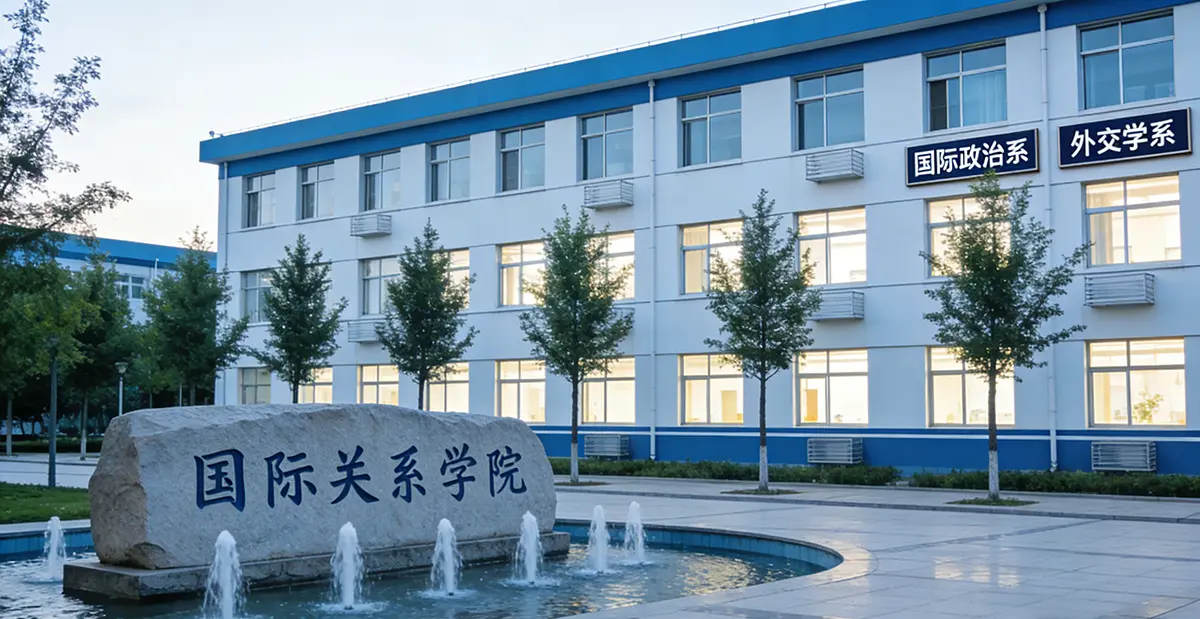
1. Introduction to the International Relations Program
International Relations is a branch of political science that studies interactions among states, international organizations, transnational corporations, and other non-state actors. It aims to understand power, conflict, cooperation, governance, and peace at the global level, with core topics including foreign policy, international security, globalization, international political economy, international law, and human rights. This program cultivates professionals equipped with a global perspective, strategic thinking, cross-cultural communication skills, and policy analysis capabilities—essential competencies for engaging with and shaping global affairs.
2. Core Curriculum for International Relations Majors
| Module Category | Core Courses |
| Theoretical Foundations | International Relations Theory (Realism, Liberalism, Constructivism, etc.), Comparative Politics, Principles of Political Science |
| Core Issue Areas | International Security Studies, International Political Economy, Diplomacy, International Organizations and Global Governance, International Law |
| Regional and Country Studies | Specific Regional Studies (e.g., Asia-Pacific, Europe, Middle East), U.S. Foreign Policy, Chinese Foreign Policy, Global South Studies |
| Research Methods and Skills | Social Science Research Methods, Quantitative Analysis Fundamentals, Policy Analysis Writing, Diplomatic Documents and Negotiation Simulation |
| Cross-Disciplinary Issues | Global Environmental Politics, Human Rights and International Ethics, Terrorism and Counterterrorism, Cyberspace Governance, International Development Cooperation |
| Language and Tools | Professional English/Second Foreign Language, Data Analysis Software (SPSS/R), GIS Fundamentals (for Geopolitical Analysis) |
4. Career Pathways and Positions for International Relations Graduates
Career paths are diverse, but competition for high-level positions is intense, heavily dependent on institutional reputation, language proficiency, internship experience, and professional networks.
Government and Public Sector
Ministry of Foreign Affairs and Overseas Missions: Diplomats, attaches, political/economic affairs officers (requires passing the national civil service examination).
International Departments of Other Ministries: Engage in international cooperation and policy analysis at the Ministry of Commerce, National Development and Reform Commission, Central Committee for Foreign Affairs, etc.
International Organizations: United Nations and its specialized agencies, World Bank, IMF, etc., serving as project officers or researchers.
Research and Think Tanks
Think tanks and international research institutions: Researchers, analysts engaged in policy analysis and recommendations.
Higher Education Institutions: Professors, researchers (typically requiring a doctoral degree).
Private Sector
Multinational Corporations: Government affairs/public policy managers, international market analysts, corporate social responsibility officers.
Consulting Firms: Political Risk Analyst, Geopolitical Advisor.
Financial Institutions: Macro Analyst or Country Risk Analyst at international investment banks or fund management companies.
Media and International NGOs
International News Editor/Journalist, International Development Program Officer.
Education and Exchange
International Schools/Educational Institutions: Global Affairs Curriculum Teacher, International Education Program Coordinator.

5. Employment Rates and Industry Trends for International Relations Majors
Employment Rate Characteristics
“High aspirations, intense competition, diverse pathways but no direct route”: Top positions (e.g., diplomats, international organizations) have extremely low acceptance rates amid globalized and fiercely competitive recruitment. Most graduates must gain experience in related fields (e.g., business, media, think tanks).
“Interdisciplinary Backgrounds and Hard Skills Are Assets”: Beyond theoretical knowledge, proficiency in at least one additional language (especially non-mainstream languages), data analysis, international business, or legal expertise significantly enhances competitiveness.
“Networking and Internships Are Critical”: The field heavily relies on internal referrals and information networks. High-quality internships (e.g., at international organizations, embassies, think tanks) serve as essential stepping stones for job applications.
Wide Starting Salary Variance: Public sector entry-level pay is stable but modest; private sectors (consulting, finance) may offer higher starting salaries, though these heavily depend on individual capabilities.
Industry Development Trends
Surge in Demand for Geopolitical Risk Analysis: Rising great power competition, regional conflicts, and normalized economic sanctions have created unprecedented demand for professional geopolitical risk assessments among corporations and financial institutions.
Complex Interconnectedness of Global Issues: Climate change, public health, cybersecurity, and AI governance transcend traditional borders, requiring cross-disciplinary, multilateral coordination expertise.
Economic Security and Supply Chain Politicization: Supply chain security for critical minerals, semiconductors, and new energy industries has become a core national strategy, driving demand for cross-analysis of international political economy and industrial policy.
Digital Diplomacy and Public Diplomacy: Social media and digital platforms have become new diplomatic battlegrounds, demanding hybrid talents proficient in both international relations and digital communication.
Crisis and Reform of Multilateralism: Traditional international institutions face reform pressures, increasing the need for research and practice in global governance innovation and international institutional design.
Rising Influence of Non-State Actors: Transnational corporations, non-governmental organizations, and city networks play an increasingly prominent role in international agenda-setting.

6. Leading Institutions Globally
International Relations is a core discipline within political science, with top universities worldwide offering relevant departments or programs.(Selected Schools - Listed in no particular order)
United States: Harvard University (Kennedy School of Government), Princeton University, Georgetown University (School of Foreign Service), Columbia University, Johns Hopkins University (SAIS)
United Kingdom: University of Oxford, University of Cambridge, London School of Economics (LSE), King's College London (Department of War Studies)
Switzerland: Graduate Institute of International and Development Studies (GIIS)
France: Sciences Po (Paris Institute of Political Studies)
Singapore: National University of Singapore (NUS), Nanyang Technological University (NTU) (Raffles Institute of International Affairs)
China: Peking University (School of International Studies), Tsinghua University, Fudan University (School of International Relations and Public Affairs), China Foreign Affairs University
Other: Australian National University (ANU), University of Toronto (Canada)
7. DisciplineMajor Recommendations
Ideal Candidates for the International Relations Program
Demonstrate sustained interest and curiosity in global political dynamics, cultural diversity, and worldwide challenges.
Possess exceptional analytical, writing, and public debate skills.
Exhibit outstanding cross-cultural adaptability and interpersonal abilities.
Aspire to develop solutions within complex, uncertain international environments.
Core Competencies of International Relations
Deep understanding and flexible application of mainstream theories in international relations.
Outstanding policy research, analysis, and writing capabilities.
Fluency in foreign languages and cross-cultural communication skills.
Ability to build professional networks and access information.
Study Recommendations for International Relations
Early specialization in a niche field or region: e.g., security studies, international political economy, Asia-Pacific studies, etc., with in-depth study.
Master at least one foreign language fluently: Beyond English, proficiency in a non-dominant language (e.g., Arabic, Russian, Spanish) offers significant advantage.
Accumulate high-quality internships and overseas experience: Pursue placements at UN agencies, think tanks, NGOs, or multinational corporations; participate in overseas exchanges or summer programs.
Strengthen quantitative and data analysis skills: Study foundational statistics and data visualization to address the growing emphasis on empirical evidence in policy research.
Actively participate in Model UN, debate competitions, and similar activities: Develop negotiation, public speaking, and quick-response skills.
Read extensively and establish information channels: Regularly follow authoritative publications like Foreign Affairs and The Economist, and monitor reports from top think tanks.
- The Previous Passage:Management(Mgmt)_管理学
- The Next Passage:Education(Educ)_教育学
Human Geography Major_Geography(Geog.)_人文地理
The Human Geography Major explores the complex relationships between human activities and space, cul···

Atmospheric Sciences(Atmos. Sci.)_大气科学
Atmospheric science is the study of phenomena and evolutionary patterns within Earth's atmospher···

Earth Sciences(Earth Sci.)_地球科学
The Earth Science major focuses on studying the Earth system and its interactions, providing a scien···

Ocean Sciences(Ocean Sci.)_海洋科学
PbootCMS是全新内核且永久开源免费的PHP企业网站开发建设管理系统,是一套高效、简洁、 强悍的可免费商用的···

