

Industrial Design(ID (业界标准缩写))_工业设计
Time:2026-03-16 Visits:1
Industrial Design Major
The Industrial Design Major integrates art, engineering, and business to create innovative products and experiences. This guide details its core design and engineering courses, diverse career paths across industries, key trends like sustainability and smart integration, and leading global university programs.
1. Program Introduction
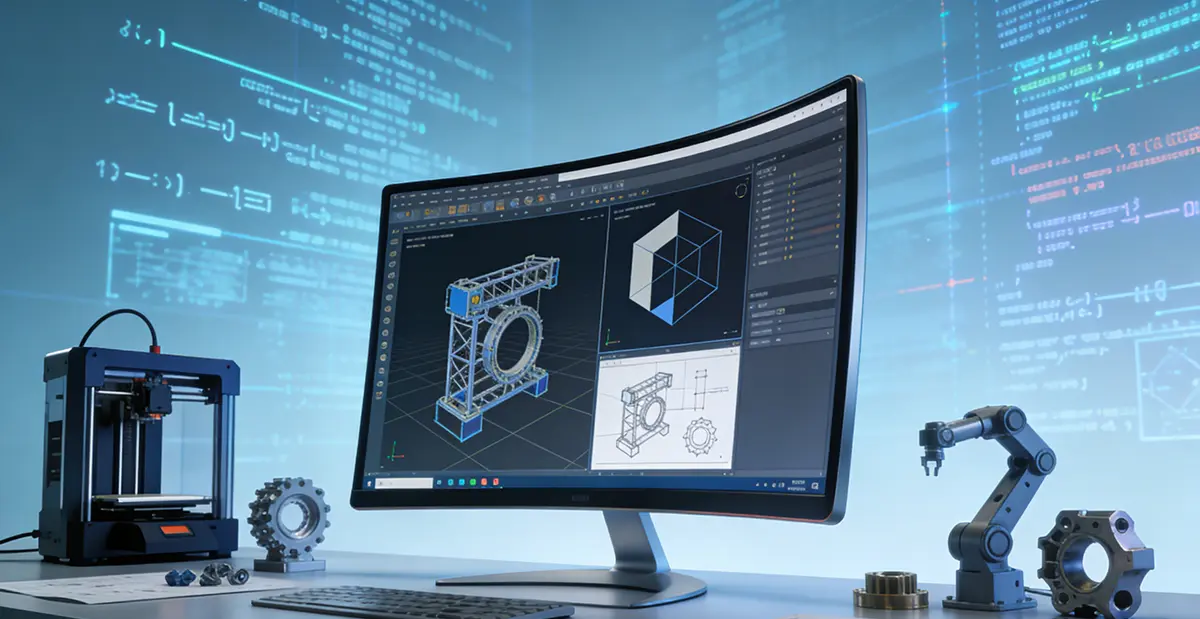
The Industrial Design Major is a comprehensive discipline that employs systematic innovation to create products, services, and experiences characterized by functionality, aesthetic value, market potential, and sustainability. Spanning the domains of art, engineering, and business, it aims to optimize a product's form, function, human-machine interaction, material processes, and its entire lifecycle experience. Ultimately, the Industrial Design Major seeks to enhance users' quality of life and generate commercial value. It serves as the core driver of modern manufacturing, acting as a crucial bridge connecting user needs, technical feasibility, and commercial success.
2. Core Curriculum of the Industrial Design Major
| Module Categories | Core Courses |
| Design Fundamentals and Thinking | Design Sketching, Design Color Theory, Three-Dimensional Composition (Plane, Color, Volume), Design Thinking, Design Psychology, Design History |
| Core Design Competencies | Product Form Design, Ergonomics, CMF Design (Color, Material, Finish), Product System Design, Design Research and User Studies, Product Semantics |
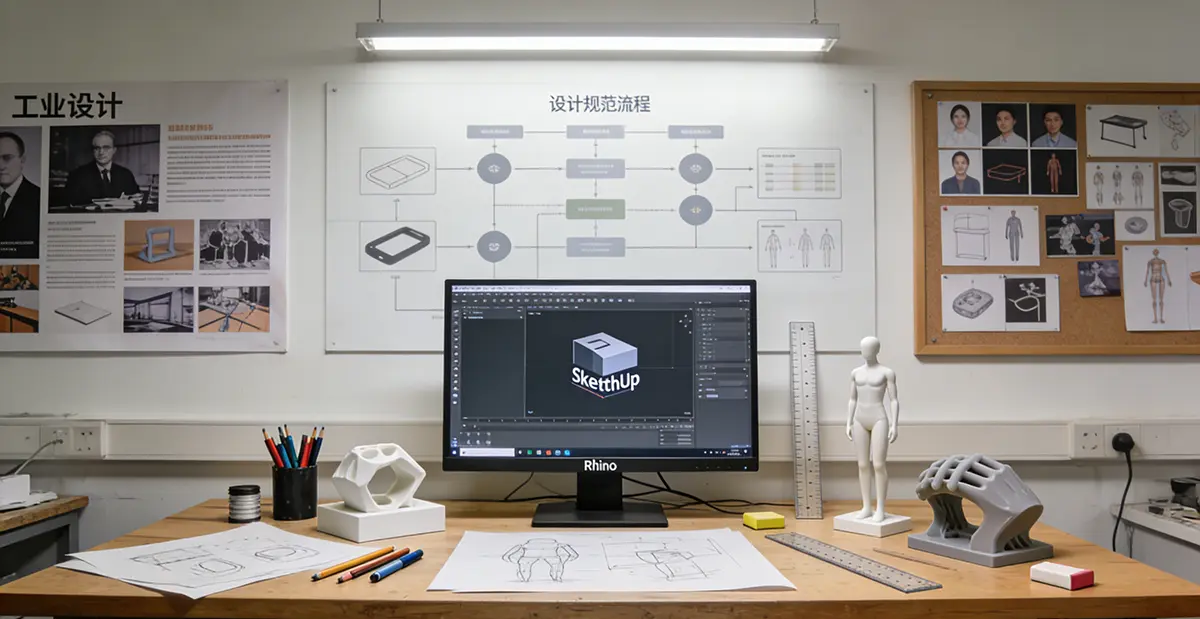
| Engineering Fundamentals | Engineering Drawing, Fundamentals of Mechanical Design, Materials and Manufacturing Processes, Prototyping (Metalworking, Woodworking, Clay Modeling), 3D Modeling and Rendering (Rhino, KeyShot, SolidWorks, Creo), Prototype Fabrication (3D Printing, CNC) |
| Interaction and Experience | Fundamentals of Interaction Design, User Experience (UX) Design, Introduction to Service Design, Smart Product Design |
| Business and Strategy | Design Management, Product Planning and Marketing, Brand Strategy, Design Strategy, Sustainable Design |
| Frontiers and Special Topics | Transportation Design, Furniture Design, Digital Product Design, Medical Device Design, Sustainable and Social Innovation Design |
| Projects and Practice | Specialized Design Workshops, Interdisciplinary Collaborative Projects, Corporate Internships, Graduation Project |
3. Advanced Study Pathways for the Industrial Design Major
Master's (Specialized Deepening): Industrial Design/Product Design: Deepens integrated innovation capabilities for complex products or specializes in specific domains such as furniture, transportation, or smart hardware. Interaction Design/User Experience Design: Expands into digital and hardware-software integrated product experience design. Service Design/System Design: Broadens from single-product design to service ecosystem design.
Master's (Integration of Engineering and Management): Design Engineering/Integrated Product Development: Strengthens engineering implementation capabilities to become a bridge between technology and design. Design Management/Innovation Management: Focuses on design team leadership, design strategy, and business innovation.
Master's (Research-Oriented): Human-Computer Interaction: Focuses on academic research concerning human-product interaction. Sustainable Design/Social Innovation: Concentrates on design solutions addressing environmental and social challenges.
4. Career Paths and Positions for Industrial Design Majors
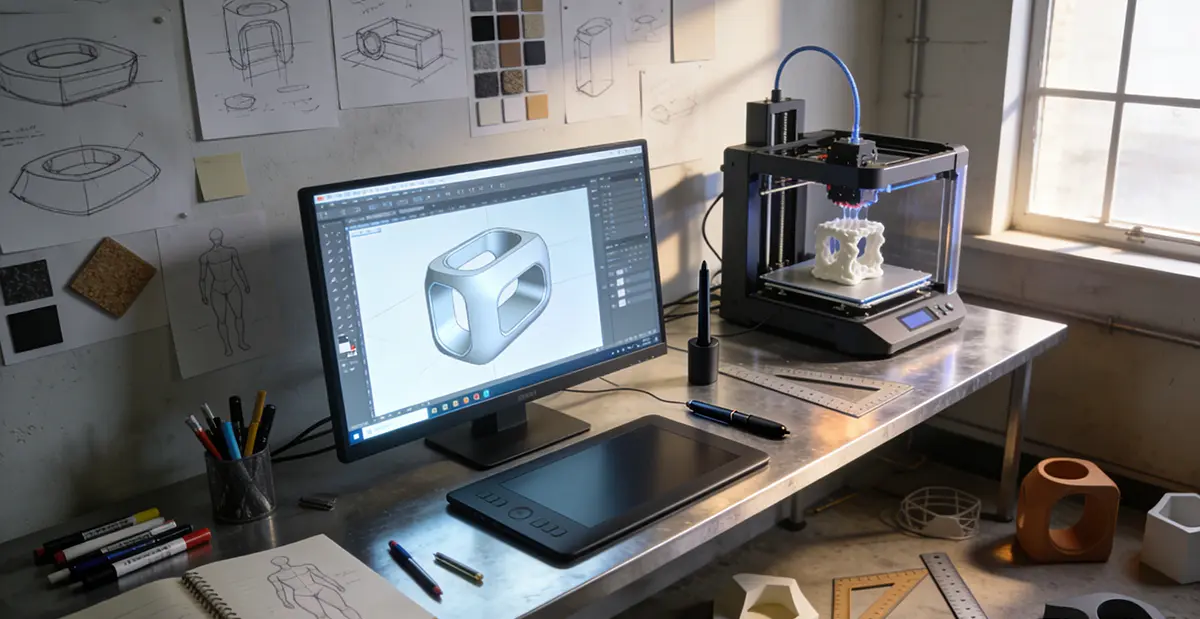
The employment landscape for Industrial Design Majors is exceptionally broad, with substantial demand spanning from traditional manufacturing to cutting-edge technology sectors.
Consumer Electronics and Smart Hardware: Product Designer, CMF Designer, UX Designer (at companies like Huawei, Xiaomi, Apple, DJI producing smartphones, computers, appliances, wearables).
Transportation Design: Automotive/New Energy Vehicle Styling Designer, Interior Designer, Color and Fabric Designer, HMI Designer (at OEMs or design firms).
Furniture and Home Products: Furniture Designer, Home Product Designer, Lighting Designer.
Cultural and Creative Products & Toys: Cultural Product Designer, Trendy Toy Designer, Toy Designer.
Design Consultancies and Service Agencies: Industrial Designer, Design Strategist, Design Researcher (at consultancies like IDEO, Frog, Designaffairs, or in-house corporate design centers).
Internet Companies: Hardware Product Manager, User Experience Designer (responsible for smart hardware product lines).
Entrepreneurship and Freelancing: Independent Designer, Design Studio Founder, Design Brand Manager.
5. Employment Rates and Industry Trends for the Industrial Design Major
Employment Rate Characteristics: “Broad demand but comprehensive skill requirements”: Manufacturing and consumption upgrades drive stable demand, but companies seek versatile talent proficient in creativity, engineering, and business, not merely drafting skills. “Portfolio and internship experience are crucial”: Core competitiveness lies in a high-quality portfolio demonstrating a complete design process and mindset, along with relevant industry internships. “Above-average starting salaries with clear growth potential”: Starting pay is higher than many pure arts majors; with accumulated experience and project complexity, advancement to senior designer or design director yields substantial compensation. “Pronounced industry clustering effect”: Premium positions are highly concentrated in developed manufacturing and tech regions like the Pearl River Delta, Yangtze River Delta, and Beijing-Tianjin-Hebei area.
Industry Trends: “Smart integration and interaction fusion”: Product design expands from physical form to integrated hardware-software interaction experiences, requiring designers to understand interaction and technology. “Sustainability and circular design”: Enhanced environmental regulations and consumer awareness drive the industry's focus on recyclable materials, modular design, extended lifespan, and servitization. “Deep innovation in CMF”: Color, Material, and Finish are no longer just final touches but core drivers of product differentiation, emotional appeal, and branding. “Additive manufacturing (3D printing) transforms workflows”: 3D printing technology is evolving from prototyping to small-batch custom production, reshaping design thinking and supply chains. “Rise of domestic trends and brand globalization”: Increased recognition of original design value by local brands, combined with the global expansion of Chinese design and manufacturing, creates new opportunities. “Design-driven business strategy”: Design's role within companies is elevating from an execution function to a strategic department, participating in early-stage product definition and business innovation.
6. Leading Global Institutions Offering the Industrial Design Major
Top schools for the Industrial Design Major are distributed worldwide, with design academies in the United States, Europe, and Asia being particularly renowned.
| Country/Region | Representative Institutions (Top Industrial Design Schools) |
| United States | Art Center College of Design (notably for transportation design), Rhode Island School of Design (RISD), Cranbrook Academy of Art, Massachusetts Institute of Technology (MIT), Stanford University (design thinking focus) |
| Germany | Bauhaus University Weimar, Ulm School of Design (highly influential legacy), State Academy of Fine Arts Stuttgart, Berlin University of the Arts |
| United Kingdom | Royal College of Art (RCA), Central Saint Martins (CSM), Loughborough University (engineering-oriented), Brunel University London |
| Italy | Politecnico di Milano (Polimi), Domus Academy |
| Nordic Countries | Aalto University (Finland), Umeå University (Sweden), Royal Danish Academy of Fine Arts |
| Japan | Musashino Art University, Tama Art University, Tokyo University of the Arts |
| China | Academy of Arts & Design, Tsinghua University; College of Design and Innovation, Tongji University; School of Design, Hunan University; School of Design, Jiangnan University; Guangzhou Academy of Fine Arts |
| Other | Hong Kong Polytechnic University (School of Design); National University of Singapore (NUS) |
DisciplineMajor Recommendations
Ideal Candidates for the Industrial Design Major:
Individuals with a natural curiosity about “why things are designed the way they are” and a passion for hands-on disassembly and improvement. Those possessing strong spatial imagination, logical analytical skills, and practical implementation abilities. People with keen interest in technology, materials, business, and aesthetics, and a willingness to find balance among them. Excellent communicators and team collaborators who can work effectively with engineers and marketers.
Core Competencies for the Industrial Design Major:
Integrated innovation capability to solve complex product system issues, from user insight to concept realization. Exceptional 3D modeling skills, understanding of engineering implementation, and mastery of CMF (Color, Material, Finish). Strong visualization skills to clearly convey design intent through sketches, models, and renderings. The ability to create value through design by understanding business, market, and brand strategies.
Learning Recommendations for the Industrial Design Major:
“Combine hands and mind; persist in sketching and model-making”: Sketches are extensions of thought, and physical models are the best way to validate a design. “Gain a deep understanding of materials and processes”: Frequently visit factories and exhibitions to learn about the processing characteristics and costs of different materials (metals, plastics, composites). “Master at least one 3D engineering software”: Such as SolidWorks or Creo; this is not just a presentation tool but a language for communicating with engineers. “Establish a systematic design process”: Rigorously practice the complete cycle of “research-insight-concept-development-engineering-presentation” and reflect it in your portfolio. “Find a vertical field to specialize in”: Explore areas of interest early during your studies (e.g., consumer electronics, furniture, medical devices) and accumulate relevant knowledge. “Stay sensitive to technology and society”: Pay attention to how IoT, AI, sustainable technologies, etc., are reshaping future products and life.
Note: Some institutions may categorize this major under different disciplines. Please refer to the specific classification used by the institution.
- The Previous Passage:Fashion Design(Fashion Des.)_服装设计
- The Next Passage:Advertising Art and Design(Adv. Art & Des.)_广告艺术设计
Human Geography Major_Geography(Geog.)_人文地理
The Human Geography Major explores the complex relationships between human activities and space, cul···

Atmospheric Sciences(Atmos. Sci.)_大气科学
Atmospheric science is the study of phenomena and evolutionary patterns within Earth's atmospher···

Earth Sciences(Earth Sci.)_地球科学
The Earth Science major focuses on studying the Earth system and its interactions, providing a scien···
Ocean Sciences(Ocean Sci.)_海洋科学
PbootCMS是全新内核且永久开源免费的PHP企业网站开发建设管理系统,是一套高效、简洁、 强悍的可免费商用的···

