

Chemistry(Chem.)_化学
Time:2026-03-08 Visits:4
As the “central science,” the Chemistry Major is dedicated to exploring the
nature, transformation laws, and wide-ranging applications of matter at the
atomic and molecular levels. It bridges physics and biology while deeply
permeating critical fields like materials, environment, and pharmacology. This
article systematically outlines the core curriculum, diverse advanced study
pathways, broad career prospects, industry trends, and leading global
institutions for the Chemistry Major, providing comprehensive guidance for
students aspiring to explore and innovate within the molecular world.
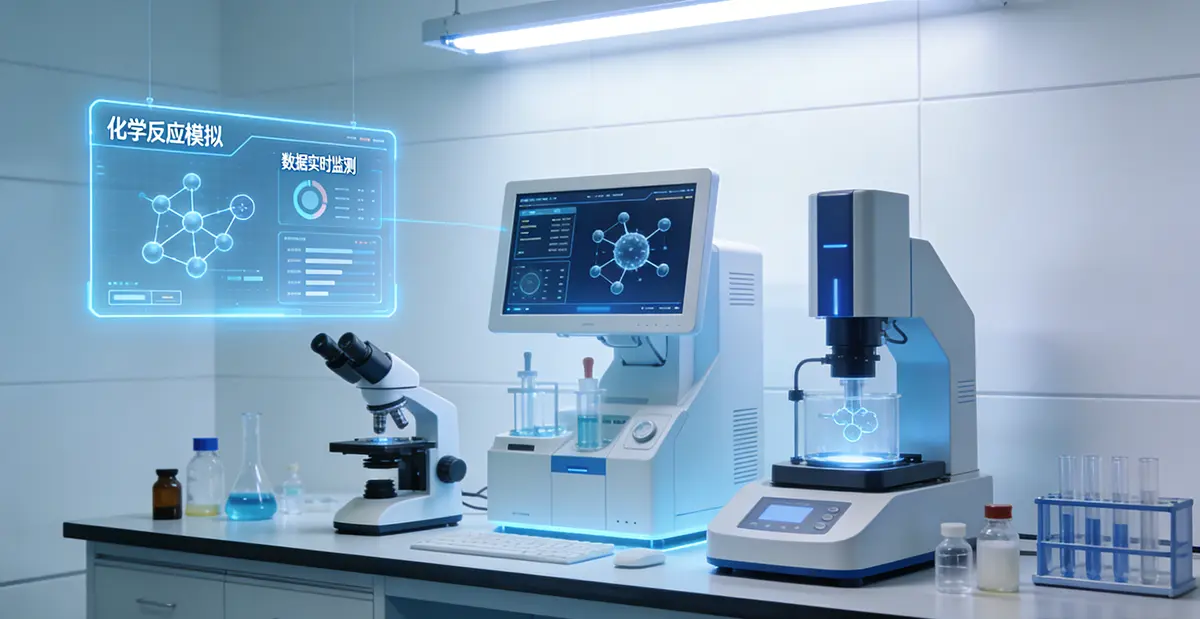
1. Introduction to the Chemistry Major
The Chemistry Major is a foundational natural science dedicated to studying the composition, structure, properties, transformation patterns, and applications of matter, widely regarded as the “central science.” It bridges physics and biology and deeply permeates numerous fields such as materials science, environmental science, and pharmacology. The Chemistry Major cultivates students' ability to comprehend the world at the atomic and molecular level, equipping them with systematic experimental skills and theoretical analytical methodologies. This establishes a solid foundation for pursuing careers in scientific research, technological development, and interdisciplinary innovation.
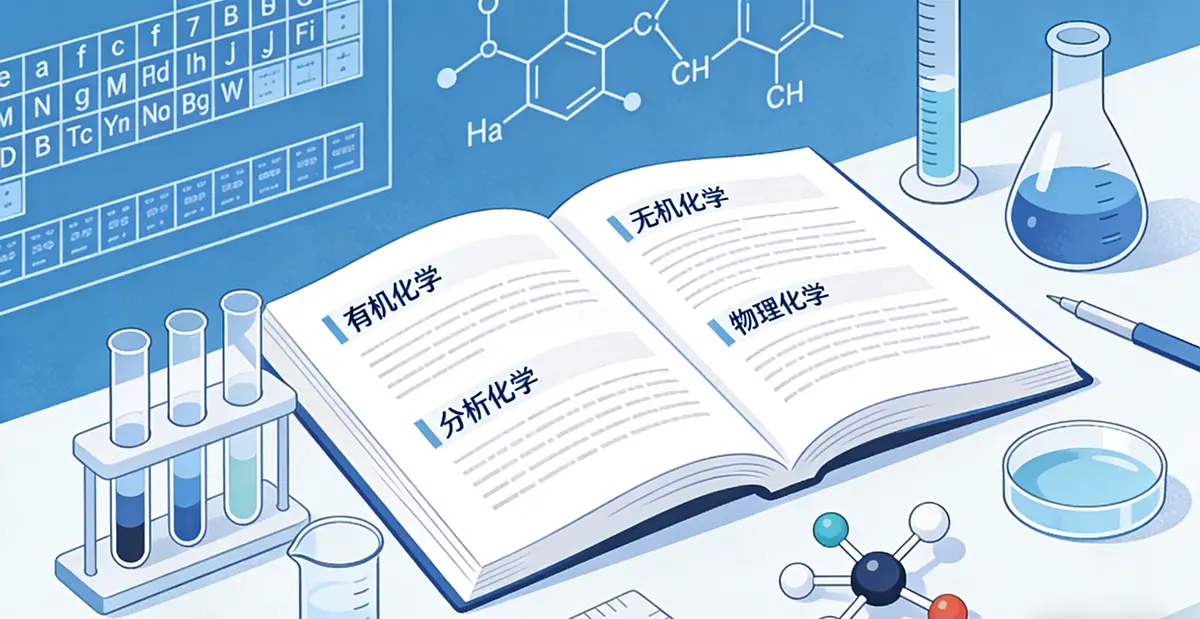
2. Core Curriculum of the Chemistry Major
| Module Category | Core Courses |
| Four Fundamental Chemistry Disciplines | Inorganic Chemistry, Analytical Chemistry (including Instrumental Analysis), Organic Chemistry, Physical Chemistry (including Structural Chemistry) |
| Specialized Core and Advanced Topics | Polymer Chemistry, Biochemistry, Materials Chemistry, Computational Chemistry, Environmental Chemistry |
| Experimental Skills | General Chemistry Lab (Fundamentals), Organic Chemistry Lab, Physical Chemistry Lab, Instrumental Analysis Lab, Comprehensive Chemistry Lab |
| Mathematics and Foundational Tools | Advanced Mathematics, University Physics, Linear Algebra, Probability & Mathematical Statistics, Computer Fundamentals & Programming (Python) |
| Specialization Electives | Medicinal Chemistry, Catalytic Chemistry, Electrochemistry, Nanochemistry, Chemical Biology, etc. |
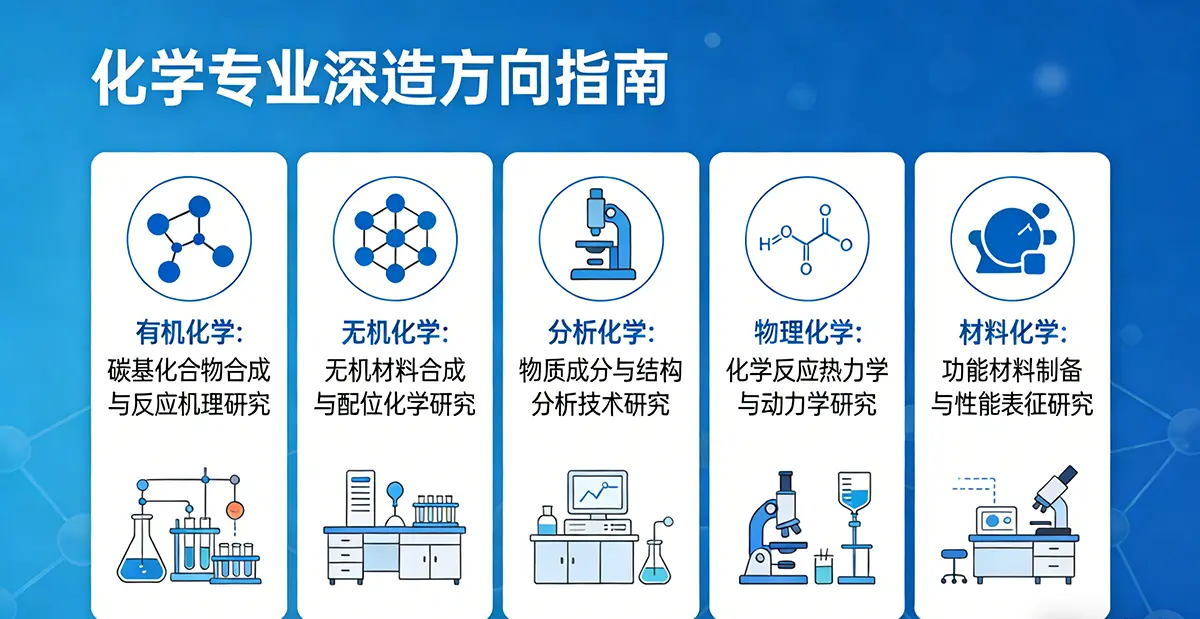
3. Advanced Study Pathways for the Chemistry Major
Pursuing a Master's or PhD in Chemistry represents the conventional path for graduates of the Chemistry Major aiming to engage in cutting-edge scientific research, academia, or high-level industrial R&D. Interdisciplinary advancement is also highly prevalent, leading into fields such as Materials Science and Engineering for new materials development, Chemical Engineering focusing on process scaling and industrial production, Pharmacy/Medicinal Chemistry for drug discovery, and Environmental Science and Engineering for pollution control research. Additionally, graduates of the Chemistry Major may obtain secondary school teaching credentials to pursue careers in education.
4. Career Paths for Chemistry Majors
Graduates of the Chemistry Major enjoy extensive career opportunities, characterized by distinct “academic credential orientation” and “industry clustering.” The mainstream pathway is in Research, Development, and Technical Support, encompassing roles such as university faculty or institutional researchers (often requiring a PhD), and R&D, process, or analytical engineers across chemical, materials, pharmaceutical, biotechnology, energy, battery, and consumer goods industries. In Production and Quality Management, Chemistry Majors find positions as production engineers, process technicians, safety specialists (EHS), quality engineers, and lab technicians. The Sales and Marketing sector values the technical expertise of Chemistry Majors for roles like technical sales engineers and product managers in chemical or instrumentation firms. Furthermore, Chemistry Majors serve in Public Service and Consulting, including inspection roles in government agencies, patent agents in law firms, and industry analysts in consulting companies specializing in chemical, energy, or pharmaceutical sectors.
5. Employment and Industry Trends for Chemistry Majors
Employment is typified by the “basic discipline” pattern: stable employment rates but generally modest starting salaries for bachelor's graduates, with career advancement heavily reliant on advanced degrees, institutional prestige, and industry sector. A high proportion of top undergraduates pursue Master's or PhDs to enhance their competitiveness. Jobs are concentrated in industrial clusters (e.g., petrochemical, pharmaceutical) within specific regions like the Yangtze River Delta.
Key industry trends shaping opportunities for Chemistry Majors include: Green Chemistry and Sustainability, driving innovation in eco-friendly processes and clean energy; the deep integration of Chemistry and Life Sciences, expanding frontiers in drug discovery; material innovation powering advancements in semiconductors and new energy technologies; AI-empowered chemical research (“AI for Science”) boosting demand for computational chemistry skills; and the shift towards specialization and high-value products like electronic chemicals and advanced formulations.
6. Leading Global Institutions Offering the Chemistry Major
Chemistry is a core foundational discipline in comprehensive universities worldwide, with numerous prestigious departments dedicated to the Chemistry Major.
| Country/Region | Representative Institutions (Traditional Powerhouses in Chemistry) |
| United States | Massachusetts Institute of Technology, California Institute of Technology, Harvard University, Stanford University, University of California, Berkeley |
| United Kingdom | University of Cambridge, University of Oxford, Imperial College London |
| Germany | Technical University of Munich, RWTH Aachen University, University of Heidelberg |
| Switzerland | ETH Zurich, École Polytechnique Fédérale de Lausanne (EPFL) |
| Asia | University of Tokyo, Kyoto University, National University of Singapore, Peking University, Tsinghua University, University of Science and Technology of China |
7. DisciplineMajor Recommendations
Ideal Candidates for the Chemistry Major:
This major suits individuals with a deep curiosity about the material world, who enjoy hands-on experimentation, possess keen observation skills, and demonstrate patience and meticulousness. Successful Chemistry Majors have strong logical and abstract thinking abilities to comprehend microscopic molecular interactions and can adapt to laboratory environments and potential chemical exposure.
Core Competencies of the Chemistry Major:
The Chemistry Major builds a robust theoretical foundation and knowledge system, demanding mastery of the four core disciplines and their interconnections. It develops proficient experimental operation and instrumentation skills for safe, precise, and standardized lab work. Graduates acquire strong data analysis and scientific problem-solving abilities to derive conclusions from data and design validating experiments. Furthermore, the Chemistry Major fosters interdisciplinary learning and application skills, enabling the use of chemical knowledge in fields like materials, biology, and environmental science.
Learning Recommendations for Chemistry Majors:
Solidify fundamentals and prioritize laboratory work, recognizing that lab reports are the first step in cultivating research thinking. Seek early laboratory experience by engaging in undergraduate research projects (URP) to build practical expertise. Master essential modern tools, including specialized software (e.g., ChemDraw, Origin) and foundational Python programming for data processing and computational chemistry. Stay informed about industry frontiers and national strategic focuses in areas like new energy and biomedicine. Proactively plan your academic and career trajectory, deciding whether to aim for direct employment (requiring internships and certifications) or advanced research roles (necessitating further education).
*Note: Program classification may vary by institution; please verify the specific structure at your chosen university.*
- The Previous Passage:Atmospheric Sciences(Atmos. Sci.)_大气科学
- The Next Passage:History of Science(Hist. Sci.)_科学史
Human Geography Major_Geography(Geog.)_人文地理
The Human Geography Major explores the complex relationships between human activities and space, cul···

Atmospheric Sciences(Atmos. Sci.)_大气科学
Atmospheric science is the study of phenomena and evolutionary patterns within Earth's atmospher···

Earth Sciences(Earth Sci.)_地球科学
The Earth Science major focuses on studying the Earth system and its interactions, providing a scien···
Ocean Sciences(Ocean Sci.)_海洋科学
PbootCMS是全新内核且永久开源免费的PHP企业网站开发建设管理系统,是一套高效、简洁、 强悍的可免费商用的···

