

Anthropology(Anthrop.)_人类学
Time:2026-03-08 Visits:3
The Anthropology Major provides a comprehensive framework for understanding humanity through its cultural, biological, and linguistic dimensions. This guide details the core curriculum, diverse graduate pathways, and expanding career opportunities in sectors from academia to tech. Discover how this discipline’s unique methodologies equip graduates to analyze global complexity and navigate cross-cultural challenges.
1. Introduction to the Anthropology Major
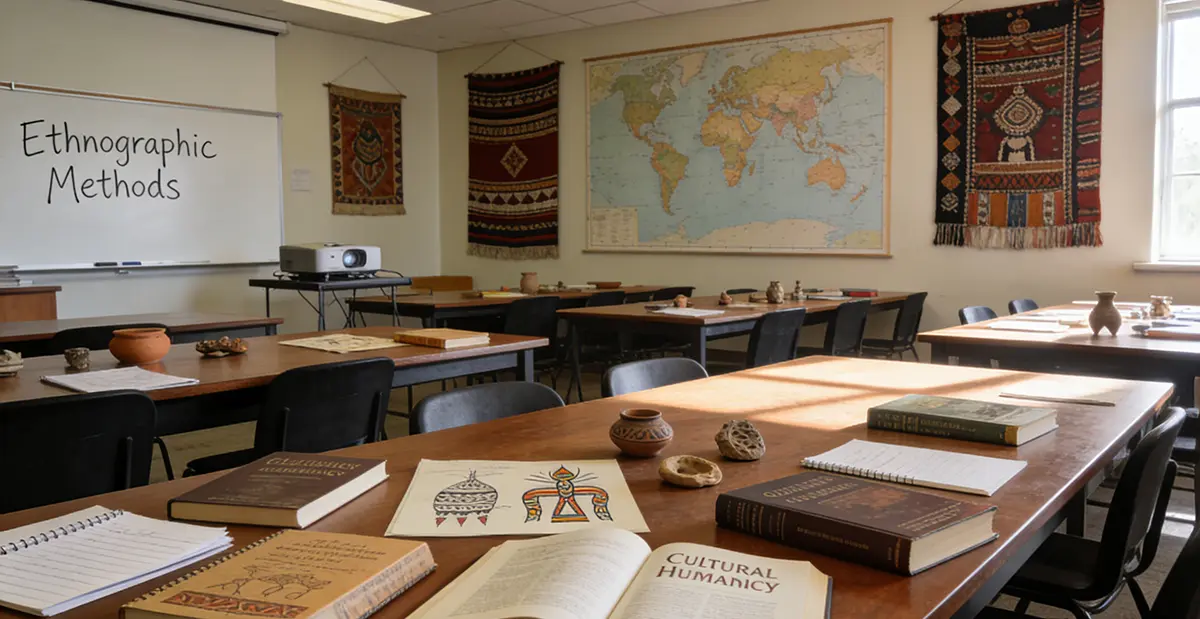
The Anthropology Major is an integrative discipline that studies both the biological and cultural dimensions of humanity, aiming to understand the human past, present, and future from holistic and comparative perspectives. It encompasses four core subfields: Cultural Anthropology, which examines cultural diversity, social structures, and systems of meaning in contemporary societies; Archaeology, which investigates past societies through material remains; Biological/Physical Anthropology, which explores human evolution, genetic variation, and adaptation; and Linguistic Anthropology, which analyzes the structure, use, and evolution of language within sociocultural contexts. The Anthropology Major cultivates cross-cultural understanding, critical thinking, and in-depth ethnographic fieldwork methodologies, serving as a vital discipline for comprehending global complexity.
2. Core Curriculum for the Anthropology Major
| Module Category | Core Courses |
| Foundations & Theory | Introduction to Anthropology, Cultural Anthropology Theory, Archaeological Theory & Method, Physical Anthropology, Linguistic Anthropology, History of Anthropology |
| Research Methods | Ethnographic Research Methods, Fieldwork Design & Practice, Qualitative Data Analysis, Archaeological Field Techniques, Foundations of Anthropological Statistics |
| Regional & Cultural Studies | Regional Studies (e.g., East Asia, Africa, Latin America), Anthropology of Religion, Political Anthropology, Economic Anthropology, Kinship & Social Organization |
| Specialized & Applied Topics | Medical Anthropology, Development Anthropology, Environmental Anthropology, Museum Anthropology, Digital Anthropology, Visual Anthropology |
| Interdisciplinary Perspectives | Anthropology & Public Health, Anthropology & Law, Cultural Heritage Studies, Globalization Studies |
| Skills & Ethics | Professional Writing, Research Ethics, Cross-Cultural Communication, Critical Reading |
3. Advanced Study Pathways for the Anthropology Major
Master’s/PhD in Anthropology: The primary route for academic research, university faculty positions, or high-level applied research.
Master’s in Applied Anthropology: Focuses on applying anthropological methods to business, public health, development, and other sectors.
Master’s in Cultural Heritage Management/Museum Studies: Prepares for careers in heritage preservation, curation, and museum management.
Master of Public Health (MPH): Combines medical anthropology to research health behaviors and policy.
Master’s in Development Studies/International Relations: Leads to work in international development and NGO project management/evaluation.
Master of Laws (LLM): Integrates legal anthropology for cross-cultural legal practice or research.
Master’s in UX Research/Design Anthropology: Entry into user research roles in the technology industry.

4. Career Pathways for the Anthropology Major
| Core Employment Sectors | Typical Positions | Primary Responsibilities & Skill Application |
| Academia & Cultural Heritage | Professor/Researcher, Museum Curator, Heritage Officer, Archaeologist | Conduct original research, teach, manage collections, preserve heritage, engage in public education. |
| Public Sector & Int'l Orgs | Program Officer (e.g., UN), Policy Analyst (Gov't), Public Health Advisor | Project management, policy analysis, cross-cultural communication, community needs assessment. |
| Business & Tech (Growth Sectors) | UX Researcher (Tech), Consumer Insights Researcher (Consulting), Design Anthropologist | Use ethnographic methods to understand user/consumer behavior, provide deep cultural insights for product/service strategy. |
| Healthcare | Medical Anthropologist (Pharma, Research Institutes) | Study doctor-patient relationships, sociocultural aspects of clinical trials, health product development. |
| Media & Education | Documentary Producer, Science Journalist, Cross-Cultural Trainer | Content creation, science communication, designing/delivering cross-cultural training programs. |
5. Employment & Industry Trends for the Anthropology Major
Employment Characteristics
Broad but indirect career pathways: Success depends on translating anthropological skills into practical problem-solving abilities across various sectors.
Experience & networking are critical: Fieldwork, internships, and professional connections are key to securing roles.
Concurrent need for global & local insights: Multinationals seek cross-cultural understanding; local firms need deep social insights.
Moderate starting salaries: Academia/public sector offers modest entry pay; tech/business provides more competitive compensation.
Industry Trends
Growing demand in tech: For cultural understanding in UX and assessing sociocultural roots of AI bias.
Deep qualitative insights in business: Ethnography supplements big data to guide innovation and marketing.
Global health & crisis response: Medical anthropologists are crucial in pandemics, vaccine trust, and health equity.
Social impact assessment: Ensuring development projects align with community needs and cultural sustainability.
Digital anthropology: Researching culture, community, and identity in online spaces like social media and the metaverse.
Digital heritage & public engagement: Using technology for heritage documentation, exhibition, and community co-creation.

6. Leading Global Institutions for the Anthropology Major
| Country/Region | Representative Institutions (Leading Programs) |
| United States | Harvard University, UC Berkeley, University of Chicago, University of Michigan, Stanford University |
| United Kingdom | University of Oxford, University of Cambridge, LSE, University College London |
| France | École des Hautes Études en Sciences Sociales (EHESS) |
| Australia | Australian National University, University of Sydney |
| China | Peking University, Sun Yat-sen University, Yunnan University, Xiamen University |
| Other | University of Toronto (Canada), Leiden University (Netherlands), University of Copenhagen (Denmark) |
7. DisciplineMajor Recommendations
Ideal Candidates for the Anthropology Major
Possess strong curiosity and respect for human cultural diversity, social structures, and meaning systems.
Demonstrate exceptional observation, empathy, reflexivity, and cross-cultural adaptability.
Enjoy long-term, immersive fieldwork and excel at building trust with people from diverse backgrounds.
Are motivated to challenge assumptions and analyze complex social realities with critical thinking.
Core Competencies of the Major
Deep ethnographic research skills: Including participant observation, in-depth interviewing, and qualitative data analysis.
Cross-cultural interpretation: Ability to understand and explain behaviors and concepts within different cultural logics.
Systemic critical thinking: Analyzing micro-level phenomena within macro historical, political, and economic contexts.
Powerful narrative and writing skills: Translating complex research into clear, compelling reports and stories.
Study Recommendations
Specialize early: Identify your subfield (cultural, archaeological, etc.) and regional focus.
Pursue fieldwork/study abroad: These experiences are foundational and enhance your resume.
Develop transferable skills: Practice writing, public speaking, project management, and learn tools like NVivo or R.
Build a portfolio: Include ethnographic reports, research papers, blogs, or multimedia projects.
Network actively: Attend anthropology conferences and conduct informational interviews with alumni outside academia.
Proactively translate your skills: Frame “ethnographic research” as “deep user insights” and “cultural analysis” as “market entry strategy analysis” for employers.
*Note: Program classification varies by institution.*
- The Previous Passage:Clinical Psychology(Clin. Psychol.)_临床心理学
- The Next Passage:Life Sciences(Life Sci.)_生命科学

Human Geography Major_Geography(Geog.)_人文地理
The Human Geography Major explores the complex relationships between human activities and space, cul···

Atmospheric Sciences(Atmos. Sci.)_大气科学
Atmospheric science is the study of phenomena and evolutionary patterns within Earth's atmospher···

Earth Sciences(Earth Sci.)_地球科学
The Earth Science major focuses on studying the Earth system and its interactions, providing a scien···

Ocean Sciences(Ocean Sci.)_海洋科学
PbootCMS是全新内核且永久开源免费的PHP企业网站开发建设管理系统,是一套高效、简洁、 强悍的可免费商用的···

