

Landscape Architecture(Landscape Arch. 或 LA)_风景园林学
Time:2026-10-15 Visits:2
Landscape Architecture Major
The Landscape Architecture Major integrates ecology, design, and engineering to shape sustainable outdoor environments. This guide details its core planning courses, diverse career paths in design and management, key trends like climate resilience, and leading global university programs.
1. Program Introduction
The Landscape Architecture Major is a comprehensive discipline that applies scientific, artistic, and engineering methodologies to protect and utilize natural and cultural resources, and to plan, design, construct, and manage outdoor human environments. It focuses on all scales of outdoor open space, from macro-level national ecological landscapes to micro-level courtyard spaces, aiming to create ecologically sound, aesthetically pleasing, fully functional, culturally rich, and sustainable living environments. As a core discipline, the Landscape Architecture Major is pivotal for harmonizing human-nature relations, advancing ecological civilization, and enhancing the quality of urban and rural life.
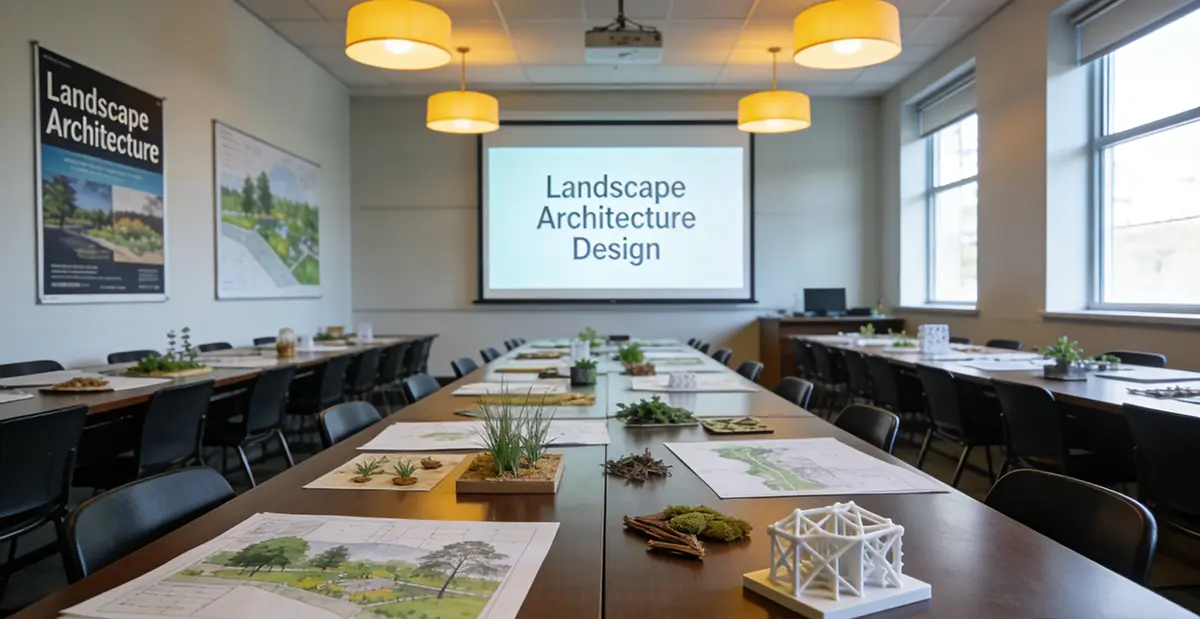
2. Core Curriculum of the Landscape Architecture Major
| Module Categories | Core Courses |
| Design Fundamentals and Theory | Introduction to Landscape Architecture, History of Chinese and World Gardens, Fundamentals of Landscape Design, Design Sketching and Color, Principles of Composition, Principles of Garden Art |
| Core Design Skills | Landscape Planning and Design (Series: Parks, Plazas, Residential Areas, Campuses, Waterfronts, etc.), Planting Design, Landscape Engineering, Landscape Architectural Design (Pavilions, Corridors, etc.) |
| Ecology and Science & Technology | Landscape Ecology, Landscape Plants (Dendrology, Floriculture), Soil Science, Landscape Pest and Disease Management, GIS Applications, Fundamentals of Remote Sensing, Landscape Hydrology |
| Engineering Technology and Materials | Landscape Engineering (Grading, Water Features, Paving, Rockeries), Landscape Materials and Construction, Construction Documentation, Project Estimation and Budgeting |
| Historical Heritage and Theory | Analysis of Classical Chinese Gardens, History of Western Gardens, Cultural Heritage Conservation, Modern Landscape Design Theory |
| Related Disciplines | Principles of Urban Planning, Environmental Psychology, Fundamentals of Tourism Planning, Public Art |
| Projects and Practice | Landscape Design Studio, Surveying Practicum, Plant Identification Practicum, Comprehensive Studio (Large-scale Projects), Graduation Design, Internship at Design/Engineering Firms |
| Frontiers and Expansion | Ecological Restoration and Brownfield Redevelopment, Sponge City and Stormwater Management, Digital Landscape and Parametric Design, Therapeutic Landscapes and Healing Gardens |
3. Advanced Study Pathways for the Landscape Architecture Major
Master's/Ph.D. (Specialized Deepening): Landscape Architecture: Deepens theories and methodologies in landscape planning and design, or focuses on frontiers like ecological restoration and digital landscapes. Landscape Ecology: Leans toward scientific research on ecological processes and biodiversity conservation. Garden History and Theory: Focuses on theoretical research in Chinese and international garden history and cultural heritage preservation.
Master's (Interdisciplinary Application): Urban Planning/Urban Design: Expands into broader urban-rural spatial planning. Environmental Design/Art Design: Focuses on artistic spatial expression and installation design. Tourism Planning: Specializes in the planning and management of scenic areas and tourist resorts. Land Resource Management: Emphasizes ecological space control within territorial spatial planning.
Related Advanced Studies: Architecture, Forestry, Horticulture.

4. Career Paths and Positions for Landscape Architecture Majors
The employment field is characterized by a “design-led, engineering-supported, and management-extended” approach, covering the entire project lifecycle.
Design Firms (Primary Destination): Landscape departments/branches in architectural or planning design institutes: Landscape Designer, Project Manager. Specialized landscape design firms/practices (e.g., AECOM, SWA, SASAKI, Turenscape): Conceptual Designer, Construction Documents Designer, Planting Designer.
Government Departments and Public Institutions: Bureaus of Natural Resources, Forestry and Grassland, Housing and Urban-Rural Development, Park Management Centers: Civil servants or technical staff responsible for planning approval, construction management, park maintenance, etc. Scenic Area Management Committees, National Park Administrations: Planning management and ecological conservation roles.
Real Estate Development and Engineering Enterprises: Major developers (e.g., Vanke, Longfor): Landscape Design Management, Engineering Management. Landscape engineering companies: Project Manager, Technical Lead, Cost Estimator.
Education and Research Institutions: University faculty in landscape architecture/horticulture; researchers at academic institutes.
Emerging Fields and Entrepreneurship: Ecological restoration companies: Ecological Engineer, Wetland Designer. Courtyard design/horticulture studios: Independent Designer, Brand Owner. Cultural tourism planning companies: Landscape Planner.
5. Employment Rates and Industry Trends for the Landscape Architecture Major
Employment Rate Characteristics:
“Broad demand, influenced by infrastructure and real estate investment”: Urbanization, ecological construction, and cultural tourism drive stable demand, but the industry is highly correlated with government infrastructure spending and real estate market cycles, leading to fluctuations.
“High demand for multi-skilled professionals”: The market seeks versatile talent proficient in artistic design, planting, engineering, ecological technology, and cost control; drafting skills alone are insufficient.
“Equal emphasis on academic qualification and practical experience”: Top design firms generally require a master’s degree while highly valuing software skills (CAD, SketchUp, Lumion, GIS) and project internship experience.
“Moderate starting salary, career growth depends on projects”: Starting salaries are comparable to architecture and planning; career advancement is closely tied to the type, scale of projects undertaken, and individual comprehensive abilities.
Industry Trends:
“Ecological civilization as a national strategy”: Ecological conservation redlines, integrated management of mountains, rivers, forests, fields, lakes, grasslands, and deserts, and national park system development generate massive ecological planning and restoration projects.
“Shift from增量 beautification to存量 enhancement”: Transition from building large new parks to refined, human-centric designs like urban micro-renewal, pocket parks, community gardens, and renovation of old parks.
“Digital and intelligent transformation”: Technologies like parametric design, drone surveying, GIS analysis, BIM for landscape, and digital twins are profoundly reshaping design, analysis, and construction methods.
“Climate change adaptive design”: Sponge cities, resilient landscapes, and nature-based solutions have become core design strategies for addressing extreme weather (waterlogging, heat island effects).
“Health-oriented and inclusive access”: Post-pandemic, demand has surged for fitness landscapes, healing gardens, and all-age-friendly outdoor spaces.
“Multifaceted values and cultural expression”: Landscape design increasingly focuses on挖掘 and interpreting regional culture, local materials, and intangible cultural heritage to foster a sense of place identity.
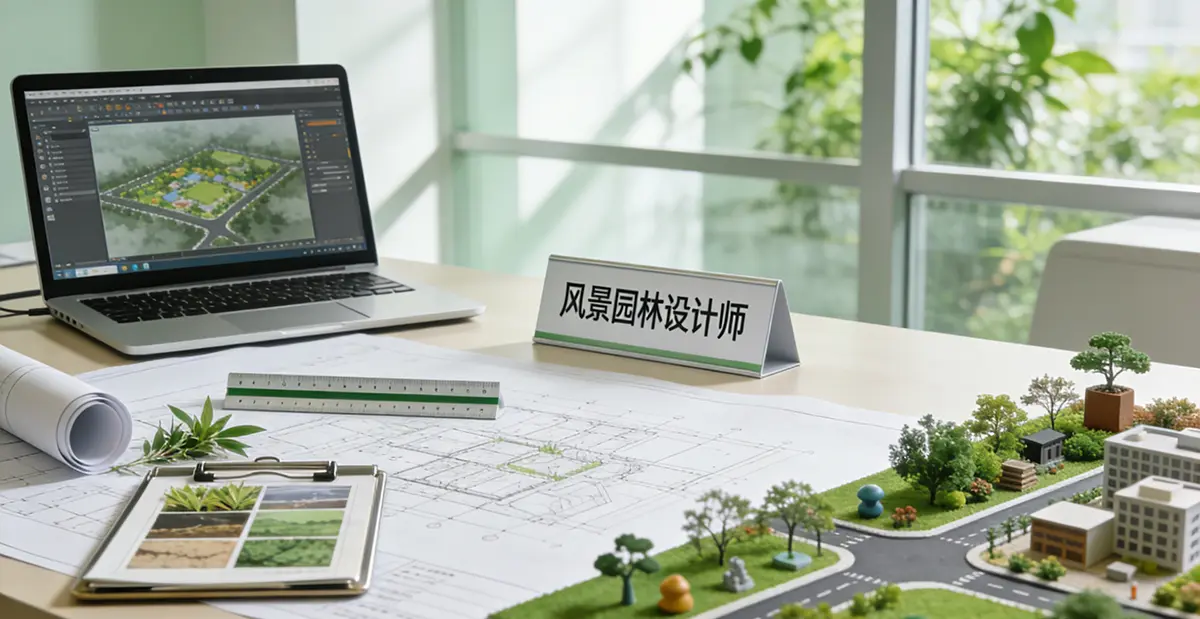
6. Leading Global Institutions Offering the Landscape Architecture Major
(Partial Institutions Displayed - Ranking Not in Order)Top programs in the Landscape Architecture Major are primarily distributed across North America, Europe, and Asia.
| Country/Region | Representative Institutions (Top Landscape Architecture Schools) |
| United States | Harvard University (GSD, cradle of modern landscape architecture), University of Pennsylvania (PennDesign), University of California, Berkeley (UCB), Cornell University, University of Virginia |
| United Kingdom | University of Sheffield (world-leading department, emphasizing ecology and society), University College London (UCL, The Bartlett), University of Edinburgh, Newcastle University |
| Europe | Delft University of Technology (TUD), ETH Zurich, Technische Universität Berlin (TUB), Swedish University of Agricultural Sciences (SLU) |
| Australia | The University of Melbourne, University of New South Wales (UNSW), RMIT University |
| China | Beijing Forestry University (School of Landscape Architecture, top-tier domestically), Tongji University (College of Architecture and Urban Planning), Tsinghua University (School of Architecture), Southeast University (School of Architecture), Nanjing Forestry University (College of Landscape Architecture) |
| Other Asia | The University of Hong Kong, National University of Singapore (NUS), The University of Tokyo (Urban Engineering) |
DisciplineMajor Recommendations
Ideal Candidates for the Landscape Architecture Major
Individuals with an innate love and sensitivity for nature, plants, land, and outdoor spaces. Those who combine artistic sensibility, scientific rationality, and engineering thinking, capable of balancing aesthetics, ecology, and functionality. Possessing strong spatial imagination, hands-on skills, and resilience, able to adapt to fieldwork and construction site work. People with a sense of responsibility and concern for issues like ecological conservation, climate change, and cultural heritage.
Core Competencies for the Landscape Architecture Major
Comprehensive design capability to systematically address ecological, functional, and aesthetic issues in outdoor spaces. Extensive botanical knowledge and the creative ability to shape space using plants. End-to-end technical control from conceptual design through construction documents to on-site supervision. Proficiency in using digital tools for design, analysis, and presentation.
Learning Recommendations for the Landscape Architecture Major
“Observe more, learn more plants, visit more sites”: Cultivate a keen perception of natural and built environments, and memorize the characteristics of common landscape plants. “Solidify design foundations, diligently practice both hand-drawing and software”: Quickly express design concepts through sketching and refine proposals precisely with software—neither should be neglected. “Gain a deep understanding of ecological processes and engineering techniques”: Study ecological principles and material construction knowledge to ensure designs are not only beautiful but also functional and durable. “Actively participate in competitions and real-world projects”: Hone creativity through design competitions and understand actual industry workflows and client needs through internships. “Stay informed about policies and cutting-edge technologies”: Study national ecological civilization policies and master advanced skills like GIS and parametric design. “Develop interdisciplinary communication skills”: Learn to collaborate effectively with architects, planners, and civil engineers.
Note: Some institutions may categorize this major under different disciplines. Please refer to the specific classification used by the institution.
- The Previous Passage:Urban Design(Urban Des.)_城市设计
- The Next Passage:Architectural History(Arch. Hist.)_建筑历史

Communication Engineering(Commun. Eng.)_通信工程
Communication Engineering Major Communication engineering Major serves as a bridge connecting the wo···
Human Geography Major_Geography(Geog.)_人文地理
The Human Geography Major explores the complex relationships between human activities and space, cul···

Atmospheric Sciences(Atmos. Sci.)_大气科学
Atmospheric science is the study of phenomena and evolutionary patterns within Earth's atmospher···

Ship and Ocean Engineering(Ship Ocean Eng.)_船舶与海洋工程
Naval Architecture and Ocean EngineeringNaval Architecture and Ocean Engineering is a core engineeri···

