

Film and Television Production(Film/TV Prod.)_影视制作
Time:2026-08-21 Visits:0
Film and Television Production Major
The Film and Television Production Major is a hands-on, collaborative discipline that trains students in the complete workflow of filmmaking, from pre-production to post. This guide details the core curriculum across directing, cinematography, sound, editing, and producing, explores advanced specializations and diverse careers in both traditional and new media sectors. It analyzes key industry trends like virtual production and short-form content, providing insights for navigating a dynamic field. The Film and Television Production Major equips aspiring filmmakers with the technical skills, creative vision, and professional adaptability needed to succeed in the evolving world of visual storytelling.
Introduction to the Film and Television Production Major
The Film and Television Production Major is a highly practical and collaborative interdisciplinary field that merges art and technology. It systematically trains professionals with comprehensive skills across the entire filmmaking process, encompassing key stages from pre-production planning, screenwriting, and directing to cinematography, sound recording, and post-production editing, color grading, visual effects, and sound mixing. Emphasizing a solid foundation in both technical craft and artistic theory, this major develops students’ creative execution, teamwork, and industry adaptability through extensive project-based practice. It serves as a foundational training ground for cultivating talent for core creative roles such as directors, producers, cinematographers, and editors.
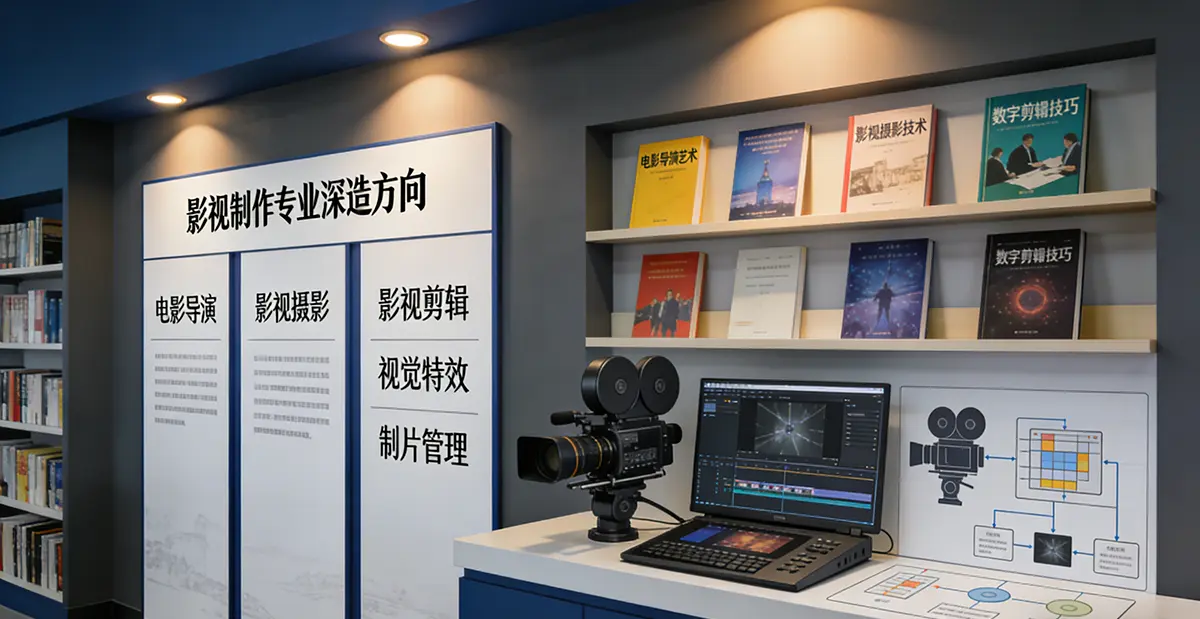
Core Curriculum for the Film and Television Production Major
| Module Category | Core Courses |
| Creative Foundations | Audiovisual Language, Film History, Fundamentals of Screenwriting, Fundamentals of Directing, Fundamentals of Acting, Film Aesthetics |
| Core Production Skills | Directing: The Art of Directing, Mise-en-scène
& Blocking, Directing Actors
Cinematography: Cinematography Technology
& Art, Lighting Techniques, Cinematic Language
Sound: Production Sound
Recording, Sound Design, Foley Art
Editing: Non-Linear Editing, Editing
Theory & Practice, Post-Production Workflow Management
Producing:
Production Management, Film & TV Project Management, Film Law &
Contracts |
| Technical Practice | Short Film Production (stage-specific exercises), Documentary Production, Commercial/Promotional Video Production, Multi-Camera Production |
| Professional Software & Tools | DaVinci Resolve (Color Grading & Editing), Avid Media Composer / Adobe Premiere (Editing), Pro Tools (Audio), Adobe After Effects (VFX), Final Draft (Screenwriting) |
| Advanced & Specialized Topics | Advanced Cinematography & Lighting, Advanced Color Grading, Film Sound Design, Fundamentals of Visual Effects, Drone Cinematography, Fundamentals of Virtual Production |
| Industry & Market Studies | Film & Television Marketing & Distribution, Film Festival Strategy, Fundamentals of Film Financing & Investment, Analysis of China’s Film & Television Industry |
Advanced Study Pathways for the Film and Television Production Major
Master’s (Creative Practice - MFA mainstream): Master of Fine Arts (MFA) in Film Production: Advanced study in a specific track (directing, cinematography, editing, sound) leading to a professional portfolio. Master in Documentary Production: Focuses on narrative methodologies and ethical practices in non-fiction filmmaking. MBA/MFA in Film Producing/Production Management: Specializes in project development, financing, budgeting, and crew management.
Master’s (Academic Research - MA/MS): MA in Film Studies: Shifts focus to film theory, history, and criticism. MA in Media Studies: Explores broader media and cultural phenomena.
Cross-disciplinary Advancement: MFA in Animation & Digital Media: Expands into animation, game design, or interactive media. MA in Arts Management: Focuses on managing film/TV institutions or festivals. Master’s in Education: Prepares for a career in film education.
Career Paths for the Film and Television Production Major
Career trajectories closely follow the industrialized division of labor in film and television, spanning from creative core to technical support roles.
Core Creative Roles (On-Set Production):
Director’s Unit: Director, Assistant Director, Director’s Assistant, Script Supervisor;
Camera Department: Director of Photography (DP), Cinematographer, Camera Operator, Camera Assistant, Focus Puller, Gaffer;
Sound Department: Production Sound Mixer, Re-recording Mixer, Foley Artist, Sound Editor;
Art Department: Production Designer, Prop Master, Costume Designer, Makeup Artist (requires specialized study);
Post-Production: Editor, Colorist, VFX Artist, Title Designer, DIT (Digital Imaging Technician).
Project Management & Development:
Production Team: Producer, Executive Producer, Production Manager, Location Manager, Production Coordinator;
Development: Creative Producer, Screenwriter, Story Editor.
Film/TV Institutions & Platforms:
Television Stations & Streaming Platforms (iQiyi, Tencent): Roles in content production departments (Director, Camera Operator, Editor, Producer);
Production Companies, Ad Agencies, Corporate Video Firms: Director, Cinematographer, Editor, Producer;
Film Festivals & Markets: Programmer, Screening Coordinator, Events Manager.
Emerging Sectors & Freelancing:
New Media Content: Short-form Video/Micro-drama Director, Cinematographer, Editor;
Independent Video Creator;
Film/TV Education: Instructor for arts entrance exams or vocational training;
Freelance Practitioner/Studio: Independent contractor undertaking directing, cinematography, or editing projects.
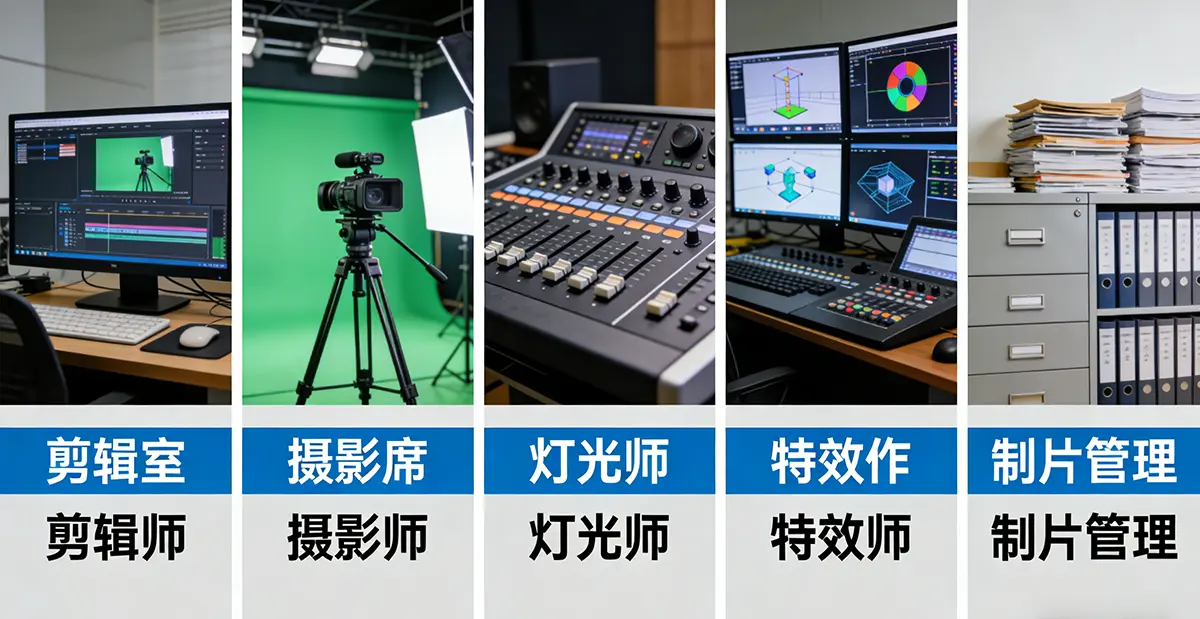
Employment Rate and Industry Trends for the Film and Television Production Major
Employment Characteristics:
“Project-Based with High Mobility”: Employment is tied to individual projects, leading to uncertainty between gigs and a high prevalence of freelance and flexible work.
“Portfolio and Network are Paramount”: Employability hinges on the quality of one’s demo reel, industry reputation, and professional network more than academic credentials.
“Pronounced Pyramid Structure”: Competition for top-tier roles (e.g., established directors, cinematographers) is fierce, with most graduates starting in entry-level assistant positions.
“Significant Starting Salary Disparity: Entry-level technical roles may offer modest compensation and demanding hours, but income growth potential is substantial with experience, skill advancement, and industry standing.
Industry Trends:
“Dominance of Short-Form & Streaming Content”: Short videos, micro-series, web films, and platform-commissioned series drive production volume and job growth, featuring faster, more agile workflows.
“Adoption of Virtual Production Technology”: The integration of LED volume stages and real-time game engines (e.g., Unreal Engine) into filmmaking creates demand for technically savvy directors, cinematographers, and production designers.
“Increased Standardization & Industrialization of Workflows”: Higher demands on post-production roles like DITs, professional colorists, and detailed sound design require more specialized technical personnel.
“Revenue-Share Models & Data-Driven Production: Online content revenue-sharing models require producers to focus on user data, necessitating market awareness among creatives.
“Resurgence of Documentary & Factual Content”: Streaming platforms’ demand for high-quality documentaries offers increased creative opportunities.
“International Co-Productions & Global Expansion: The globalization of Chinese film and TV content requires professionals skilled in both production and cross-cultural communication.
Leading Global Institutions Offering the Film and Television Production Major
(Selected Institutions - Rankings Not in Order)
| Country/Region | Representative Institutions (Top Film & Television Production Schools) |
| United States | University of Southern California (School of Cinematic Arts), New York University (Tisch School of the Arts), American Film Institute (AFI, graduate only), University of California, Los Angeles (School of Theater, Film & Television), Chapman University (Dodge College of Film & Media Arts) |
| United Kingdom | London Film School (LFS), National Film and Television School (NFTS, graduate only), University of the Arts London (London College of Communication), Bournemouth University (Faculty of Media & Communication) |
| Australia | Australian Film, Television and Radio School (AFTRS), Griffith University (Queensland College of Art - Film School) |
| China | Beijing Film Academy (Directing Dept., Cinematography Dept., School of Audiovisual Communication, etc.), Communication University of China (School of Drama, Film & Television; School of Television Studies), Shanghai Theatre Academy (Film School), Central Academy of Drama (Film & Television Department) |
| Europe | The Łódź Film School (Poland), La Fémis (France), Film Academy Baden-Württemberg (Germany) |
DisciplineMajor Recommendations
Ideal Candidates for the Film and Television Production Major:
Individuals with an immense passion for and desire to tell stories through audiovisual means—not just film enthusiasts but potential creators. Those with strong hands-on skills, problem-solving abilities, and resilience to handle the intense, irregular schedules of film production. Candidates who possess excellent teamwork, communication, and leadership potential (especially for directing and producing tracks). Quick learners who can rapidly adapt to new technologies (cameras, lighting, post-production software).
Core Competencies of the Film and Television Production Major:
Mastery of at least one core production skill (directing, cinematography, editing, sound, etc.) coupled with foundational knowledge of the entire production pipeline. A high-quality portfolio (short films, commercials, clips) that demonstrates personal style and technical proficiency. The ability to organize, manage a crew, and deliver a completed project. Extensive industry connections and the skill to acquire necessary resources.
Study Recommendations for the Film and Television Production Major:
“Make Films! Make Films! Make Films!”: Seize every opportunity for practical experience, starting with low-budget shorts. Your body of work is your primary currency. Specialize in One, Understand All: Choose a primary focus (e.g., directing, cinematography, editing) while gaining working knowledge of other departments to facilitate collaboration. Build Your Portfolio and Professional Brand: Meticulously maintain a personal website/showreel with professionally presented work. Pursue Internships and On-Set Experience: Seek internships with production crews or companies during your studies, starting from entry-level to build experience and networks. Stay Current on Industry and Technology Trends: Continuously follow developments in new equipment, software, platforms, and industry reports. Engage with Film Festivals and Pitching Forums: Actively submit student work to domestic and international festivals and participate in project pitching events to gain exposure and opportunities.
Note: Program classifications may vary by institution. Please refer to the specific classification used by the target institution.
- The Previous Passage:Musicology(Musicology)_音乐学
- The Next Passage:Jewelry Design(Jewelry Des.)_珠宝设计

Communication Engineering(Commun. Eng.)_通信工程
Communication Engineering Major Communication engineering Major serves as a bridge connecting the wo···
Human Geography Major_Geography(Geog.)_人文地理
The Human Geography Major explores the complex relationships between human activities and space, cul···

Atmospheric Sciences(Atmos. Sci.)_大气科学
Atmospheric science is the study of phenomena and evolutionary patterns within Earth's atmospher···
Ship and Ocean Engineering(Ship Ocean Eng.)_船舶与海洋工程
Naval Architecture and Ocean EngineeringNaval Architecture and Ocean Engineering is a core engineeri···

