

Drama Education(Drama Educ.)_戏剧教育
Time:2026-10-07 Visits:1
Drama Education (Art Practice) Major
The Drama Education Major (Art Practice) is an interdisciplinary field that utilizes theatrical arts as a powerful medium for teaching, learning, and social engagement. This guide details the curriculum blending performance skills, educational theory, and workshop facilitation, explores advanced specializations from drama therapy to community arts, and maps diverse careers in schools, cultural institutions, and social services. It analyzes industry trends driven by arts education policy and the growing recognition of drama's role in fostering empathy and critical thinking. The Drama Education Major equips practitioners with the creative, pedagogical, and collaborative skills to facilitate transformative experiences in diverse educational and community settings.
Introduction to the Drama Education (Art Practice) Major
The Drama Education Major (Art Practice) is an interdisciplinary field that integrates theatrical arts, educational theory, and practice. It does not merely train stage actors or directors, but rather employs drama—encompassing performance, directing, playwriting, and stagecraft—as a core pedagogical medium, cognitive tool, and human development methodology. It is applied across diverse fields such as formal education, community development, psychological healing, and social innovation. Its central goal is to stimulate individual creativity, empathy, critical thinking, and collaboration through organized, planned, and participatory dramatic processes, thereby fostering personal growth and social integration. This major serves as a vital practical discipline for advancing aesthetic education, implementing holistic education principles, and building inclusive communities.
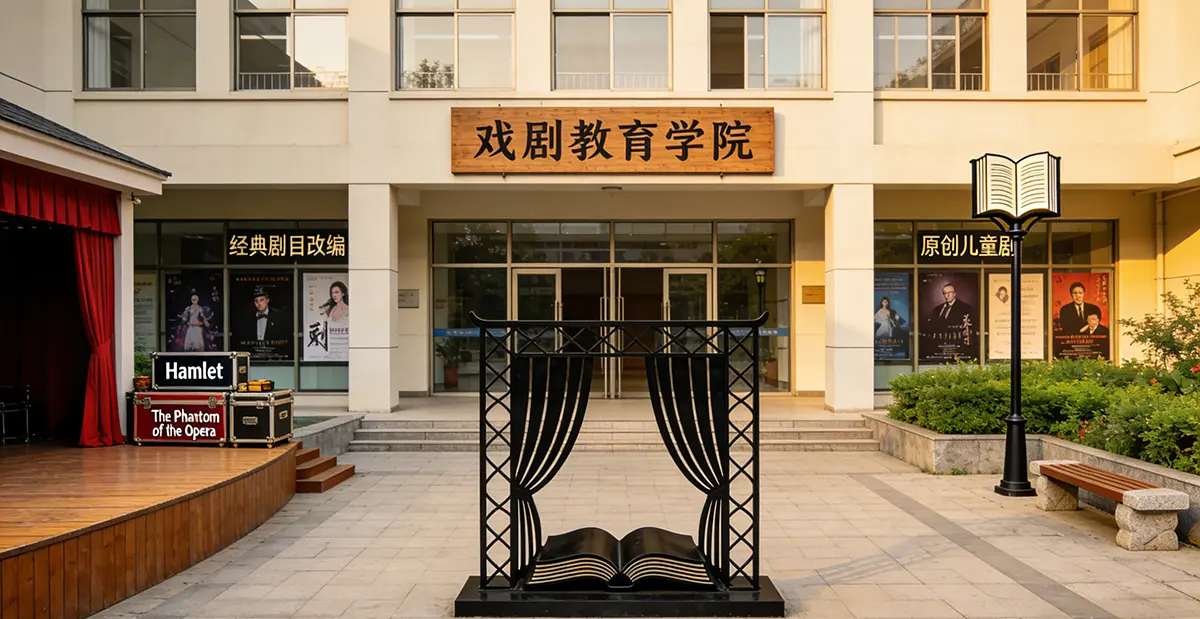
Core Curriculum for the Drama Education (Art Practice) Major
| Module Category | Core Courses |
| Core Theatre Arts | Introduction to Drama, Fundamentals of Acting, Fundamentals of Directing, Script Analysis and Playwriting, History of Theatre, Voice and Movement Training, Fundamentals of Stagecraft |
| Educational and Psychological Foundations | Principles of Education, Developmental Psychology, Learning Sciences, Curriculum and Instruction Theory, Educational Psychology |
| Drama Education Methodology | Introduction to Drama Education, Applied Theatre, Educational Drama, Creative Drama, Process Drama, Theatre-in-Education Practice, Drama Workshop Design and Facilitation |
| Professional Application Areas | School-Based Drama Education, Community Theatre, Foundations of Drama Therapy, Museum and Gallery Education, Drama Work with Special Populations, Youth Theatre Development |
| Practice and Creation | Educational Theatre Project Creation and Staging, Teaching Practicum, Community Arts Practice, Final Project/Thesis |
| Research and Evaluation | Research Methods in Arts Education, Project Evaluation, Qualitative Research, Action Research |
| Related Supporting Fields | Fundamentals of Arts Management, Cultural Policy, Digital Media and Theatre, Narrative Techniques, Improvisation |
Advanced Study Pathways for the Drama Education (Art Practice) Major
Master's/Ph.D. (Research-Oriented): M.A./Ph.D. in Drama Education/Arts Education: Deepens theoretical and research expertise, focusing on specific populations (e.g., children, elderly, individuals with special needs) or fields (e.g., critical pedagogy, intercultural drama education). M.A./Ph.D. in Applied Theatre/Drama and Performance Studies: Concentrates on theatre practice in social contexts, such as community theatre, forum theatre, prison drama.
Master's (Practice-Oriented): M.A. in Educational Drama/Creative Drama: Enhances teaching methodologies and practical skills to cultivate senior drama educators or trainers. M.A. in Drama Therapy: Requires specific coursework and clinical hours to pursue professional accreditation (e.g., RDT).
Interdisciplinary Pathways: M.A. in Education/Psychology: Combines drama expertise for broader educational research, curriculum development, or counseling. M.A. in Arts Management/Cultural Policy: Shifts focus to theatre project planning, arts organization administration, or policy research. M.A. in Acting/Directing: Furthers artistic mastery to become a teaching artist.

Career Paths for the Drama Education (Art Practice) Major
Career opportunities reflect the "cross-border integration of art and education," extending from traditional schools into broad public and social spheres.
Educational Institutions (Core Destinations): K-12 Schools: Drama Teacher, Aesthetic Education Instructor, School Drama Club Advisor, Interdisciplinary Curriculum Integration Teacher; Preschools & Early Learning Centers: Early Childhood Drama Educator, Curriculum Developer; Colleges & Vocational Schools: Arts Education/Drama Faculty, Student Affairs Counselor, Arts Center Administrator.
Community & Social Service Organizations: Community Cultural Centers, Youth Palaces, Public Libraries: Drama Workshop Facilitator, Community Arts Project Coordinator; NGOs/Foundations: Using drama for social advocacy, empowering marginalized groups, Public Welfare Project Officer; Correctional, Rehabilitation Centers: Drama Therapy Assistant or Project Partner.
Cultural & Arts Institutions: Theatres, Performing Arts Centers: Public Education/Audience Development Officer; Museums, Art Galleries: Public Education Project Manager; Cultural Centers, Heritage Protection Agencies: Utilizing theatre for cultural transmission and public education.
Emerging Cultural Industries & Freelancing: Cultural Communication & EdTech Companies: Educational Drama Product/Curriculum Developer, Online Theatre Content Planner, Educational Theatre Producer; Independent Drama Educator/Trainer: Founder of a private studio; Corporate Training Sector: Employing drama methods for team building, communication, and leadership training.
Employment Rate and Industry Trends for the Drama Education (Art Practice) Major
Employment Characteristics:
“Diverse Paths, Yet Not a Traditional Necessity”: Employment heavily depends on regional investment in cultural/arts education and societal awareness, with far more opportunities in first-tier and new first-tier cities. “Hybrid of Institutional and Project-Based Work”: Beyond stable positions in schools or public institutions, many roles exist in project-based social organizations or as freelancers, requiring strong self-promotion and project management skills. “Interdisciplinary Backgrounds are More Competitive”: Graduates with solid theatre skills, pedagogical knowledge, and strong communication/organizational abilities are highly sought after. “Significant Starting Salary Variation”: Public school systems offer stable, moderate entry-level pay; income in commercial sectors and freelancing is directly tied to personal skill and project resources, offering high potential but volatility.
Industry Trends:
“Ongoing Benefits from Arts Education Policies”: National emphasis on school aesthetic education and the trend of introducing drama courses create new teaching positions. “Rise of Lifelong Learning and Community Building”: Growing demand for experiential, interactive arts education in community, senior, and family education. “Deepening Role of Applied Theatre in Social Issues”: Theatre's value as a tool in mental health, special education, social integration, and corporate training is gaining wider recognition. “Integration of Technology and Drama Education”: New formats like online workshops, VR/AR immersive educational theatres, and digital storytelling are being explored. “Emphasis on Evaluation and Efficacy”: Funders and partners increasingly value measurable outcomes in social-emotional learning and soft skill development, driving professionalization.

Leading Global Institutions Offering the Drama Education Major
(Selected Institutions - Rankings Not in Order)
| Country/Region | Representative Institutions (Renowned in Drama Education/Applied Theatre) |
| United Kingdom | University of Warwick (Drama and Drama Education), Royal Central School of Speech and Drama (Applied Theatre), University of Exeter (Drama Education), Birmingham City University (Theatre Education Practice) |
| United States | New York University (Educational Theatre), Columbia University (Theatre Education), Arizona State University (Theatre Education), Lesley University (Integrated Arts Education) |
| Australia | University of Melbourne (Theatre Education), Queensland University of Technology (Theatre and Performance) |
| Canada | University of British Columbia (Theatre Education), York University (Community Arts Practice) |
| China (Hong Kong, Macau, Taiwan) | The Hong Kong Academy for Performing Arts (Theatre Education), Taipei National University of the Arts (Graduate Institute of Arts and Humanities Education) |
| China (Mainland) | The Central Academy of Drama (Department of Theatre Education), Shanghai Theatre Academy (Theatre Education), Beijing Film Academy (Related Fields), East China Normal University (Arts Education), Nanjing University of the Arts (Arts Education) |
DisciplineMajor Recommendations
Ideal Candidates for the Drama Education (Art Practice) Major:
Individuals with a dual passion for theatre arts and education, who believe in the transformative power of art. Those who possess exceptional empathy, communication skills, organizational ability, and creativity, and enjoy collaborating and guiding within groups. Candidates with an open mind and adaptability to meet the needs and challenges of diverse groups (children, seniors, special populations). Those with strong reflective and practical skills, able to quickly translate theory into concrete workshop activities.
Core Competencies of the Drama Education (Art Practice) Major:
The ability to design and effectively facilitate drama workshops/educational programs on various themes for diverse audiences. The skill to integrate theatrical elements and techniques into instructional design across different subjects or social issues. Competence in project planning, organization, management, and multi-stakeholder (schools, communities, institutions) communication and coordination. The capacity for critical reflection, documentation, evaluation, and research on the practice process.
Study Recommendations for the Drama Education (Art Practice) Major:
“Learning by Doing” is Fundamental: Actively participate in on- and off-campus rehearsals, workshops, and teaching practicums to accumulate extensive frontline facilitation experience. Build a Personal “Toolkit”: Learn and master a wide range of drama games, improvisation techniques, playwriting, and directing methods. Specialize in a Niche Area: Deepen practice in one field during studies, such as youth theatre, community theatre, or drama therapy, to develop expertise. Stay Informed on Policy and Industry Trends: Understand national arts education policies, local cultural funding programs, and connect with active practitioners and organizations. Develop Project Management Thinking: Learn essential skills in proposal writing, budgeting, promotion, and outcome reporting. Consider Relevant Certifications: Pursue qualifications like a teaching certificate (arts/language focus), or certifications in drama therapy or specific pedagogies based on career goals.
Note: Program classifications may vary by institution. Please refer to the specific classification of the target institution.
- The Previous Passage:Stage Design(Stage Des.)_舞美设计
- The Next Passage:Drama Studies(Dramatic Literature and Theory)_戏剧学

Communication Engineering(Commun. Eng.)_通信工程
Communication Engineering Major Communication engineering Major serves as a bridge connecting the wo···
Human Geography Major_Geography(Geog.)_人文地理
The Human Geography Major explores the complex relationships between human activities and space, cul···

Atmospheric Sciences(Atmos. Sci.)_大气科学
Atmospheric science is the study of phenomena and evolutionary patterns within Earth's atmospher···

Ship and Ocean Engineering(Ship Ocean Eng.)_船舶与海洋工程
Naval Architecture and Ocean EngineeringNaval Architecture and Ocean Engineering is a core engineeri···

