

Political Science(PoliSci)_政治学
Time:2026-10-01 Visits:0
Political science is the study of power, authority, government, and governance. It systematically examines how human societies organize and function, how public resources are allocated, and how collective decisions are made and implemented. If management science governs “organizations” and journalism constructs “meaning,” then political science explores the “rules of the game” that shape the very foundations of our lives.
Introduction to Political Science Major: Shaping Society's Rules of Engagement
Political science strives to understand and improve the order of human collective life. It examines not only institutional design at the national level but also delves into power dynamics within communities, organizations, and international relations. Through studying political science, you will gain the ability to discern the underlying logic of societal functioning, comprehend the motivations behind political behavior, and contemplate how to build more just and effective governance systems.
Its core missions include:
- Understanding Power: Exploring the nature, origins, and distribution of power across diverse social structures.
- Analyzing Institutions: Studying the origins, evolution, and societal impacts of political systems like governments, parties, parliaments, and courts.
- Interpreting Behavior: Analyzing the motivations and decision-making patterns of political actors such as voters, politicians, and interest groups.
- Participating in governance: Cultivating civic literacy to provide knowledge and talent for public policy formulation, implementation, and evaluation.

Core Courses at International Institutions
Political science curricula emphasize comprehensive coverage from theory to methodology, and from domestic politics to global perspectives, aiming to develop students' critical thinking, research capabilities, and practical application skills.
| Course Module | Core Course Examples | Learning Objectives |
| Political Theory | Principles of Political Science, Political Philosophy (Ancient & Modern), History of Chinese/Western Political Thought, Ideology Studies | Master foundational concepts and core theories in political science; understand diverse intellectual traditions' perspectives on the state, power, and justice. |
| Comparative Politics | Comparative Politics, Governments and Politics of Selected Countries (e.g., U.S., China, Russia), Development Politics | Identify commonalities and distinct characteristics of political phenomena by comparing political systems, processes, and outcomes across nations. |
| Domestic Politics | Chinese Government and Politics, Constitutional and Administrative Law, Local Government and Politics, History of Political Institutions | Deepen understanding of the operational logic, historical evolution, and contemporary challenges of China's political system. |
| International Relations | Introduction to International Politics, Theories of International Relations, Diplomacy, International Organizations, International Security | Examines political phenomena at the international level, including state interactions, global governance, conflict, and cooperation. |
| Research Methods | Methods in Political Science, Social Surveys and Statistics, Qualitative Research Methods, Data Analysis | Acquires tools for scientifically studying political phenomena, enabling the design and execution of research projects with evidence-based analysis. |
| Public Policy and Administration | Public Policy Analysis, Introduction to Public Administration, Public Economics, Leadership Studies | Examines how policies are formulated, implemented, and evaluated, laying the foundation for careers in public affairs. |
| Frontier and Interdisciplinary Studies | Race and Politics, Gender and Politics, Political Communication, Environmental Politics, Political Psychology | Explores cutting-edge intersections between political science and other social sciences, focusing on contemporary critical issues. |
Advanced Study Pathways in Political Science Major
At the master's or doctoral level, research in political science becomes highly specialized, typically aligning with academic interests and career goals:
- Political Theory: Deep dive into historical and contemporary political philosophy, Western Marxism, Chinese political thought, preparing for academic research or teaching roles.
- Comparative Politics: Focuses on the political systems of specific countries or regions (e.g., East Asia, Latin America) or comparative analyses of specific issues (e.g., democratic transitions, authoritarian resilience, ethnic conflicts).
- International Relations: Studies international security, international political economy, foreign policy analysis, global governance, and international organizations—a key pathway to careers in international institutions or diplomacy.
- Domestic Politics/Government: Focuses on the study of domestic political systems, legislative politics, administrative institutions, judicial politics, and local governance, closely tied to domestic public affairs.
- Public Policy/Public Administration: Often offered as a separate department, this remains a popular graduate track for political science graduates, emphasizing applied fields such as policy analysis, program evaluation, and public management.
- Political Science Methodology: Focuses on developing or refining quantitative or qualitative methods in political science research, cultivating future methodological specialists.

International Career Paths and Positions
Political science graduates possess profound theoretical knowledge, sharp analytical skills, and solid research capabilities, making them adaptable across numerous fields.
| Industry Sector | Common Positions | Brief Job Responsibilities |
| Government & Public Sector | Civil Servants (e.g., Policy Researchers, Administrative Managers), Selected Cadres, Foreign Affairs Specialists, Legislative Assistants | Engage in policy research, document drafting, administrative coordination, and foreign affairs work within Party and government agencies, People's Congresses/Political Consultative Conferences, and foreign affairs departments. This constitutes the primary career path for political science graduates, accounting for over 60% of graduates. |
| International Organizations & Development Agencies | Project Officers, Policy Analysts, Consultants | Work in the UN system, World Bank, Asian Development Bank, NGOs, etc., coordinating projects, conducting policy analysis, and advancing international development. |
| Legal Sector | Lawyers, Judicial Assistants, Legal Researchers | Political science is an ideal preparatory discipline for law school. Graduates perform well on law school entrance exams and can pursue legal careers. |
| Journalism and Media | Political Correspondents, Editors, Commentators, Policy Reporting Specialists | Work at news agencies, newspaper groups, and broadcast stations, responsible for political news coverage and in-depth reporting. |
| Think Tanks and Research Institutions | Researchers, Assistant Researchers, Data Analysts | Engage in policy consulting, research projects, and report writing at various public policy and international relations think tanks. |
| Education and Academia | University professors, secondary social science teachers, researchers | Engage in teaching and research at universities, Party schools, social science academies, typically requiring doctoral or master's degrees. |
| Business and Commerce | Government affairs officers, corporate social responsibility managers, market research analysts | Handle government relations, policy advocacy, and social impact analysis at multinational corporations or large enterprises. |
| Elections & Political Consulting | Campaign Managers, Pollsters, Political Consultants | Provide strategic advice and data analysis for clients in election campaigns or political consulting firms. |
International Employment Rates & Trends
Employment Rate: Political science graduates maintain stable employment rates, though outcomes heavily depend on academic credentials and individual capabilities. Domestically, intense competition exists within the field, with provincial-level government positions typically requiring master's degrees. Graduates from Shandong University's political science programs demonstrate strong adaptability in the job market with diverse career pathways. Inner Mongolia University maintains a postgraduate enrollment rate exceeding 30% for this major, peaking at 45.8% in certain years. In Canada, University of Winnipeg alumni excel across government agencies, diplomatic missions, and NGOs.
Salary Levels:
Starting salaries for political science graduates are generally lower than those in applied liberal arts fields like finance or law, typically ranging from 4,000 to 6,000 RMB. However, the career ceiling is relatively high, with significant promotion advantages within the civil service system. Senior policy analysts can command salaries comparable to corporate executives.
Industry Trends:
- Civil service exams remain popular but increasingly competitive: While civil service exams remain the primary career path for political science graduates, competition has intensified. There is a growing demand for candidates with interdisciplinary backgrounds (e.g., “Political Science + Law/Economics”) and postgraduate degrees.
- Rising demand for think tanks and consulting: As decision-making becomes more scientific and democratic, think tanks at all levels increasingly seek political science professionals with robust research capabilities and policy acumen.
- International Communication and Public Diplomacy: In the era of globalization and information, both nations and enterprises prioritize international image and discourse power. Graduates proficient in international relations and cross-cultural communication find expanded opportunities in foreign affairs.
- Data Literacy as a “Hard Currency”: Political science graduates skilled in quantitative research methods, statistical software, and data analysis gain significant competitive edge in the job market.
- Emerging Interdisciplinary Fields: New cross-disciplinary areas like environmental politics, science and technology policy, health governance, and urban politics offer fresh arenas for political science professionals.
Ideal Candidates for Political Science Major and Core Competencies
If you possess these traits, you may find fulfillment and achievement in political science:
- Intense curiosity about societal dynamics: You seek not just to observe “what happened,” but to probe “why it happened” and “who made the decisions behind it.”
- Commitment to public affairs and social responsibility: You naturally engage with national issues and social welfare, aspiring to contribute to societal improvement.
- Strength in critical thinking and logical analysis: You enjoy reading and deep thinking, can distill core issues from complex phenomena, and analyze and argue with rigorous logic.
- Strong reading and writing skills: Political science demands extensive reading of classic texts and writing analytical reports, making excellent writing abilities a crucial foundation.
- Open-mindedness and tolerance for diverse perspectives: You are willing to listen to and understand viewpoints differing from your own, possessing cross-cultural communication skills and empathy.
Core Competencies: Your core value lies in your systemic thinking ability to discern power dynamics and grasp the essence of governance. This encompasses not only solid political science theory and research methods but also a unique capacity to integrate macro perspectives with micro analysis—navigating complex, ever-changing social environments to identify directions, analyze problems, and propose solutions. As Zhang Xuefeng observes, this ability grants you “understanding of society's underlying logic” and the potential for “long-term development.”

Leading Institutions Worldwide
(Selected Schools - Listed in no particular order)
Based on the 2025 QS World University Subject Rankings and THE World University Rankings, the top global institutions in the field of Political Science are as follows:
| Country/Region | Representative Institutions | QS 2025 Rank |
| United States | Harvard University, Stanford University, Princeton University, Yale University, University of California, Berkeley, Massachusetts Institute of Technology | 1, 3, 5t, 8, 9, 15 |
| United Kingdom | University of Oxford, London School of Economics and Political Science, University of Cambridge, King's College London, University College London | 2, 5t, 7, 12t, 22 |
| Continental Europe | Sciences Po Paris (France), Leiden University (Netherlands), University of Amsterdam (Netherlands), Freie Universität Berlin (Germany) | 4, 17, 23, 32 |
| Singapore | National University of Singapore | 10 |
| Australia | Australian National University | 11 |
| Mainland China | Tsinghua University, Fudan University, Peking University, Zhejiang University, Renmin University of China, Shanghai Jiao Tong University, Wuhan University | 19, 20, 27, 64, 54, 81, 101-150 |
| Hong Kong, China | The University of Hong Kong, The Chinese University of Hong Kong, City University of Hong Kong | 52, 93, 98 |
| Canada | University of Toronto, McGill University, University of British Columbia | 34t, 44, 48t |
Recommended Academic Pathways for Political Science Major
1. Undergraduate Stage
Build a solid theoretical foundation, broaden your knowledge horizons, and begin practical exploration
- Core: Diligently study core courses such as Principles of Political Science, History of Chinese and Foreign Political Thought, Comparative Politics, Introduction to International Relations, and Research Methods to develop a systematic understanding of the discipline.
- Expansion: Pursue a minor in Economics, Law, Sociology, History, or Statistics based on your interests to develop a multidisciplinary knowledge structure, significantly enhancing your competitiveness for employment and further studies.
- Practice: Stay informed about current affairs by reading high-quality media and analytical articles to cultivate policy sensitivity. Actively participate in student government, Model United Nations, public policy debates, and similar activities. Seek internships at government agencies, think tanks, or media outlets to gain firsthand experience in public affairs operations.
2. Master's Stage
Focus on specialization, deepen research capabilities, and accumulate practical experience
- Academic Master's: If pursuing theoretical research or a PhD, choose an academic master's program. Emphasize deep involvement in your advisor's research projects, master cutting-edge methodologies, and conduct in-depth study in a specific field (e.g., comparative politics, international relations theory).
- Professional Master's: For those entering public administration, the Master of Public Administration (MPA) is an excellent choice, emphasizing applied skills like policy analysis and public affairs management.
- Advancement: Regardless of path, master one research methodology (e.g., quantitative analysis, case studies) and secure high-quality internships in relevant fields.
3. Career Development and Lifelong Learning Stage
- Positioning: Begin in roles such as policy research, administrative management, or media analysis. You may specialize in a specific field (e.g., social security policy analyst, foreign affairs specialist) or pursue a general management career path.
- Future: Politics remains an enduring social issue. Regardless of your role, you must continuously monitor domestic and international political developments while maintaining independent thinking and learning capabilities. Your role extends beyond that of an observer—you are an active participant and contributor.
- The Previous Passage:Logistics and Supply Chain Management Major_物流与供应链管理
- The Next Passage:没有了!
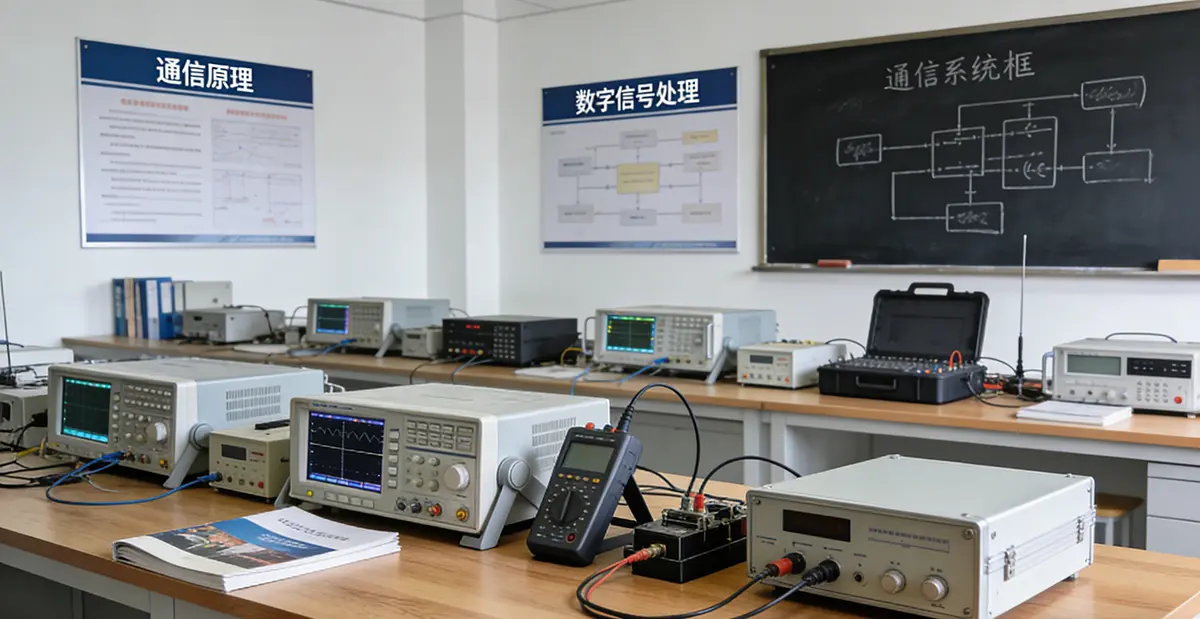
Communication Engineering(Commun. Eng.)_通信工程
Communication Engineering Major Communication engineering Major serves as a bridge connecting the wo···
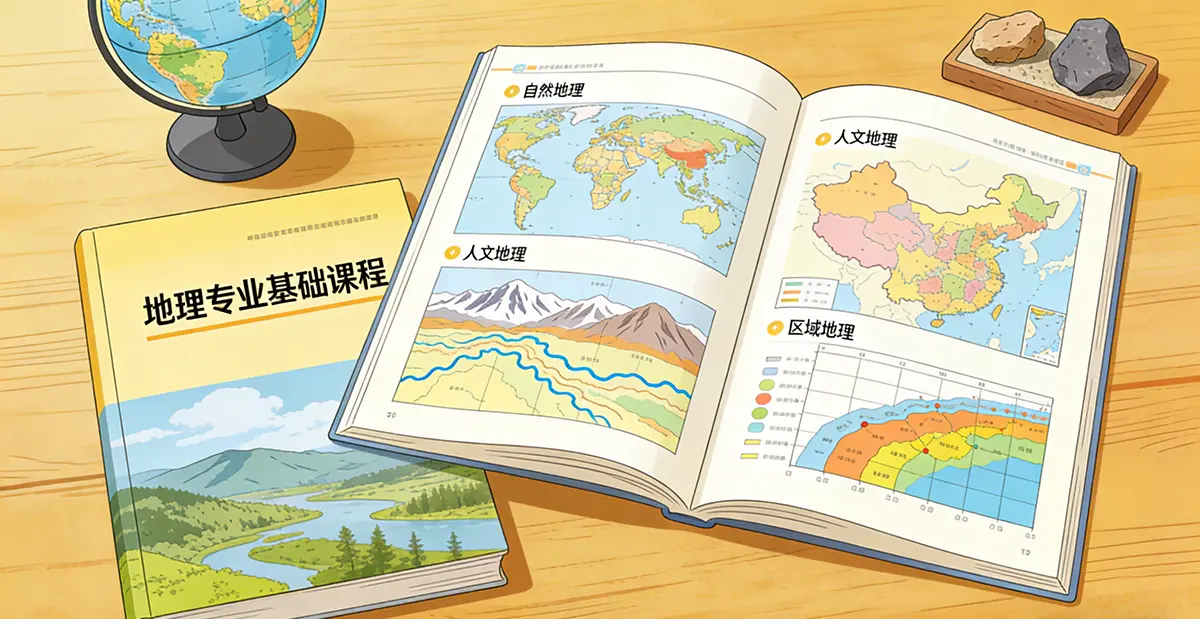
Human Geography Major_Geography(Geog.)_人文地理
The Human Geography Major explores the complex relationships between human activities and space, cul···

Atmospheric Sciences(Atmos. Sci.)_大气科学
Atmospheric science is the study of phenomena and evolutionary patterns within Earth's atmospher···
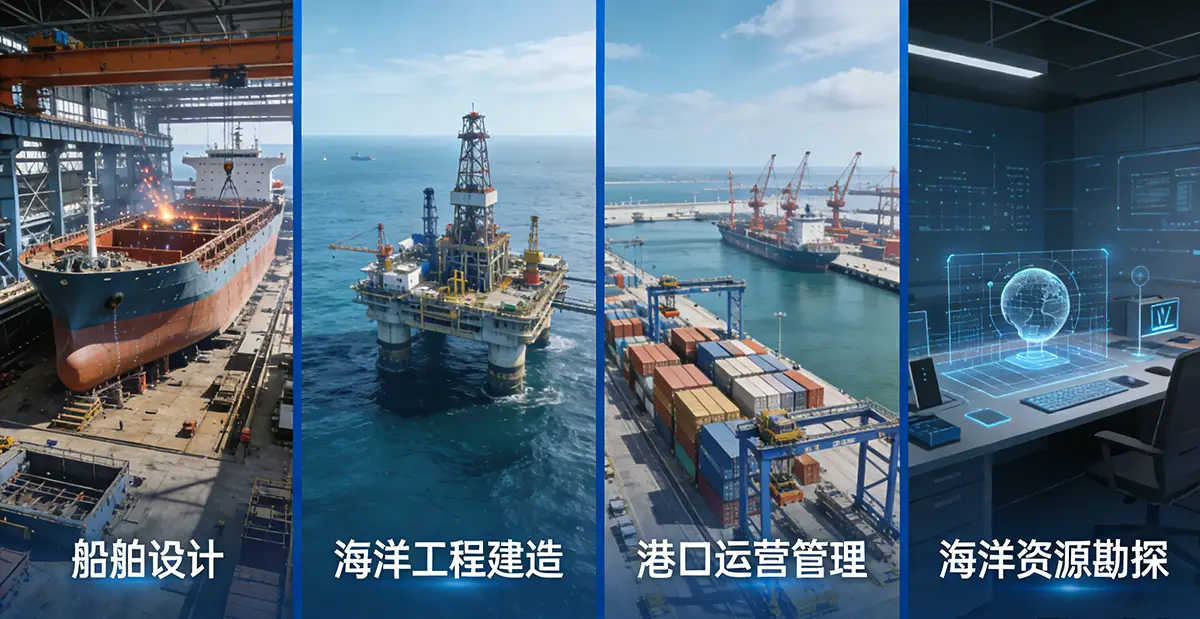
Ship and Ocean Engineering(Ship Ocean Eng.)_船舶与海洋工程
Naval Architecture and Ocean EngineeringNaval Architecture and Ocean Engineering is a core engineeri···

